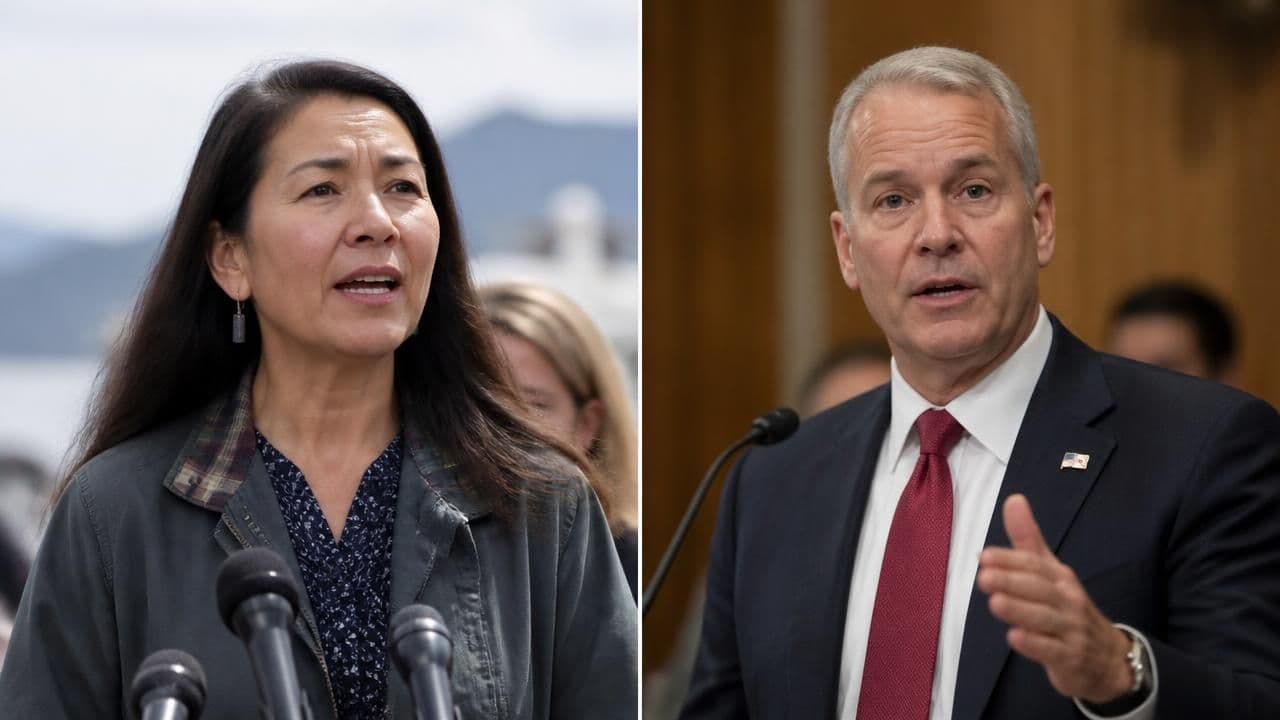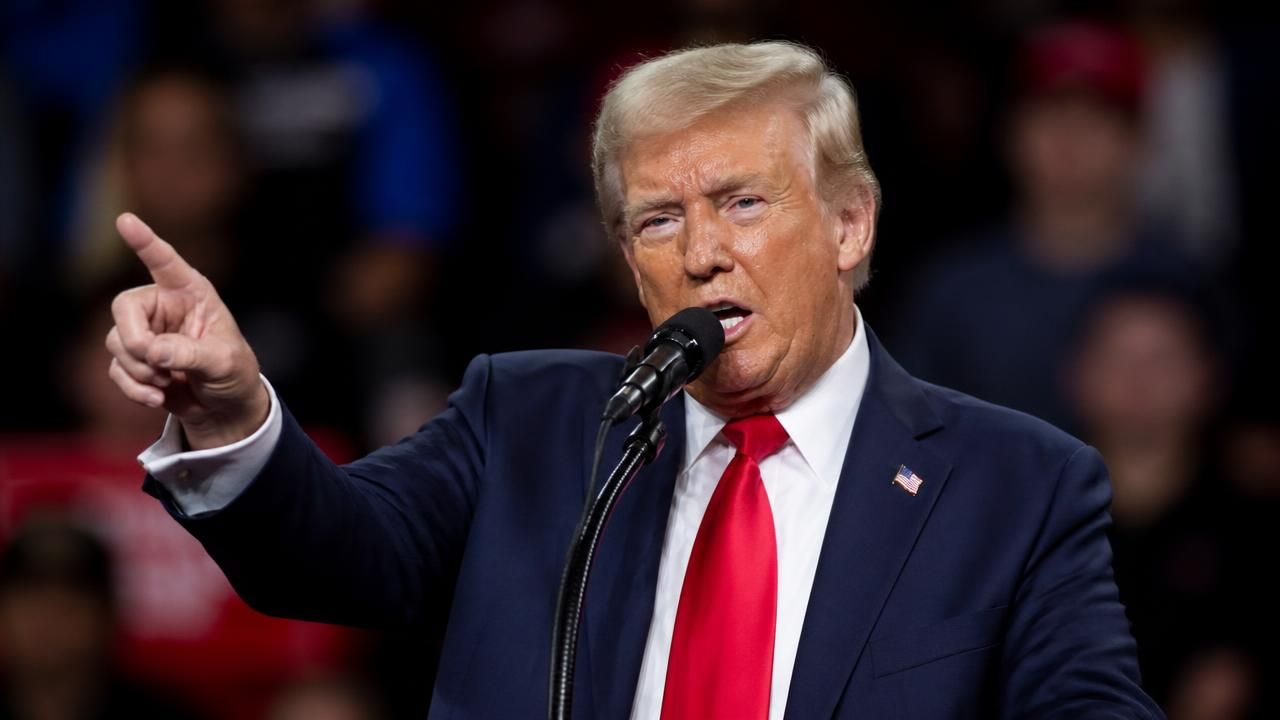
President Donald Trump in the final days of the midterm campaign called for Mary Peltola, the Democratic candidate for Alaska’s U.S. Senate seat, to quit the race and face prosecution, after The New York Times reported that her campaign and national Democrats helped recruit spoiler candidates. Trump offered no explanation of what crime he believed Peltola had committed, according to The New York Times, and the sources reviewed did not describe the report as alleging criminal conduct.
The demand marked an extraordinary escalation in a contested Senate race and was quickly picked up by outlets across the political spectrum, from The New York Times, The Associated Press, NBC News and USA Today to BNO News, UPI, The Seattle Times, The Globe and Mail, Yahoo News and MSN. The coverage converged on the same core facts: Trump wants Peltola removed from the ballot and prosecuted, and he also targeted a candidate he called “Fake Dan Sullivan.”
What the Times reported
The New York Times reported that Peltola’s campaign and national Democrats helped recruit spoiler candidates into the Alaska Senate race. In Alaska’s ranked-choice voting system, additional candidates can affect the outcome by drawing votes or reshaping voter coalitions, even if they do not win. Headlines in several outlets referred to the controversy as involving a “Sullivan spoiler,” and Trump’s “Fake Dan Sullivan” remark appeared to refer to the ballot dispute involving a Sullivan-named candidate.
The report did not, according to the accounts, accuse Peltola of a crime. That did not stop Trump from characterizing the alleged recruitment effort as “voter fraud at the highest level,” a phrase highlighted by Yahoo News. The New York Times noted pointedly that Trump “offered no explanation of what crime was committed.”
Trump’s demands
Trump called for Peltola to leave the Senate race, be removed from the ballot and face criminal prosecution. He also called for prosecution of the candidate he dubbed “Fake Dan Sullivan.” The statements were circulated widely in headlines that emphasized different aspects of the same remarks: MSN framed the story around Trump calling for prosecution, UPI and BNO News focused on his demand that Peltola be removed from the race, The Seattle Times said he wanted her “banned” from the race, and The Globe and Mail described the dispute as a “spoiler candidate controversy.”
“Voter fraud at the highest level,” Trump said, according to Yahoo News.
There was no indication in the sources that any prosecutor had opened an inquiry or that Peltola had been charged with any offense. A call for prosecution by a president is not itself a legal action; federal charges would require evidence and a decision by prosecutors. Recruiting candidates to run for office is generally treated as political activity, and the report as described in the coverage centered on political strategy rather than alleged criminal conduct.
Alaska’s political backdrop
Peltola is a former Alaska congresswoman now seeking the Senate seat held by Republican Dan Sullivan. Alaska adopted ranked-choice voting in 2020, using a top-four primary and a ranked-choice general election. That system can make candidate recruitment and ballot placement especially consequential, because multiple candidates from the same ideological lane can alter the final round of voting. The controversy therefore lands in a state where election rules, candidate names and ballot mechanics are already central to political strategy.
The timing amplified the story. Source 4 described Trump’s intervention as coming “days before” the midterm election, turning a report about campaign tactics into a last-minute fight over ballot access and criminal accusations. The race is among the midterm contests that will help determine the balance of power in the Senate, and Trump’s remarks put the Alaska contest into the national spotlight.
How outlets framed it
The New York Times emphasized the absence of a stated legal theory, reporting that Trump lashed out at Peltola after the Times story and offered no explanation of the crime he had in mind. Wire services such as The Associated Press and BNO News kept their headlines focused on the demand that Peltola quit the race and face prosecution. NBC News framed the story around “Dan Sullivan ballot dispute,” while USA Today’s headline simply said Trump called for Peltola to be prosecuted. The Globe and Mail put the emphasis on the “spoiler candidate controversy,” and Yahoo News highlighted Trump’s “voter fraud” language.
Those differences matter. Straight-news outlets treated the remarks as a political demand; the Times added the crucial caveat that Trump did not specify a crime; and some headlines foregrounded the most dramatic elements, including removal from the ballot and prosecution. Together, the coverage showed how a single set of remarks can be reported as a legal threat, a political attack or a ballot controversy, depending on which element an outlet chose to emphasize.
Implications
The episode underscores how quickly a campaign-strategy story can become a prosecution demand in the Trump era. It also raises questions about the boundaries between hardball politics and criminal law, and about how voters in a ranked-choice state will interpret allegations of spoiler recruitment. For Peltola, the accusation creates a late-stage distraction in a race already defined by national stakes. For Republicans, Trump’s intervention may energize his base but also inject uncertainty into a Senate contest that party strategists would prefer to keep focused on local issues.
For Alaska voters, the practical question is whether the controversy changes perceptions of the candidates or the integrity of the ballot. The sources reviewed did not include a response from Peltola or evidence of a criminal investigation. What they did show is a familiar pattern: a news report about campaign tactics, a rapid presidential demand for prosecution, and a media ecosystem parsing the difference between allegation, evidence and political rhetoric.