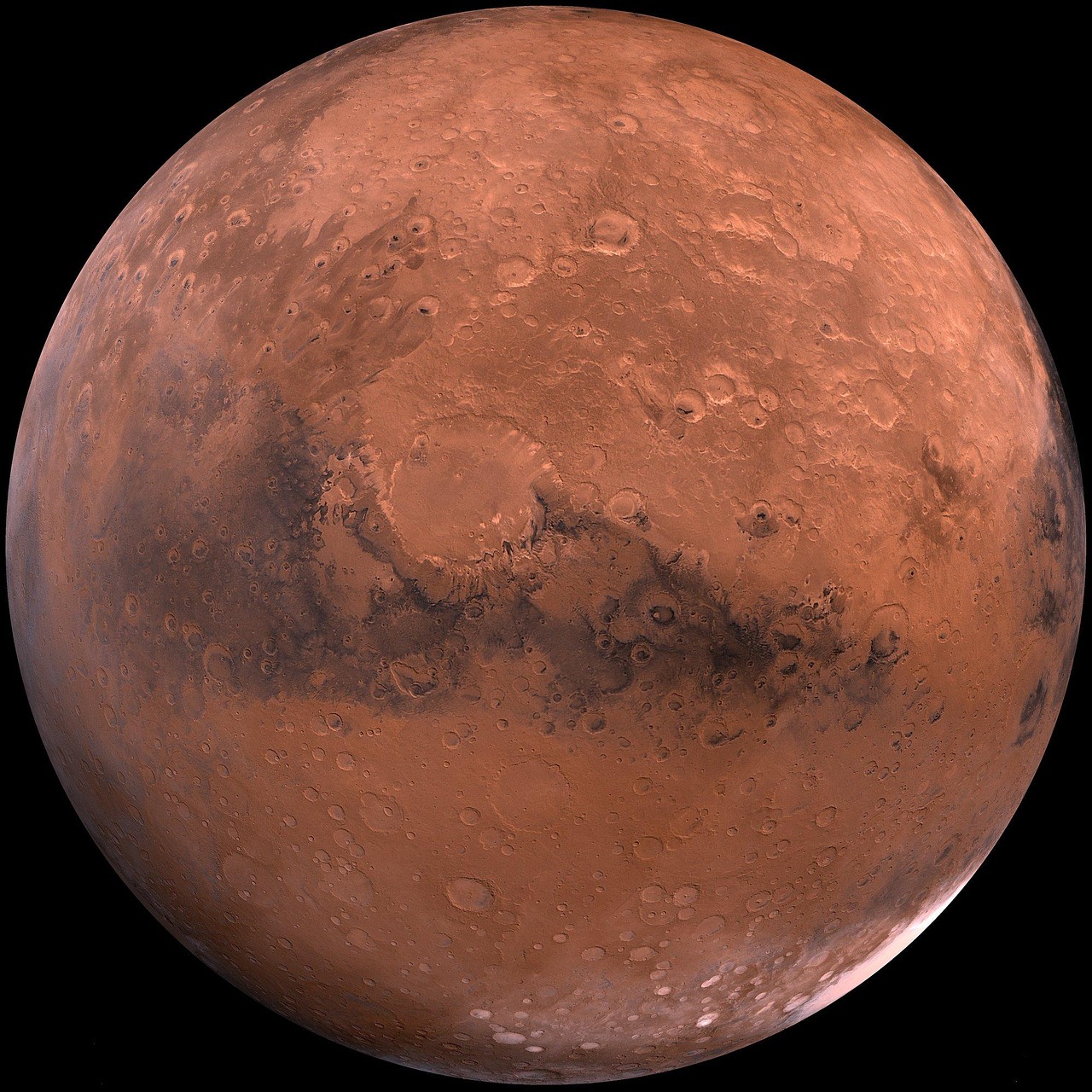
NASA’s Perseverance rover has delivered a new panoramic portrait of Mars that is at once spectacular and sobering: a wind-scoured, dust-choked valley that billions of years ago was a river channel feeding fresh water into Jezero Crater. The image, released by NASA’s Jet Propulsion Laboratory, stitches together 217 frames captured by the rover’s Mastcam-Z instrument on May 20, 2024 — the 1,155th Martian day, or sol, of the mission. The 360-degree view of Neretva Vallis is an enhanced-color mosaic processed to heighten contrast and reveal subtle differences in the Martian surface. The image is credited to NASA/JPL-Caltech/ASU/MSSS.
The panorama is more than a postcard. It captures the central tension of Perseverance’s mission: Mars today is a dry, dusty, radiation-blasted world, but its rocks preserve evidence of a warmer, wetter past. Neretva Vallis is one of the clearest windows into that past, a channel that once carried water into Jezero’s ancient lake. The same dust that obscures the view is also a practical problem for future astronauts — and, according to a JPL headline on the rover’s dust research, a source of clues for protecting crews. The agency’s photo release credits Arizona State University for Mastcam-Z operations, working with Malin Space Science Systems and the Niels Bohr Institute on design, testing and calibration.
Dust: nuisance, hazard and scientific instrument
Mars dust is not merely a visual filter. It coats solar panels, settles into mechanical joints and can be kicked up by rocket landings. For human missions, the finer fractions pose health risks if inhaled, and Martian regolith is known to contain perchlorates, salts that can be toxic to humans. A JPL article titled “NASA’s Perseverance Offers Clues to Protect Crews from Mars Dust” signals that the rover’s environmental measurements are being used to understand how dust moves, clings and affects equipment. Its title reflects a research thread that runs through the mission: the same windblown material that makes Neretva Vallis look barren is a design constraint for any future habitat, spacesuit or rover.
The dust also shapes how scientists read the landscape. The Mastcam-Z mosaic was enhanced to improve visual contrast, a standard technique that helps geologists distinguish rock types, textures and layers. In the panorama, the valley’s floor and walls appear in muted tones, but the processing accentuates color differences that can hint at mineralogy. That is important because Perseverance is not just a photographer; it is a field geologist. Its cameras guide sampling, and its instruments analyze chemistry and mineral structure.
Nickel-rich rocks and the chemistry of habitability
That geochemical work has produced another line of evidence. Reports highlighted by MSN say Perseverance found nickel-rich rocks in Jezero Crater, hinting that early Mars had the chemistry needed for life. Nickel is not a biosignature by itself. It is, however, biologically important: nickel-bearing enzymes are used by microbes to metabolize gases such as hydrogen and carbon dioxide, and nickel can be concentrated in rocks altered by water. In that sense, nickel-rich rocks are a clue about habitability — about whether the environment offered the raw ingredients and energy sources that life could exploit — rather than proof that life existed.
The distinction matters. Planetary scientists are cautious about conflating “chemistry needed for life” with “life.” Early Mars had water, organic molecules and energy gradients, but the question is whether those conditions persisted long enough and in the right places. Jezero’s lake and river delta are among the best places to test that question. Perseverance has been caching rock and regolith samples for a future return, and those samples are the mission’s most valuable scientific payload.
The sample-return dilemma
That is where the story becomes a policy problem. CNN framed the issue starkly: “NASA may already have proof life once existed on another planet. Scientists might never get to find out.” The headline captures a growing anxiety in the planetary science community. The evidence may be sitting inside titanium tubes on the Martian surface, but without a Mars Sample Return mission, scientists cannot subject those samples to the full arsenal of terrestrial laboratories — instruments that can detect chemical and isotopic signatures far beyond the capability of rover-mounted tools.
“NASA may already have proof life once existed on another planet. Scientists might never get to find out.” — CNN’s framing of the sample-return stakes
NASA and the European Space Agency have planned a multi-spacecraft campaign to retrieve the samples, but the architecture has faced cost growth and schedule pressure. An independent review in 2023 put the likely cost near $11 billion and suggested a launch in the 2040s, far later than originally envisioned. NASA has since sought cheaper, more innovative approaches, including industry studies and a rethinking of how to land a retrieval vehicle and launch samples off Mars. The debate is not about whether the samples are worth returning; it is about whether the United States and its partners can afford the mission and sustain the political will.
The differing emphases in coverage reveal different stakes. NASA’s photojournal presents the panorama as a visual and geological achievement — a 360-degree record of an ancient river valley. JPL’s dust research frames the rover as an environmental monitor whose data will protect future crews. MSN’s nickel story emphasizes habitability and the chemistry of life. CNN’s headline elevates the sample-return question to a cliffhanger: the answer to one of humanity’s oldest questions may already be collected, but not yet in human hands.
What comes next
Perseverance continues to explore Jezero Crater, and each new image and rock analysis adds to a dossier that will be argued over for decades. The Neretva Vallis panorama is a reminder that Mars is both a familiar landscape and an alien hazard — a place where river channels are now dust traps and where the search for life depends as much on engineering and budgets as on geology. If the samples ever come home, the dust in the picture may be remembered less as an obstacle than as the thin veil separating evidence from certainty.