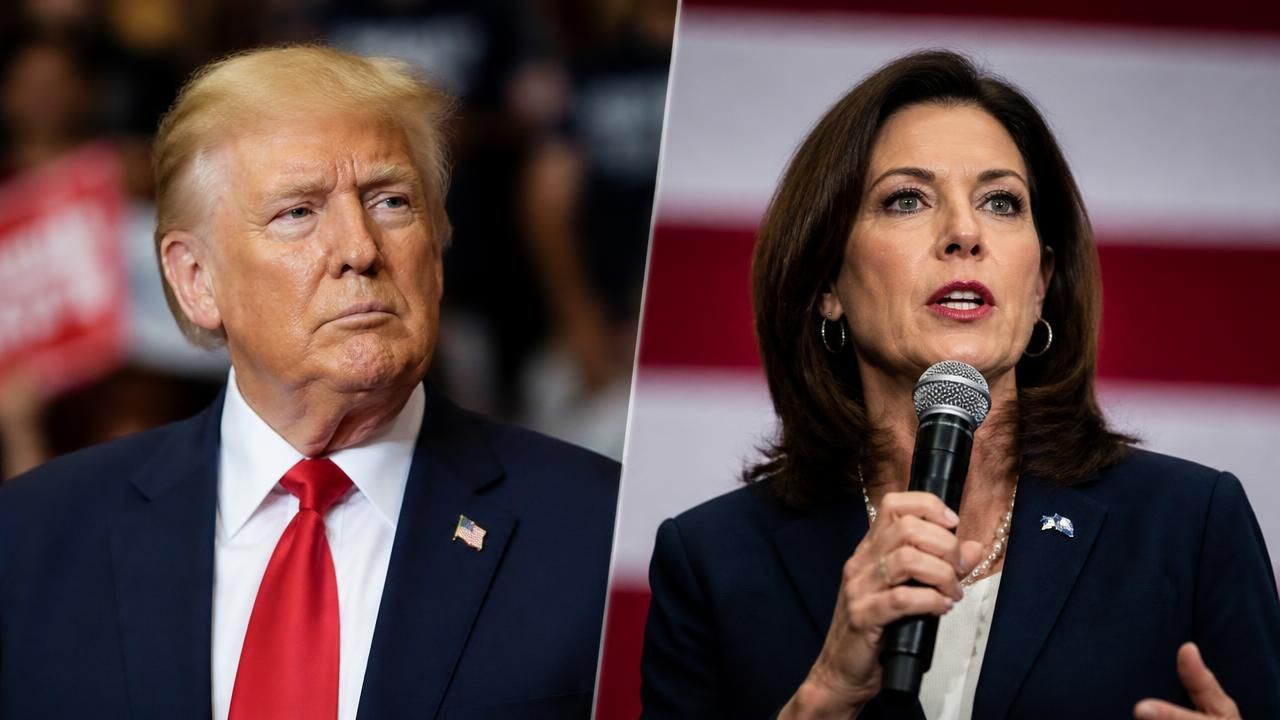
Senator Darline Graham, a South Carolina Republican, is getting an unusual coalition of reinforcements in what has become an unexpectedly competitive re-election fight: former President Donald Trump, a national Republican cash infusion, and — for the first time — a newly formed super PAC aligned with the data center industry.
The convergence of those forces, reported across four outlets this week, marks one of the clearest examples yet of how the lobbying battle over artificial intelligence is spilling into electoral politics, and how the physical infrastructure behind AI — warehouses of servers, transmission lines and water cooling systems — has become a political constituency with money to spend.
An unexpectedly tight race
According to The New York Times, Graham finds herself in a race that has tightened far beyond initial expectations, drawing national attention and outside money. The dynamic is unusual for a state that has leaned reliably Republican in recent Senate cycles, and it has made Graham a magnet for both party resources and new industry interests looking to buy influence early.
NBC News reported that Trump traveled to South Carolina to campaign for Graham, lending his endorsement and rally presence to a candidate who has aligned herself with his agenda. South Carolina Public Radio noted the trip was Trump's second visit to the state in three months — a frequency that underscores how seriously Republicans are treating the contest and how much they believe the seat is at risk.
MSN, meanwhile, reported that GOP-aligned groups have poured roughly $5 million into the race to bolster Graham, a figure that places the contest among the more heavily contested down-ballot fights of the cycle.
The data center industry's first political bet
The most consequential development, and the one that most clearly distinguishes this race from a routine Senate contest, comes from The Times: a super PAC aligned with the data center industry has begun spending in federal elections, and its first endorsement is Graham.
The significance lies less in the dollar figure — which has not been detailed — than in the precedent. Data center operators and the utilities, developers and real estate firms that serve them have traditionally lobbied state legislatures and local zoning boards, where land use, tax abatements and power contracts are decided. Creating a federal super PAC signals a strategic shift: the industry now believes national policy on AI, energy and grid regulation is being written in Washington, and it wants a seat at the table.
The move marks a maturation of the data center sector as a political actor — an industry that once avoided Washington fights now assembling the machinery to win them.
The industry's stakes are enormous. The buildout of AI-capable computing has driven surging electricity demand, prompting utilities to revise forecasts upward and grid operators to warn about reliability. Data centers are also facing growing local resistance over water use, noise, land consumption and the size of the tax breaks municipalities grant to attract them. Federal policy touches all of it: permitting reform, transmission siting, energy tax credits, and any legislation governing AI itself.
Why AI politics are escalating
The Times framed the super PAC's creation against a backdrop of accelerating political fights over artificial intelligence — fights that now span safety regulation, child protection, copyright, national security controls on chips, and the energy consequences of the compute boom. As those debates move from think tanks into campaigns, industry groups are recalibrating. Backing a single Senate candidate is a comparatively cheap way to test whether the sector's money can move a race and buy goodwill on Capitol Hill.
Graham's appeal to the industry appears straightforward. She is an incumbent Republican in a chamber where control of the Senate may hinge on a handful of seats, and she represents a state that has actively courted manufacturing and technology investment. A first bet on a candidate in a close race offers the possibility of outsized returns: a grateful senator, and a demonstration that the super PAC is a serious player.
Differing frames, one story
Each outlet approaches the race from a different angle, and the differences are instructive. The Times treats the story as a Washington-and-industry tale — the emergence of a new moneyed interest and what its first endorsement reveals about the political economy of AI. NBC News and South Carolina Public Radio frame it as a national political story, focused on Trump's personal investment in a state race and the meaning of a second visit in three months. MSN's coverage centers on the horse-race mechanics: $5 million, a competitive seat, a party defending its majority.
Taken together, the picture is of a race being fought on three levels at once — a presidential proxy battle, a national party spending war, and a new industry's opening bid for influence.
What to watch
- Disclosure filings: Campaign finance reports will reveal how much the data center super PAC actually spends, and whether other industry donors follow its lead.
- Energy policy: Whether Graham embraces transmission reform, nuclear and gas expansion, or federal incentives for data center siting will signal what the industry expects in return.
- Local backlash: Data center opposition has been most intense at the county level; watch whether that sentiment migrates into state and federal races.
- The Trump factor: Two visits in three months suggest the GOP believes Graham needs presidential-level mobilization — and that the race remains genuinely close.
For an industry that has spent the past several years building server farms and negotiating tax deals in state capitals, the South Carolina Senate race is a test of whether it can also build political capital — and whether AI's infrastructure boom will now be accompanied by an electoral machine.