From São Paulo trading desks to Washington trade offices and European campaign trails, the same phrase keeps surfacing in financial coverage this week: de olho nas eleições — keeping an eye on the elections. What began as a domestic Brazilian political story has become a global market theme, as investors, policymakers and columnists try to price the outcome of votes on three continents simultaneously.
A Razor-Thin Runoff in Brazil
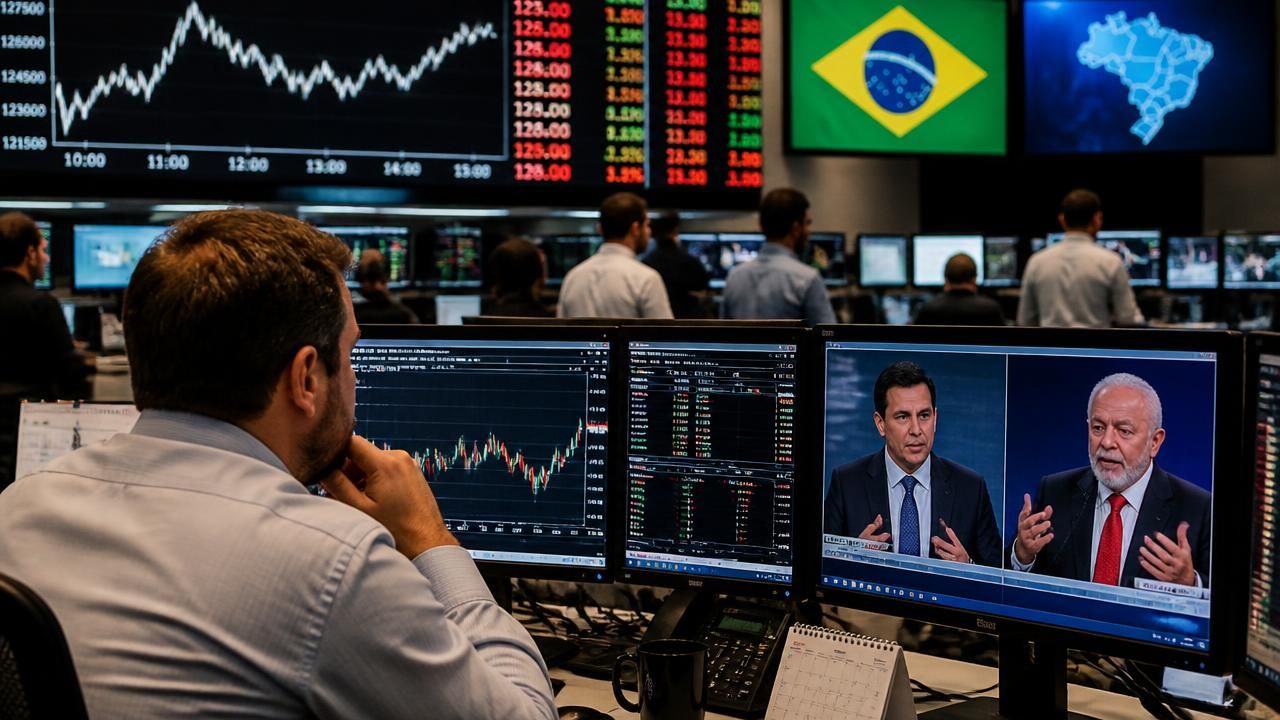
Bloomberg Markets reported that Flávio Bolsonaro and Luiz Inácio Lula da Silva have reached a second-round runoff technically tied after a televised debate and a wave of political events held across the country on Saturday. The report, produced by Patricia Xavier and Beatriz Amat with editing by Fabiola Moura, framed the race as too close to call — a characterization that immediately rippled into local market coverage.
Flávio Bolsonaro e Lula chegam ao segundo turno tecnicamente empatados após debate e atos realizados no país neste sábado.
The practical consequence for markets is a familiar one in Brazilian election cycles: volatility without direction. When polls show a genuine dead heat, investors stop positioning on the likely winner and start positioning on the uncertainty itself — hedging currency exposure, shortening duration, and waiting for the first credible post-debate surveys.
The Bolsa Watches Brasília
Brazilian financial outlet Seu Dinheiro captured the mood in its weekly roundup of most-read stories, which combined three threads: investor doubts over the sugar-and-energy giant Raízen (RAIZ4), a stock exchange fixated on the election calendar, and an earnings season about to flood the tape.
The Raízen questions matter beyond one ticker. The company sits at the intersection of commodities, energy transition and leveraged balance sheets — precisely the profile that suffers when the cost of capital is uncertain. With a runoff looming, the market's ability to price Brazilian risk assets is being squeezed from two sides: corporate fundamentals on one hand, political discount on the other.
Where to Put the Money
The most concrete investor question, covered separately in national coverage, is where to allocate fixed income while the second round plays out. The choice between Tesouro Selic, IPCA+ inflation-linked bonds and prefixado fixed-rate paper is effectively a bet on what an election does to the curve.
- Tesouro Selic — the liquidity trade. Post-fluidity, no duration risk, ideal for money that may need to move once the result is known.
- IPCA+ — the inflation trade. Attractive when real yields are high and the next government's fiscal stance is unclear.
- Prefixado — the conviction trade. Highest upside if the curve rally, highest mark-to-market pain if it does not.
Strategists quoted across the coverage converge on a similar message: in a technically tied race, the rational position is optionality, not conviction.
Trump Rewrites the Canada Tariff List — With One Eye on the Midterms
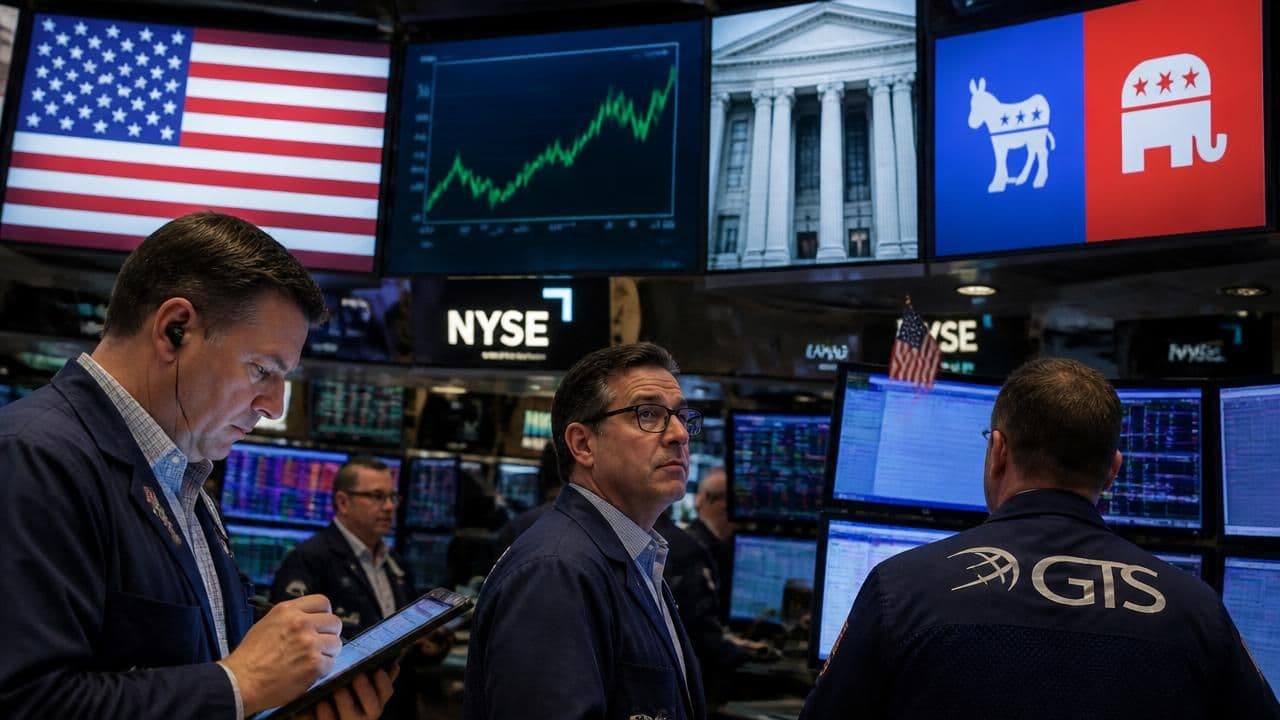
North of the Rio Grande, the election lens is being applied to trade policy. Money Times and MSN both reported that President Donald Trump has revised the list of Canadian products affected by 50% tariffs, explicitly with an eye on the U.S. midterm elections.
The revision is a textbook case of electoral tradecraft. Tariffs that hit consumers or key industries in politically competitive districts tend to get carved out; tariffs that hit foreign producers without domestic blowback tend to stay. By redrawing the list, the White House can claim toughness on trade while shielding voters from the price effects — a balance that becomes more urgent as midterm campaigning intensifies.
The broader implication for markets is that North American trade policy is now a function of the U.S. electoral calendar. Supply-chain managers who modeled tariffs as a fixed cost must now model them as a fluctuating political variable.
The International Press Turns Its Gaze South
MSN also highlighted that the international press is focusing on two Brazilian themes: Trump's stated interest in the Brazilian election, and the country's rising indebtedness. The combination is potent. Foreign coverage that links a national vote to external political interference — real or perceived — tends to raise the risk premium before it raises the polling numbers.
The debt angle is equally consequential. Fiscal credibility has been the single most important driver of Brazilian asset prices for a decade, and any foreign narrative that hardens around deteriorating public accounts feeds directly into the currency and the long end of the curve.
Europe: Migration, Protests and the Ballot Box
DW reported that Europe's far right, with elections in view, is blaming migration for protests across the continent. The framing is consistent with a broader pattern visible in all seven sources: political actors increasingly interpret social unrest through an electoral lens, converting street-level events into campaign material.
That tendency has market consequences too. European political risk premia, like Brazilian ones, react not to the protests themselves but to what they imply about the durability of governing coalitions and the fiscal promises made to win them.
What to Watch
- First credible polls following the Saturday debate — the runoff's true starting line.
- Brazilian earnings calendar and Raízen guidance, as a proxy for corporate confidence.
- The final scope of U.S. tariffs on Canada and any further midterm-driven revisions.
- Foreign commentary on Brazil's fiscal trajectory and any external interference narrative.
- The shape of the Brazilian yield curve as investors rotate between Selic, IPCA+ and prefixado.
The unifying lesson across these disparate stories is that elections are no longer a seasonal event for markets — they are a continuous input. From the Brazilian second round to American midterms to European protest politics, the price of political uncertainty is being quoted every day.