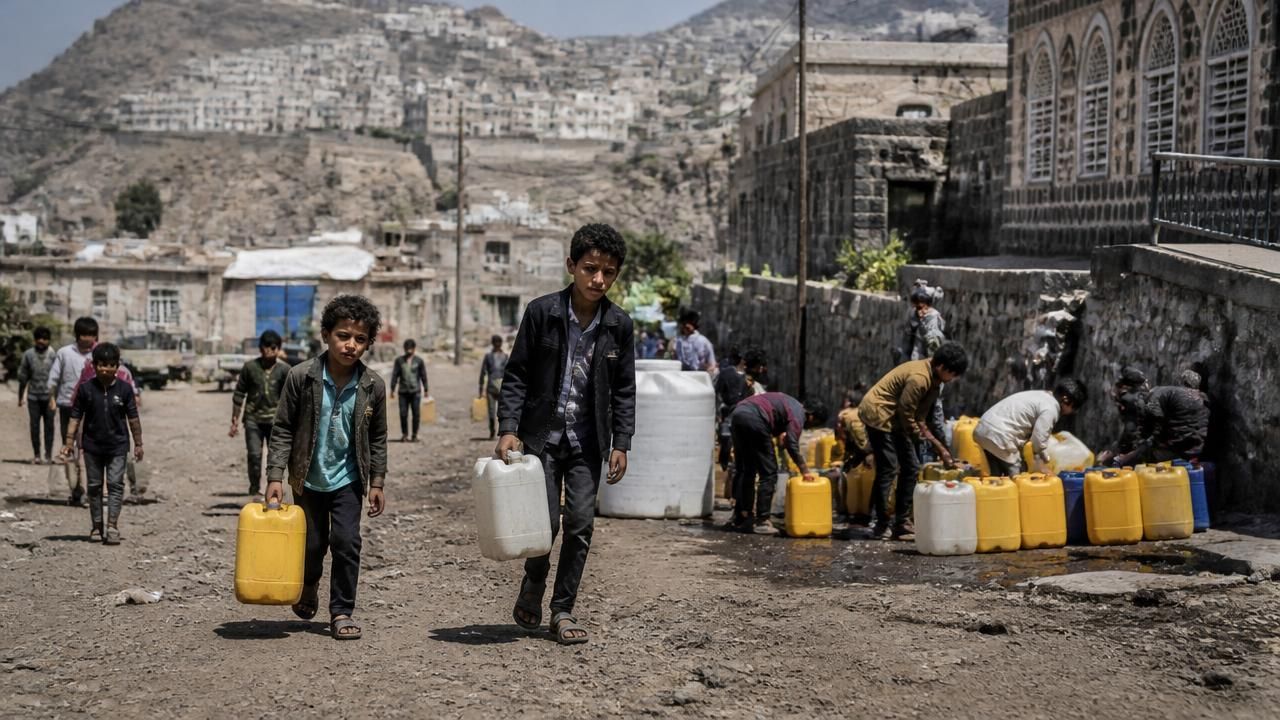
Taiz, one of Yemen's largest cities, is sliding deeper into a humanitarian emergency as Houthi rebels backed by Iran tighten their encirclement and cut a vital route into the southwestern city, according to reporting from NPR, The New York Times, MSN and Newsday. The city has struggled with water shortages for more than a decade, but residents and aid workers now face a sharper, more immediate crisis: drinking water supplies are dwindling, food stocks are running low and the main arteries for relief and commerce are increasingly contested.
A siege in slow motion, then a sudden escalation
For years, Taiz has sat on a frontline of Yemen's civil war. The Houthis have controlled territory around the city, while the internationally recognized government and local forces hold parts of Taiz itself. NPR reported that the city has struggled with water issues for over a decade, but the situation has worsened in recent weeks as the Houthis tightened their encirclement. That framing was echoed by Newsday, which ran the same headline focus on dwindling drinking water supplies. The New York Times went further, warning that the major Yemeni city is running out of food and water as Houthis encircle it.
The latest turn came as Houthis cut a vital route to the besieged city, according to MSN, which also reported that Yemen's government declared a counter-offensive in response. The loss of a key road is not merely a military setback. It complicates the movement of fuel, food, medicine and water tankers into a city where even before the latest escalation, water infrastructure was fragile.
Water, food and the route that keeps a city alive
In Taiz, as in much of Yemen, water access depends on a chain of fragile systems: wells and pumps that need electricity or fuel, tanker trucks that need passable roads, and storage facilities that need security. When a frontline shifts or a road closes, the effects ripple quickly through households. NPR and Newsday both place drinking water at the center of the story, reflecting how the most basic survival need is now the most urgent pressure point. The New York Times broadens the frame to food as well, suggesting that the city's crisis is no longer only about thirst but about the collapse of everyday supply lines.
'The city has struggled with water issues for over a decade, but the situation has worsened in recent weeks,' NPR reported, describing a slow-burning crisis that has now accelerated.
The Houthi encirclement has made an already difficult situation more dangerous. Taiz has long been contested, and the city's residents have lived with disrupted services, damaged infrastructure and the constant threat of renewed fighting. Now, with a vital route cut, the margin for error is shrinking. Food that once reached markets may become scarcer and more expensive. Water tankers may face longer, riskier journeys. Hospitals and clinics, which depend on clean water and fuel, could be stretched further.
Government counter-offensive raises the stakes
Yemen's government has declared a counter-offensive as the Houthis choke off the route, MSN reported. The move signals that the battle for Taiz is entering a more overtly military phase, even as the humanitarian situation deteriorates. A counter-offensive could be aimed at reopening supply corridors and breaking the encirclement, but it also carries risks: intensified fighting can further damage infrastructure, displace more families and complicate aid deliveries.
The Houthis' Iranian backing, cited by NPR, adds a regional dimension to the local siege. Yemen's war has long been shaped by outside powers and proxy interests, and the pressure on Taiz fits a pattern in which control of terrain and transport routes becomes leverage. For the internationally recognized government, declaring a counter-offensive is partly a military decision and partly a political signal that it will not accept the encirclement without a response.
How different outlets frame the same crisis
The four sources converge on the same grim reality but emphasize different dimensions. NPR and Newsday lead with the daily struggle for drinking water, placing residents' survival at the center of the story. The New York Times broadens the lens to food and water together, warning of a full urban emergency. MSN foregrounds the military and political response: the Houthi cut to a vital route and the Yemeni government's declared counter-offensive. Together, the coverage shows a crisis that is at once humanitarian, infrastructural and strategic.
That difference in framing matters. A water story emphasizes the slow violence of siege warfare, in which pumps, pipes and tankers become lifelines. A food-and-water story emphasizes the risk of a broader breakdown in the city's ability to sustain its population. A counter-offensive story emphasizes the shifting military map and the possibility that the next phase of the war will be fought over access routes. Readers encountering only one frame may miss how tightly these threads are connected.
Why Taiz matters beyond the city
Yemen's civil war has produced what the United Nations has called one of the world's worst humanitarian crises. Taiz's encirclement is a reminder that sieges do not only kill through bombardment; they kill through thirst, hunger and disease. When drinking water supplies dwindle, families are forced to choose between expensive purchases, unsafe sources and displacement. When food routes are cut, markets thin out and prices rise. When hospitals lose water and fuel, preventable illnesses become deadly.
The crisis also tests the international response. Aid agencies can pre-position supplies and support water trucking, but they need access and security. A counter-offensive may reopen roads, but it may also close windows for relief. The coming weeks will reveal whether the government's military response can break the encirclement without further harming civilians, and whether mediators can secure humanitarian corridors before the city's supplies run out.
What to watch
- Whether the government's counter-offensive reopens the vital route into Taiz and restores supply movement.
- Whether water tankers, fuel and food can reach neighborhoods despite the Houthi encirclement.
- Whether aid agencies can secure safe access and prevent a full breakdown in drinking water and health services.
- Whether fighting intensifies around Taiz and displaces more residents, compounding the humanitarian emergency.
For now, the reports from Taiz describe a city caught between a long-running water crisis and a newly sharpened siege. The headlines differ in emphasis, but the underlying warning is the same: without restored access and urgent humanitarian support, one of Yemen's major urban centers risks running out of the essentials of life.