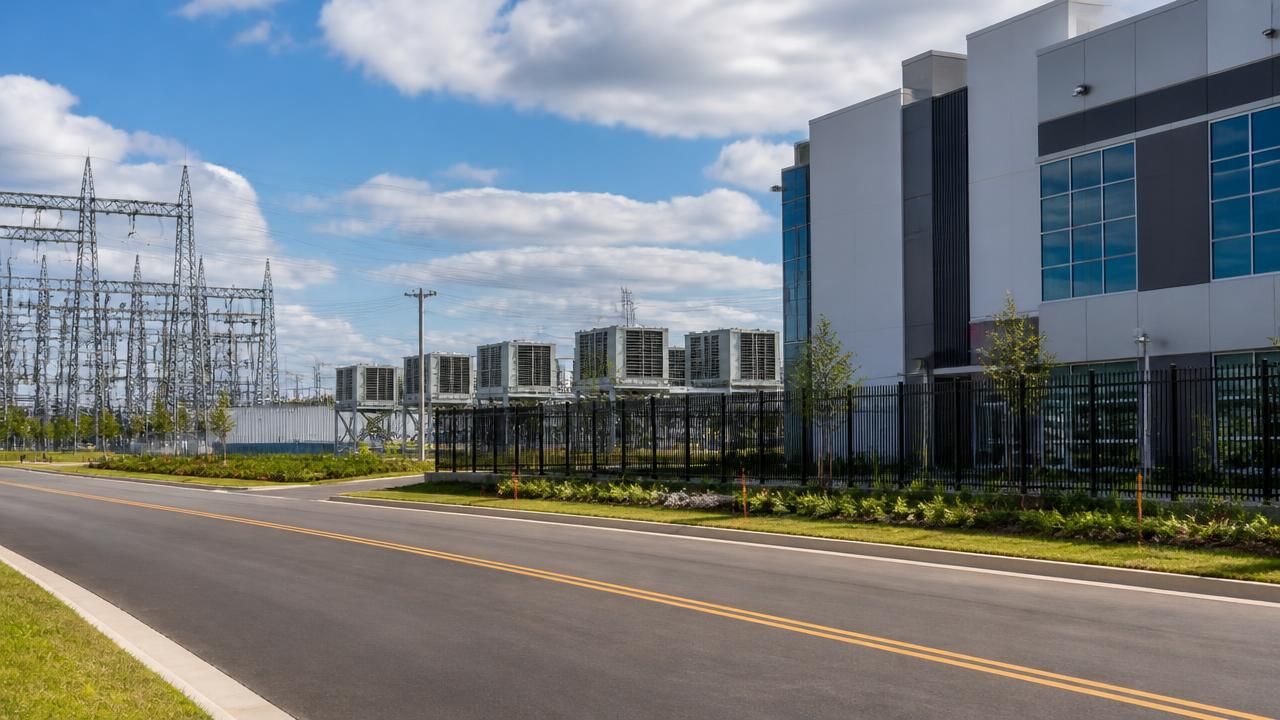
For a decade, the arrival of a hyperscale data center was treated by most local officials as an unqualified win: a low-profile tenant that paid property taxes, employed a handful of technicians and rarely complained. The artificial intelligence boom has upended that assumption. With AI workloads driving a fresh wave of construction, communities across the country are no longer asking whether to accept the facilities but on what terms — and the answers are diverging sharply from county to county.
Nowhere is the contrast clearer than in Virginia's Loudoun County, home to the cluster known as "Data Center Alley," where the industry has become a pillar of the local tax base. According to reporting by Fox News, the resulting revenue is so substantial that Loudoun homeowners effectively save about $5,800 a year in taxes compared with what they would otherwise owe for the same level of services. Bloomberg reported that the county channeled the windfall into schools, parks and infrastructure — a rare case of a locality converting server farms into durable public investment.
The gold standard — and its limits
Yet even Loudoun is now restraining the industry. County officials have moved to cap or limit further growth, wary of the land consumption, transmission-line demands, noise complaints and the political volatility that come with becoming a single-industry jurisdiction. The county's own success has made the case for diversification as much as for expansion.
The same tension animates Loudoun's public conversation. A USA Today headline captured a widely circulated sentiment among residents — "We've been screwed" — reflecting the frustration of homeowners and neighbors who say the tax benefits have been unevenly distributed and the local costs concentrated near individual facilities. That framing sits awkwardly beside the savings figure, and the gap between the two is precisely what makes the story nationally relevant: the same county can be both a beneficiary and a cautionary tale, depending on which household, which road and which school district you ask.
"The bigger lesson may be that towns have more bargaining power than they think."
That assessment, from Bloomberg's analysis of Loudoun's approach, is the closest thing to a consensus emerging among policy analysts. Local governments that negotiate early — on revenue-sharing agreements, infrastructure contributions, utility capacity and siting standards — tend to capture far more value than those that simply approve permits.
Why the numbers are so large
Forbes framed the dynamic in blunt macroeconomic terms, describing a $700 billion data center build-out in which tax gains are outpacing political backlash. That thesis holds in places with concentrated capacity and business-friendly property tax regimes. But the broader the boom spreads, the more the costs migrate from the property tax ledger into line items that local governments cannot easily bill back to developers.
Georgia: $300 million for schools
In Georgia, the construction boom for data centers comes with a cost for schools estimated at $300 million, according to MSN — a figure that captures how data centers' relatively modest public-service demands are paired with exemptions, abatements and land-use changes that can shift the burden of funding schools onto residential ratepayers even as districts must expand capacity for the workforce moving in around the facilities.
Texas: rural roads absorbing the shock
In rural Wichita County, Texas, the story is physical rather than fiscal. Heavy construction traffic associated with new facilities has taken a toll on county roads, a familiar pattern in rural jurisdictions whose road budgets were calibrated for agricultural traffic, not thousands of concrete and equipment deliveries. Pavement does not invoice developers; taxpayers do.
Madison County: 'transformational'
Not every local assessment is negative. Madison County Schools has described data centers as "transformational" for its revenue picture, MSN reported — a reminder that districts on the receiving end of a favorable tax arrangement can view the same industry as a structural fix for chronic underfunding.
Three frames, one industry
- The market frame (Forbes): a $700 billion capital wave whose tax receipts are large enough to overcome political resistance.
- The governance frame (Bloomberg): localities hold more leverage than they use, and Loudoun's negotiated model — plus its new limits — is the template.
- The household frame (Fox, USA Today): tangible savings for some homeowners, concentrated disruption and diffuse grievance for others.
What happens next
The decisive variable is no longer demand for compute but the negotiating capacity of county boards, school districts and state legislatures. Several states are already revisiting the sales-tax exemptions and depreciation schedules that made data centers economically attractive in the first place; others are weighing requirements for grid upgrades and water use. Meanwhile, utilities are signaling that the transmission and generation costs required to serve AI-scale loads will land on ratepayers unless large-load tariffs shift them onto the facilities themselves.
Loudoun's experience suggests the outcome is not predetermined. A county that treats the data center boom as a tax base to be cultivated — and bounded — can fund schools and parks with it. A county that treats it as an inevitability generally ends up repaving roads. The difference, officials increasingly argue, is who negotiates first, and whether the agreement outlasts the boom.