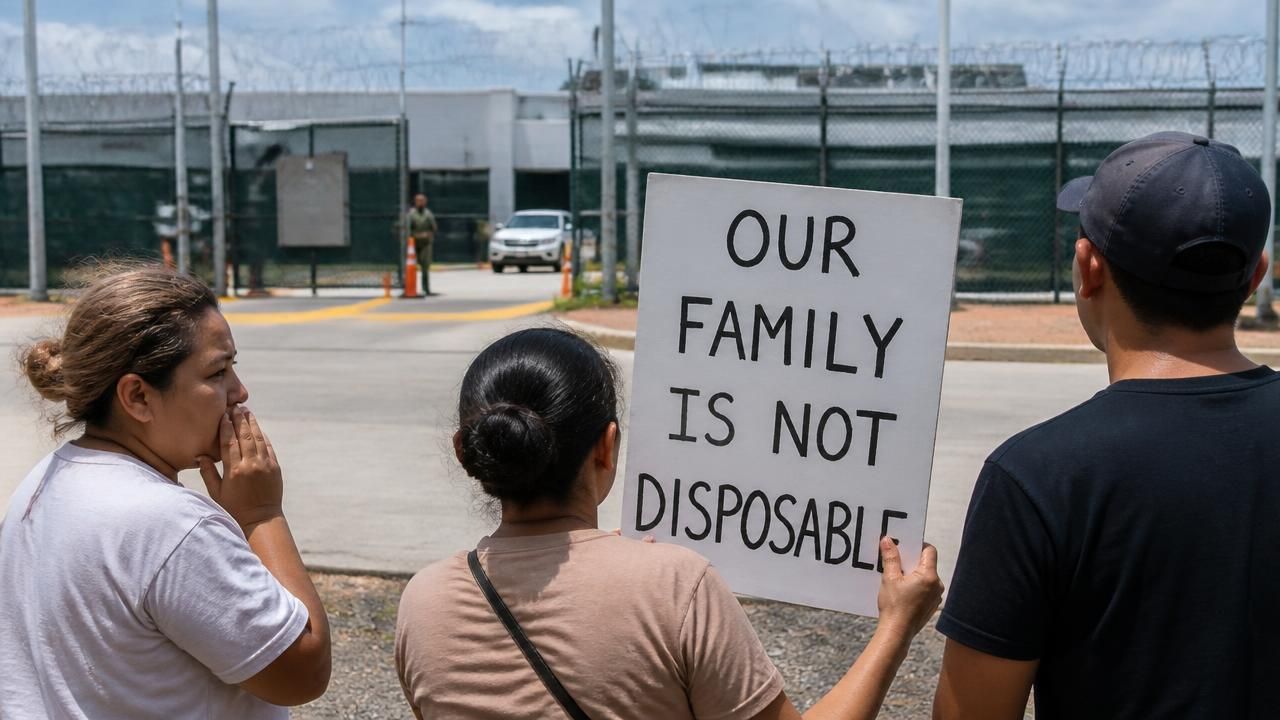
Families of severely ill people held in two immigration detention facilities in South Florida say U.S. Immigration and Customs Enforcement (ICE) is preparing to deport their relatives to countries in Africa where they have no family, no history and, in some cases, no idea they are being sent — possibly as early as Wednesday.
The accounts, relayed to the Guardian by relatives and by the immigration advocacy group the Workers Circle, describe detainees whose medical conditions have deteriorated inside custody and who now face long-haul charter flights to destinations that have not been publicly confirmed. The Workers Circle says it has been monitoring conditions inside the two facilities and speaking directly with people detained there.
What we know — and what we don't
The picture emerging from the accounts is fragmentary but consistent: removal flights are being scheduled on short notice, relatives report being unable to get clear answers about destinations, and attorneys say they have had little time to file last-minute challenges.
- Who: Seriously ill people held at two ICE facilities in south Florida, whose families say their conditions are worsening.
- What: Pending removal to African countries described by advocates as "third countries" — nations with which the detainees have no ties.
- When: Flights reportedly scheduled as early as Wednesday.
- Why contested: Families argue deportation would amount to a death sentence given the lack of medical care available to them abroad; the government has not publicly detailed the medical arrangements, if any, for individual removals.
ICE has not confirmed the specific flights or destinations. In public statements on similar removals, the agency has said it does not comment on individual cases but that all detainees receive medical care consistent with its detention standards and that removals follow final orders of removal.
The medical question at the center of the story
The relatives' central fear is not abstract. Detainees described as gravely ill — with conditions that advocates say require continuous treatment — would be transferred into health systems that may be stretched, distant from any support network, and, in some cases, unfamiliar in language and infrastructure. Families say they have been told little about how medication or continuing care would be handled in transit or on arrival.
Coverage of the case across outlets has framed the same facts through different lenses. Some reports foreground the health question — whether adequate care will exist abroad — while others lead with the human stakes, with one headline capturing a relative's blunt warning: the detainee, the family member said, would die there.
"He'll die there." — the words relatives have used to describe what they believe awaits their loved ones if the flights proceed, as reported in coverage of the case.
Advocates argue that the timing is especially troubling. Notices arriving days — or hours — before a flight leave little room for medical evaluations, for humanitarian parole requests, or for the kind of Emergency Stay Unit filings that immigration attorneys typically use to halt a removal at the last minute.
How third-country removals became routine
The case sits inside a broader shift in U.S. immigration enforcement. Over the past year, the administration has expanded so-called third-country removals — sending people to nations other than their country of origin — as part of a diplomatic push that has included agreements and informal understandings with several African governments. Officials have cast the arrangements as lawful exercises of sovereign authority and as a deterrent, arguing that the prospect of removal to a distant country discourages irregular migration.
Critics — including human rights organizations, some members of Congress and immigration attorneys — contend that the practice can violate protections against removal to countries where a person faces torture or persecution, and that short-notice removals undermine the ability of individuals to exercise their legal rights. Courts have repeatedly been asked to intervene in individual cases, with mixed results depending on jurisdiction and timing.
For families in South Florida, the dispute is intensely personal. Relatives describe phone calls cut short, conflicting information from detention staff and case officers, and the sense that the system is moving faster than anyone can respond to.
Two framings of one story
The divergence between outlets is instructive. One framing emphasizes process and policy: a government exercising removal authority, agreements with foreign governments, and the logistical question of medical care abroad. The other emphasizes the human cost: sickness inside custody, families scrambling, and a conviction that deportation would be fatal.
Both framings can be true at once, which is part of what makes the story consequential. If the government's position is that detention standards and removal protocols protect health, then documentation of individual medical cases — and of what arrangements exist on arrival — becomes the crucial test. If advocates' account is accurate, the case becomes part of a wider argument about whether enforcement speed is outpacing legal and humanitarian safeguards.
What happens next
Attorneys and advocacy groups are expected to seek emergency relief for individual detainees before any flights depart, while pressing ICE and the Department of Homeland Security for details on destinations, manifests and medical provisions. Families say they are still trying to reach relatives by phone and to obtain any written notice of removal.
Whether the Wednesday flights take off may ultimately be decided case by case, in filings and phone calls and last-minute rulings — a process that, for the people inside these two Florida facilities, is being measured in days rather than months.