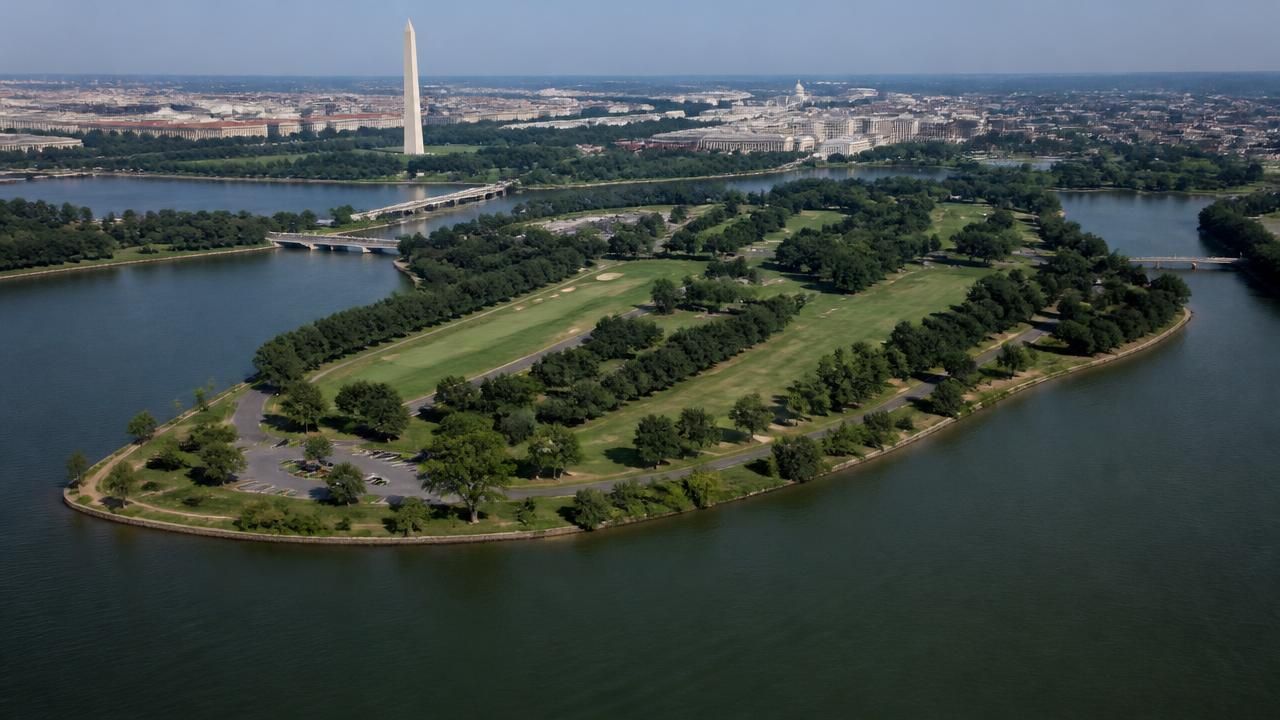
For more than a century, East Potomac Park has been an anomaly in the heart of the nation's capital: a 300-plus-acre peninsula of public green space, ringed by the Potomac River and the Washington Channel, set aside — in the language of its original charter — "for the pleasure of the people." It is home to a beloved public golf course, a miniature golf course, walking paths, picnic grounds and a scenic loop road that residents use daily.
Now that peninsula is the center of a bitter, multi-front fight. President Donald Trump has unveiled plans to close and substantially redesign the East Potomac Park golf course, a project his administration has described as a long-overdue upgrade to a deteriorating public asset — and which critics describe as a takeover of public parkland by a private presidential passion project.
What the plan entails
According to reporting by The New York Times, the administration has outlined a rapid timetable: a roughly 15-month closure of the historic course followed by a sweeping overhaul. Renderings released by the president's team show a sprawling, tournament-style golf complex overtaking much of the peninsula — a design that, as NPR reported, eliminates the open grassy areas and the road that locals rely on, replacing them with fairways and related infrastructure.
Other details have alarmed preservationists and park advocates. As first reported by MyNorthwest and picked up by other outlets, the National Park Service could remove more than 500 trees as part of the redesign. The administration has also signaled it intends to move quickly. Trump has said construction would begin "immediately" — even as a judge's order loomed over the project.
'Trash Island' and the president's personal stake
The president has not been coy about his interest. He has derisively referred to the existing course as "Trash Island," a phrase that has become a rallying point for both supporters, who say it captures the site's dilapidated condition, and opponents, who say it reveals contempt for the people who actually use the park.
The Atlantic, which has covered the saga closely, framed the story around Trump's well-documented fixation on golf — describing a president who "really wants this golf course" — and later turned its attention to one of the plan's more surprising casualties, a miniature golf course that the magazine called the "cutest target" of Trump's broader D.C. makeover. The framing is telling: what the administration presents as infrastructure improvement, national outlets increasingly portray as a personal project executed on public land.
A judge steps in
The most consequential development has been judicial. As reported by Ideastream and other outlets, a federal judge has sharply questioned — and chastised — the administration's plan to push ahead with the overhaul, signaling deep skepticism about whether the government had adequately followed the legal process required before altering protected parkland. The judge's halt order has become the central obstacle to the administration's aggressive timeline, setting up a collision between the White House's stated intention to start work "immediately" and the courts' authority to stop it.
The legal fight turns on familiar questions: Can federal land designated for public recreation be redeveloped on this scale? What environmental and public-input reviews are required? And who, ultimately, gets to decide what East Potomac Park is for?
Residents fear what could be lost
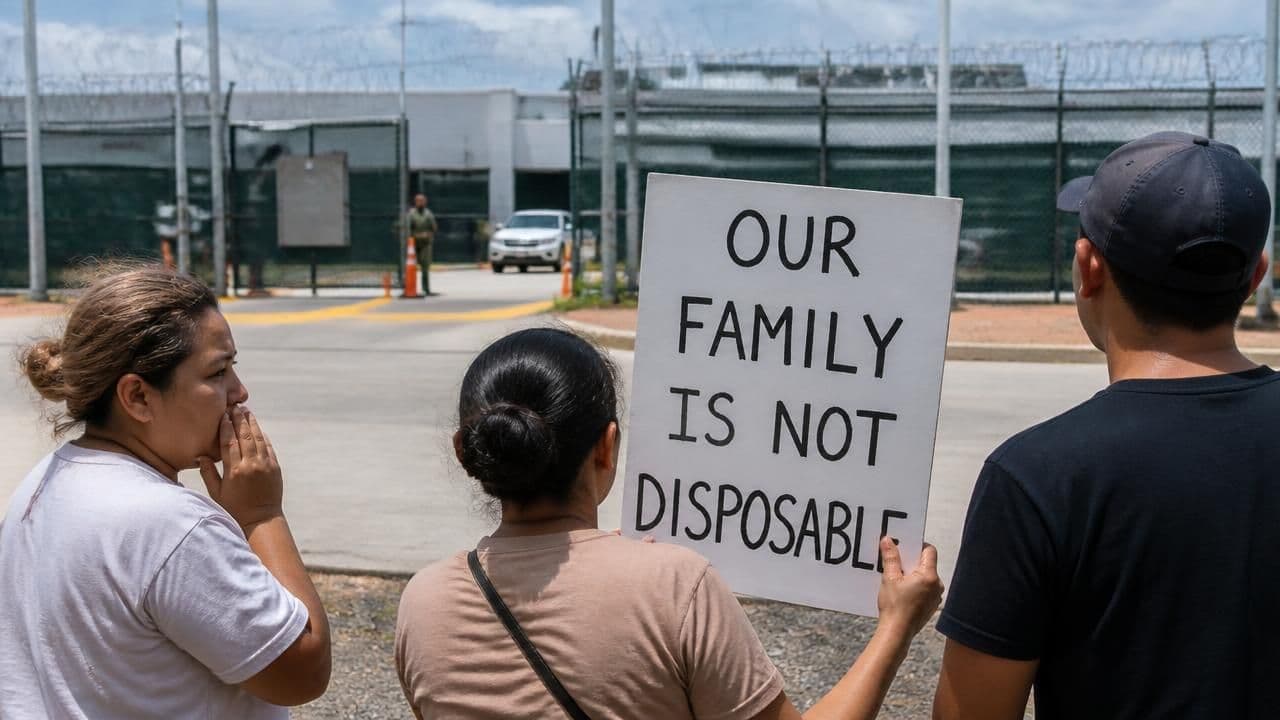
For many Washingtonians, the dispute is less about golf than about access. The New York Times reported that as Trump wages the golf course fight, many residents fear what could be lost — not just a course, but a rare slice of free, open, waterfront space in a city where such amenities are scarce.
NPR captured the emotional core of the opposition: a park created explicitly "for the pleasure of the people" being remade in a way that, in the eyes of locals, narrows who that pleasure is for. Grassroots pushback has organized quickly, with residents, preservation groups and park users arguing that a public course should be improved for the public — not replaced with a design that excludes them.
Opinion writers have been blunter. One widely circulated MSN column argued that Trump's plans for a public golf course "expose how little he cares about the public or golf" — a two-barreled critique that the scheme neither serves the community nor represents good course design. Another asked a simpler question: what does D.C. lose if it loses a major park to a golf dream?
Competing frames, real stakes
The story reads differently depending on where you stand. Supporters see an aging municipal course in disrepair, a president willing to invest in a neglected corner of the capital, and a bureaucratic and legal system standing in the way of visible improvement. Critics see a public trust converted into a showcase for private tastes, with hundreds of mature trees, a beloved loop road and open lawns as the price of admission.
"Trash Island" — President Trump's description of the existing East Potomac Park course, a phrase that has become shorthand for the dispute itself.
The outcome will hinge on the courts in the near term, but the broader implications extend beyond one peninsula. The fight has become a test case for how federal parkland can be reimagined, how quickly a presidential administration can move against local opposition, and whether the phrase "for the pleasure of the people" still carries legal and moral weight in the nation's capital. For now, the tractors have not rolled, the trees still stand, and Washingtonians are watching — and organizing — to see what survives the next 15 months.