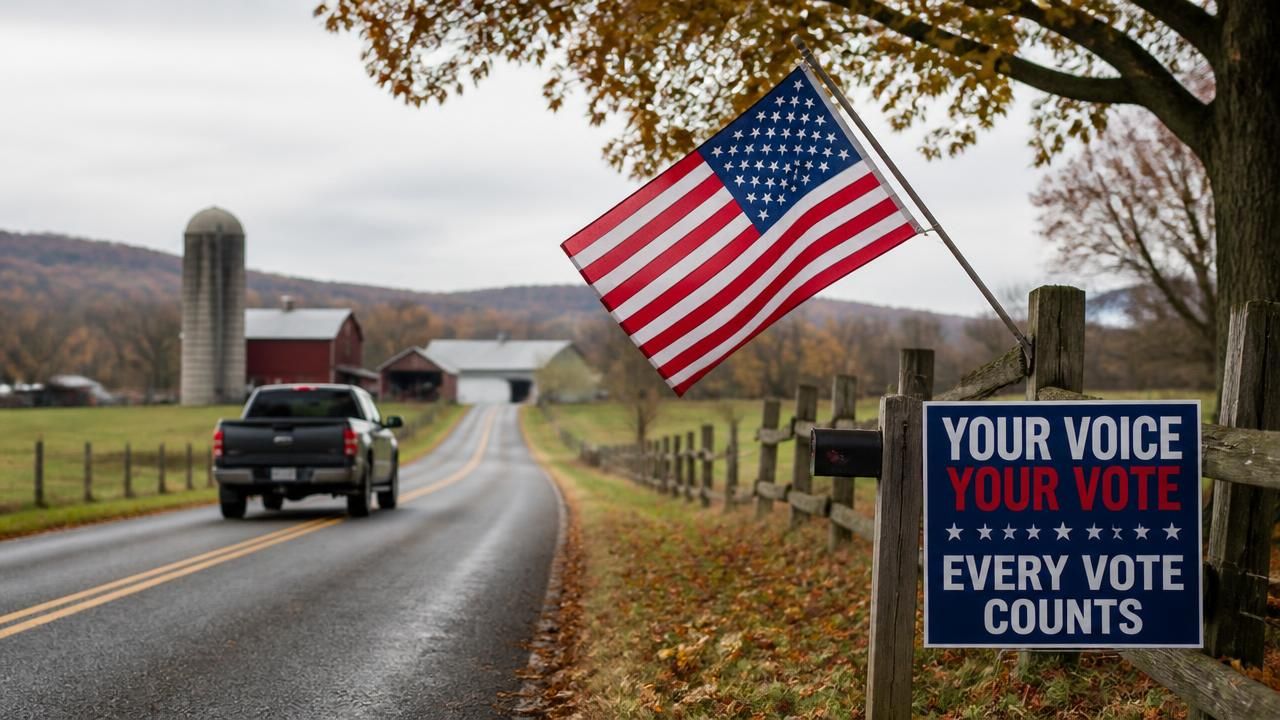
With roughly two weeks until voters go to the polls, the battle for control of the U.S. Senate has narrowed to a handful of states — and to a handful of voters within them. Ohio, long a reliably red state in presidential years, has emerged as the cycle's most closely watched proving ground, where the outcome may hinge on rural voters who have backed Republicans for a generation but whose allegiance is now in question.
The stakes are spelled out with brutal clarity in the chamber's arithmetic. According to Ballotpedia's running analysis of the 2026 map, Republicans cannot afford to lose more than two seats if they hope to keep their majority, while Democrats must net four to take control outright.
"Republicans cannot lose more than two seats to keep control of the U.S. Senate. Democrats need to gain four for a majority." — Ballotpedia News
Ohio: The Bellwether
NPR's reporting frames Ohio as the state that could decide the Senate, noting that although it has voted red in recent elections, it is competitive this year. The network's central insight is demographic: if Democrats are to prevail, they must win over people who have previously backed Republicans — and rural voters sit at the top of that list. That is a reversal of the usual battleground math, in which suburban moderates are the prized swing bloc. In Ohio, the countryside itself is the swing district.
A Fox News poll of the race, summarized by MSN, points to two forces shaping the contest: a pronounced gender gap and pervasive "pocketbook pain." The combination is volatile. Economic anxiety can cut against an incumbent party, but it also collides with reproductive-rights concerns that have driven Democratic turnout since 2022 — particularly among women. Candidates in both parties are calibrating accordingly, emphasizing costs, wages, and household budgets while carefully managing the social issues that animate each base.
Down-ballot, the picture is equally fluid. State News has been tracking which Ohio Statehouse contests are tightening this cycle, a reminder that the Senate race does not exist in isolation: legislative majorities, redistricting, and control of state election machinery are all on the same ballot. NBC News' 2026 Ohio elections hub likewise catalogues a full slate of races and past results against which this year's swings will be measured.
The Trump Factor
If Ohio is the hinge, the former president is the weather system moving over it. A new poll reported by MSN found Trump's rural support sliding 14 points in the weeks before the midterms — a striking erosion in the very constituency that helped redefine the Republican coalition. Whether that represents a durable realignment or a transient protest vote is the central question of the closing fortnight.
It has also complicated life for Republican candidates. In Iowa, Senate hopeful Hinson is campaigning on a promise to "solve problems," and both MSN and USA Today frame her bid around a single strategic dilemma: can she outrun Trump? The question captures a party-wide tension. In rural counties, Trump remains the engine of turnout. In suburban precincts, he is the reason college-educated voters, especially women, have drifted away. Candidates are attempting to bank the former without paying for the latter.
The Epstein files have injected a further wildcard. CNN reports that Jeffrey Epstein "has been everywhere this campaign season," even as voters wonder how much he should matter — a sign of how thoroughly questions about elite accountability and transparency have saturated the information environment. Whether the issue moves votes or merely dominates coverage is disputed by strategists in both parties.
A National Map in Motion
The story is not confined to the Midwest. Fox News reports that with 14 days remaining, Trump is heading to North Carolina as the GOP fights to hold the Senate — a state that has become a firewall for Republicans seeking to limit Democratic gains. In South Carolina, the former president rallied for Darline Graham in a Senate race that will test the durability of his endorsement power in the Deep South.
Texas may be the cycle's most volatile subplot. There, Attorney General Ken Paxton has erased James Talarico's lead as early voting surges, according to MSN — a reversal that has national Democrats recalculating where to send their final dollars. Houston Public Media's survey of voter sentiment in six key states suggests the broader pattern: a restless, economically anxious electorate, skeptical of incumbents of either party and unusually resistant to traditional campaign messaging.
What to Watch
- Rural turnout and defection rates in Ohio's exurban and agricultural counties, where a 14-point erosion in Trump support would be decisive if it holds.
- The gender gap in suburban counties ringing Columbus, Cincinnati and Cleveland.
- Early-vote surges in Texas, which can signal enthusiasm asymmetries before Election Day.
- Down-ballot Statehouse races in Ohio, which will shape governance long after the Senate fight is settled.
The through-line across outlets is a shared recognition that 2026 is not a conventional referendum. NPR emphasizes persuasion of former Republican voters; Fox News emphasizes defensive holdings in North Carolina; CNN emphasizes the preoccupations of the electorate; Houston Public Media emphasizes state-level variation. Each framing points to the same conclusion: with a two-seat cushion, Republicans have almost no margin for error, and Democrats need a near-perfect night.
For Ohio's rural voters, that means the spotlight will not leave them for the next two weeks. For everyone else, it means a Senate majority could be decided by a few thousand households in counties that rarely see a national reporter — and who know it.