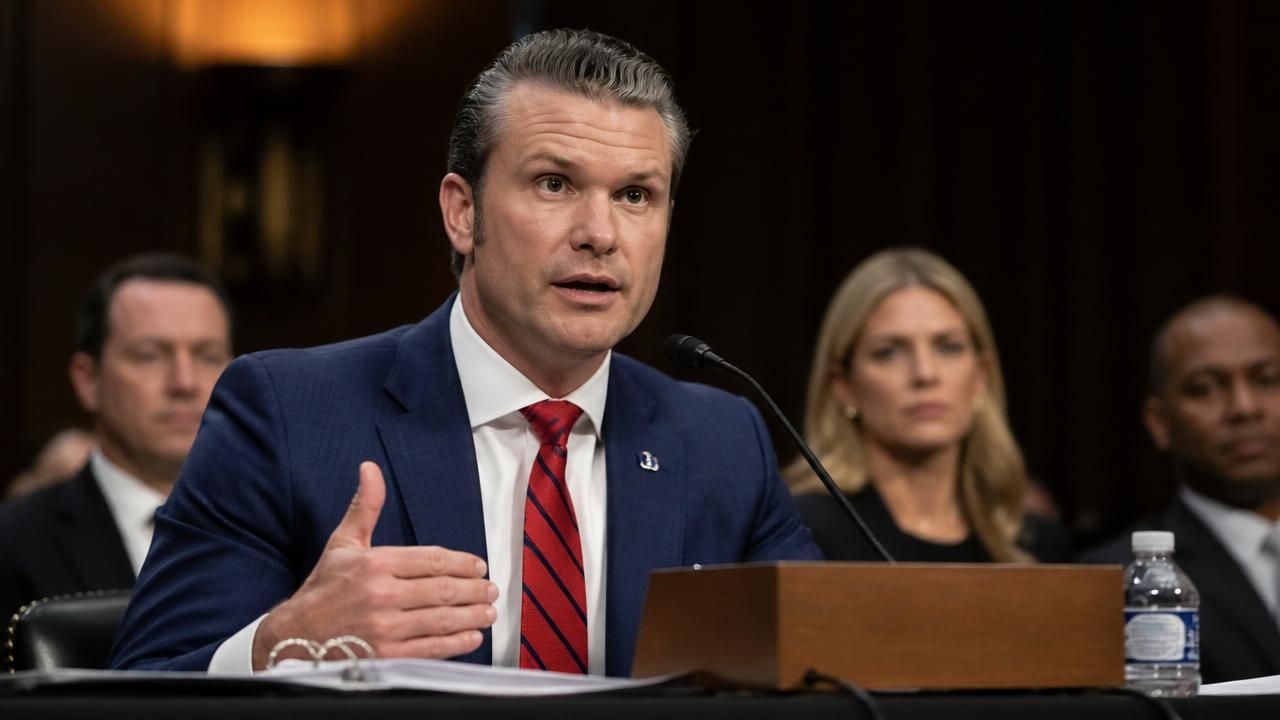
Defense Secretary Pete Hegseth has issued a formal directive barring Department of Defense personnel from using nonpublic information to place bets on prediction markets — particularly wagers tied to U.S. military operations — warning that such trades could hand valuable intelligence to adversaries and put troops at risk.
The memo, dated October 20 and published Monday by CBS News, was circulated to senior Pentagon leadership, leaders of the Combatant Commands, and directors of Defense Department field activities. Its subject line was blunt: "Do Not Compromise Military Operations for Personal Financial Gain."
What the memo says
According to accounts of the document, Hegseth frames insider betting not merely as an ethics violation but as an operational security threat. Personnel are prohibited from using classified or otherwise nonpublic information — including knowledge of pending operations, deployments, or strikes — to profit on commercial prediction platforms.
"Do Not Compromise Military Operations for Personal Financial Gain" — subject line of the Oct. 20 memo from Defense Secretary Pete Hegseth
Coverage of the directive emphasized its warning that "our enemies watch," and that personnel who violate the policy could face criminal charges rather than administrative discipline alone. The memo does not appear to ban participation in prediction markets outright; instead it draws a line at the use of information the public cannot see.
Why the Pentagon is worried
The core concern is signals intelligence in reverse. Prediction markets aggregate dispersed beliefs into a single price, and unusual movements on contracts like "Will the U.S. conduct a military strike on X by date Y" can be read by foreign intelligence services as a hint that someone with access knows something. A well-timed, large bet placed by a service member with operational knowledge could effectively broadcast a warning — or confirm a leak — before an operation begins.
That dynamic converts individual trading decisions into potential force-protection failures. The memo's logic follows a long tradition of Pentagon rules restricting stock trading, gambling, and outside financial entanglements for personnel with access to sensitive programs, but applies them to a fast-growing, largely internet-native marketplace that regulators have only recently begun to police.
The prediction market boom behind the directive
The order lands as prediction markets have moved from the fringes of the internet into mainstream finance. Platforms such as Kalshi, which is regulated by the Commodity Futures Trading Commission, and Polymarket, a crypto-native venue that has drawn scrutiny from U.S. authorities, have seen explosive volume around elections, geopolitics, and conflict. Contracts on ceasefires, military strikes, and the fates of foreign leaders have become some of the most closely watched — and most ethically fraught — products in the sector.
Crypto and fintech outlets framed the Pentagon move as the latest collision between decentralized betting markets and government oversight. Cointelegraph, which covers the crypto industry, headlined the story as a ban on "Pentagon insider bets on military operations," positioning it as a regulatory milestone for platforms whose users increasingly wager on world events in real time.
How different outlets told the story
- Ars Technica led with the operational-security angle, emphasizing Hegseth's warning that the wagers "could give important clues to enemy countries."
- CBS News, which first published the memo, focused on the scope of the prohibition: DoD personnel may not use nonpublic information about U.S. military operations to bet.
- MSN's syndicated coverage stressed the punitive dimension, with headlines warning troops they could face criminal charges and describing a "stern warning to Pentagon staff."
- Cointelegraph treated the directive as news for the prediction-market and crypto sector, underscoring how closely those platforms now intersect with national security.
- Newser summarized it simply as Hegseth "setting policy" on military operations bets.
The divergent framing is telling. For defense reporters, this is a force-protection and counterintelligence story. For financial and crypto reporters, it is a story about the maturation — and the limits — of event-based wagering. Both readings converge on the same reality: prediction markets have grown consequential enough that the Pentagon now considers them a vector for leaks.
Enforcement questions remain
It is unclear from the memo how the department intends to detect violations. Prediction markets are pseudonymous by design on many platforms, and tracing a wallet or account to a service member requires either voluntary disclosure or investigative work by military criminal investigators. The threat of prosecution may serve primarily as a deterrent, reinforcing norms ahead of any actual enforcement action.
Legal analysts have also noted that the line between "nonpublic" and merely "unclassified but sensitive" information can be difficult to police, and that the department will need clear guidance on what counts as material, nonpublic knowledge in the context of a given contract.
What happens next
The directive puts service members and civilian employees on notice that trading on operational knowledge is now explicitly off limits, and it signals to the prediction-market industry that Washington is watching its national-security contracts closely. Whether it prompts platform-level changes — such as geo-restrictions on military-adjacent contracts or enhanced surveillance of suspicious trading — remains to be seen.
For now, the message from the Pentagon's top civilian official is unambiguous: in an era when anyone with a phone can bet on the next strike, the department views silence as a military asset, and personal profit as a potential breach.