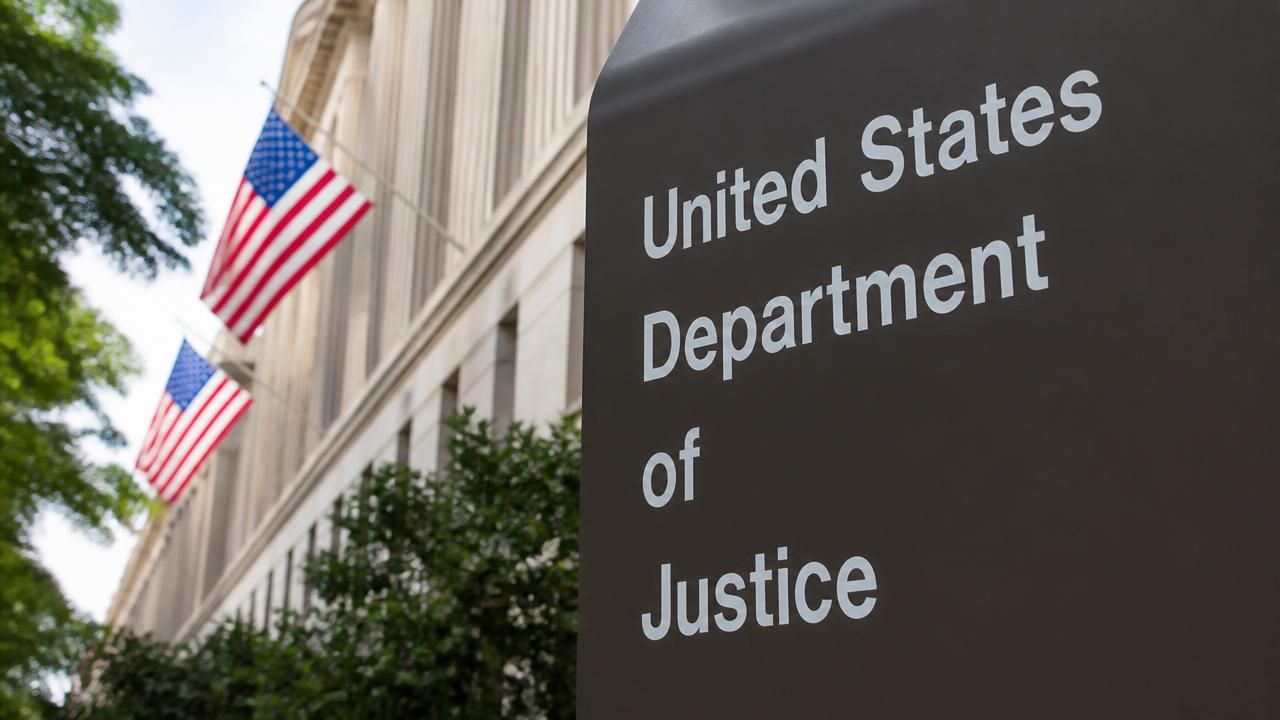
Federal prosecutors have charged two former senior FBI officials with making false statements to Congress about their roles in the bureau's handling of the investigation tied to Hunter Biden's laptop, a step that instantly revived one of the most bitterly disputed episodes of the 2020 presidential campaign and ignited a new fight over the politicization of American law enforcement.
The charges, announced by the Justice Department, accuse the former officials of misleading lawmakers about the extent of their involvement in the laptop investigation — a probe that conservatives have long argued was slow-walked and soft-pedaled, and that Democrats and former bureau officials have long described as a routine matter distorted into a conspiracy theory. Outlets across the political spectrum reported the same core development, but framed its significance in starkly different terms.
What the charges allege
According to the accounts reported by Politico, Click2Houston, OAN and other outlets, the two men — identified in coverage as former FBI intelligence officials and, at one point, senior figures in the bureau — are accused of lying to Congress about their involvement in the investigation into the laptop. The underlying offense is false statements to a coordinate branch of government, a charge that in federal law carries a statutory maximum of five years per count, though such cases routinely result in far shorter sentences or diversion agreements.
The charges do not allege that the officials mishandled classified material or obstructed the investigation itself. Instead, they turn on testimony: whether the officials accurately described what they did, and when, as lawmakers pressed them on the bureau's decision-making during a period of intense public scrutiny.
A narrow charge with a broad political blast radius
The narrow legal question — who said what under oath — has been almost entirely eclipsed by the political one. Coverage from MSN and other syndicated outlets emphasized that the two were "frequent targets of Trump allies," a framing that places the indictments directly inside a years-long campaign by allies of the president to pursue the law enforcement and intelligence officials they blame for the Russia investigation and for what they see as the suppression of damaging information about the Biden family.
How the laptop saga became a political fault line
The story dates to October 2020, when the New York Post published material said to have been pulled from a laptop abandoned at a Delaware repair shop. The provenance of the material was contested from the outset, and a group of former intelligence officials signed a public letter suggesting the story bore hallmarks of Russian disinformation. Major social media platforms limited distribution of the story in the campaign's final weeks — a decision that became a durable grievance on the right and a subject of repeated congressional inquiry.
Subsequent investigations, including those by the House Judiciary and Intelligence Committees and the special counsel inquiry led by David Weiss, established that the FBI had possession of the laptop material and examined it as part of a broader investigation into Hunter Biden's finances. The special counsel later brought tax and gun charges; Hunter Biden was convicted on the gun counts, pleaded guilty to tax charges, and was pardoned by his father in December 2024. The question of how the bureau handled the laptop — and how it described that handling to Congress — is the thread now pulled back into open court.
Two competing narratives
The New York Times described the charges as an escalation of a broader campaign, writing that they "intensified the administration's efforts to go after the law enforcement and intelligence personnel who cast doubt on unsubstantiated claims that Joseph R. Biden Jr. engaged in corrupt dealings in Ukraine." That framing casts the prosecutions as part of a deliberate retribution program aimed at officials who resisted or questioned claims damaging to the Biden family.
Conservative outlets, including Newsmax and OAN, told the story in almost inverse terms — as a long-delayed accounting for what they characterize as a two-tiered justice system in which bureau officials intervened in politically sensitive investigations and then obscured those interventions from Congress.
"Frequent targets of Trump allies" — the phrase used in syndicated coverage of the indictments — captures the central tension: whether the men are defendants in a legitimate perjury case or symbols in a larger war over who polices the police.
Both readings can be true at once, legal analysts note. A prosecution can be legally sound and politically motivated; a defendant can be a genuine target of partisan pressure and still have given inaccurate testimony. The charges will ultimately be tested in court, where the government must prove falsity, materiality and intent — and where the political context will hover over every filing.
The broader pattern
The case is the latest in a series involving former officials from the FBI and the intelligence community. It follows years of congressional referrals, inspector general reviews and internal disciplinary actions, and it lands in a Justice Department that has been reshaped by leadership installed under the current administration. Critics of the department have pointed to a string of personnel actions and investigations as evidence of a punitive turn; supporters argue that the department is correcting a prior era of selective restraint.
- Who: Two former senior FBI officials with roles in the intelligence and laptop-related inquiries.
- What: Charges of making false statements to Congress about their involvement in the investigation.
- Why it matters: It reopens the 2020 laptop controversy in a courtroom and tests whether Congress can compel candid testimony from the bureau.
- What's next: Arraignment, likely motions over intent and materiality, and hearings that will almost certainly re-air the 2020 election fight.
What to watch
The most consequential question may be precedent rather than punishment. If false-statement prosecutions become a routine tool for Congress to punish officials for disputed testimony, future witnesses — bureau agents, analysts, cabinet officers — will face a materially different calculus about how much to say. That chill, legal scholars warn, could cut against the very transparency the congressional inquiries were designed to produce. The case also injects the laptop saga squarely back into the political calendar, giving both parties a ready-made argument as they frame the next election around the integrity of federal law enforcement.