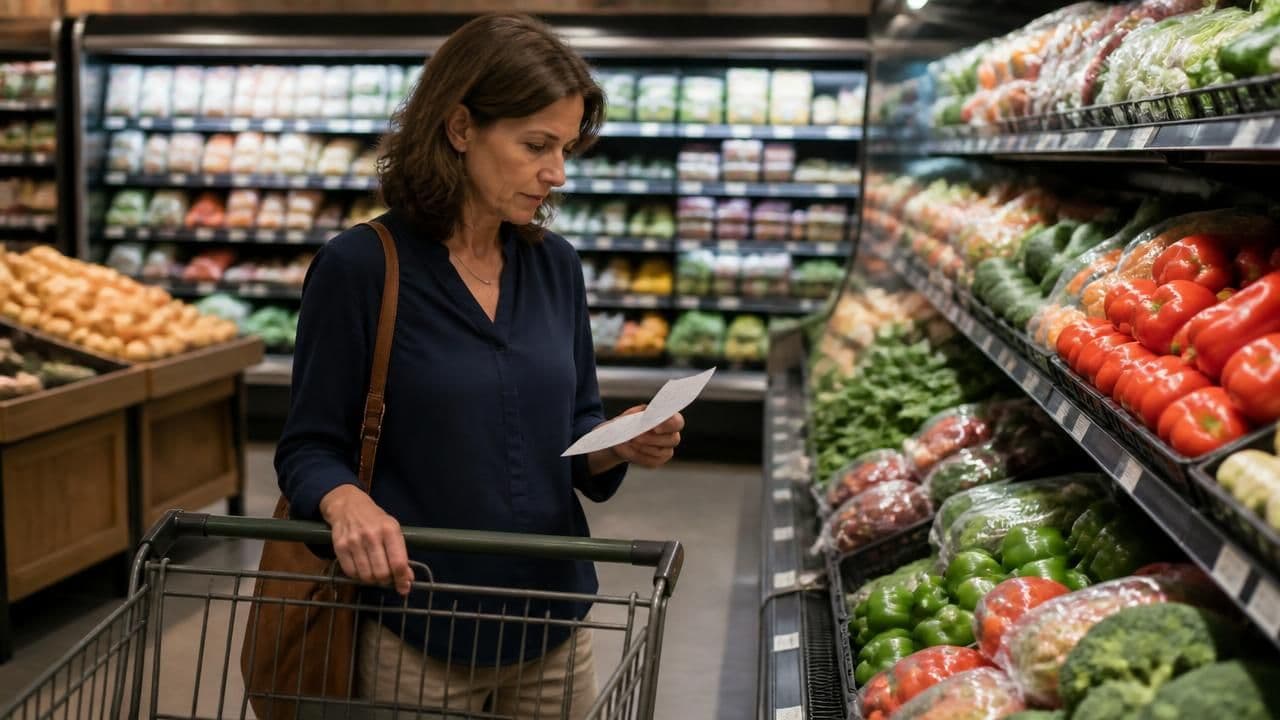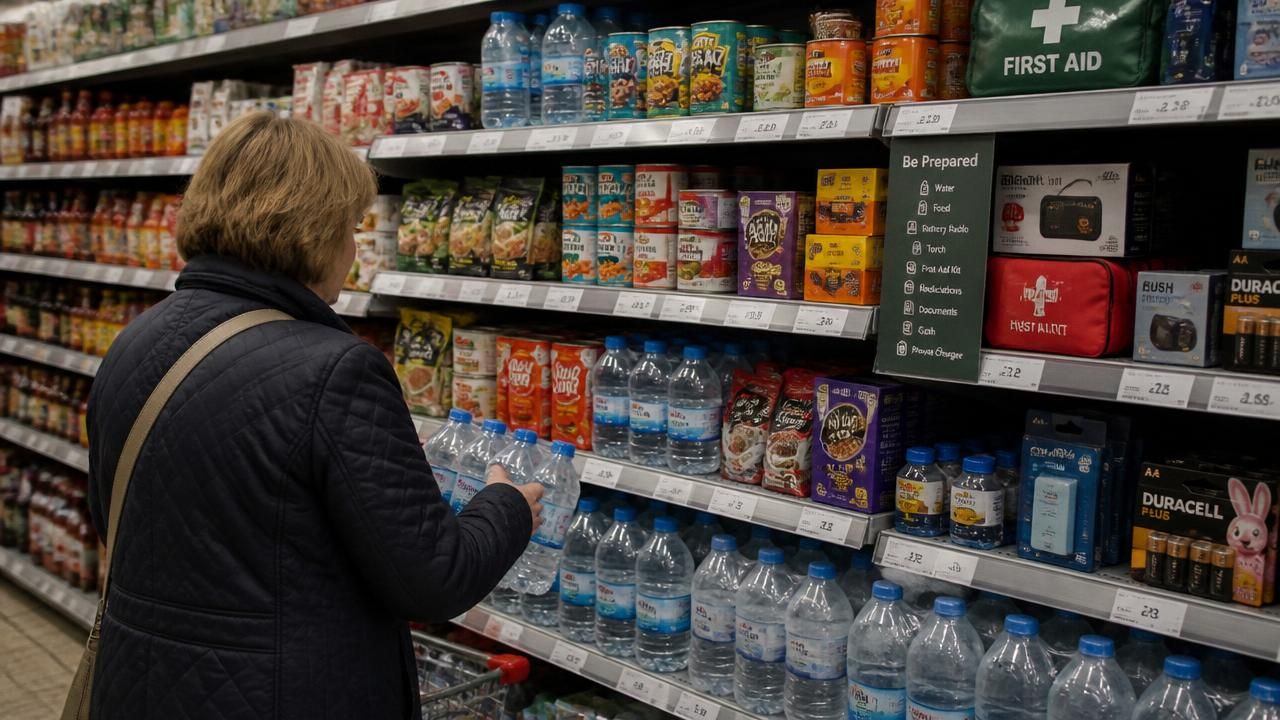
The UK government has launched a national preparedness campaign telling every household to keep stocks of water, food and other essentials on hand, in what ministers describe as a drive to build "national resilience" against the kind of everyday disruptions — power cuts, severe weather, supply chain failures — that are increasingly treated as routine rather than exceptional.
Defence Secretary Wes Streeting announced the "Be Ready" campaign, which advises the public to prepare for emergencies in the same way they might plan for a household budget or a fire drill. According to the guidance, households should assemble a kit of nine core items, widely reported to include bottled water, non-perishable food, a battery-powered or hand-crank radio, a torch with spare batteries, a first-aid kit, prescription medicines, some cash, important documents such as passports and insurance papers, and a power bank or phone charger.
From the studio to the supermarket aisle
The story travelled fast and in several directions at once. The BBC reported the announcement straight, framing it as a government message that people should be prepared for "everyday" threats, and then followed it into the arena of public argument when Streeting joined the Question Time panel alongside the Conservative former security minister Tom Tugendhat and members of the studio audience.
The Guardian, meanwhile, led on the practical instruction buried in the policy: that every Briton should stockpile water and food supplies. That framing shifted the emphasis from strategy to shopping list, turning a civil contingency document into a question about household budgets — how much water, how many days, and who pays for it.
Aggregator coverage on MSN pushed the personalisation further still, with headlines tying the advice to "every household" and to a discrete count of nine items, a format that lends itself to checklists and shares far more readily than a white paper on resilience. The convergence is instructive: the same announcement produced a security story, a consumer story and a service-journalism story, each with a different implied reader.
Why now?
The timing reflects a broader shift in how Western governments talk about civil defence. The war in Ukraine, repeated flooding and storm damage across the UK, the pandemic's disruption of supply chains and a series of high-profile infrastructure failures — from power outages to water outages — have pushed the concept of "resilience" from the margins of defence planning into the mainstream of domestic policy.
Governments in Sweden, Finland and Norway have distributed preparedness leaflets to households in recent years, and Germany has periodically debated stockpiling guidance. The UK's move positions it alongside that Nordic model, in which the state's message is less about a specific threat than about a general posture: citizens should be able to look after themselves for a period — commonly 72 hours — while services recover.
Being prepared is not about expecting disaster. It is about making sure that when something goes wrong, households and communities can cope while help arrives.
That argument is the one ministers are expected to repeat as the campaign rolls out, since the political risk lies less in the advice itself than in how it is received. Critics have already begun asking whether telling people to buy bottled water and tinned food is a substitute for investment in infrastructure, and whether households already squeezed by the cost of living can afford to lay in supplies they may never use.
A question of trust
The presence of Streeting on Question Time — and of Tugendhat on the panel opposite him — underlined how quickly a civil contingencies announcement becomes a partisan debate about competence. Defence and resilience have become competitive political ground, with each party claiming a clearer-eyed view of the risks the country faces.
There is a practical dimension too. Emergency planners have long argued that household preparedness reduces pressure on stretched services during the first hours of a crisis, when ambulances, fire crews and utility teams are triaging the most serious problems. A population that can heat a meal and light a room without help frees capacity for those who cannot.
But the campaign also raises questions the guidance does not answer: whether local authorities will be funded to support people who cannot afford a kit, how the advice will reach those in flats without storage space, and how a public already sceptical of official messaging will judge a government that simultaneously warns of threats and asks citizens to absorb part of the cost of responding to them.
What is clear is that the era in which emergency planning was conducted quietly inside Whitehall is over. The "Be Ready" campaign puts the household — its cupboard, its water bottle, its paperwork — at the centre of national security policy, and invites the public to judge the government on whether the advice feels like prudence or like an abdication.