A BBC investigation has found evidence that Sudan's paramilitary Rapid Support Forces (RSF) systematically destroyed the healthcare system in el-Fasher, the capital of North Darfur, during the militia's long siege and eventual takeover of the city. The findings, reported by BBC Africa correspondent Barbara Plett Usher and based on testimony from doctors who worked inside the city, add a detailed medical dimension to a war that has already produced what the United Nations describes as one of the world's worst humanitarian catastrophes.
The story surfaced across multiple platforms in different forms. The BBC's own reporting led with the voices of physicians describing the collapse of el-Fasher's hospitals; MSN's aggregation carried the headline "Hospitals deliberately targeted by Sudan's RSF fighters, BBC investigation finds," foregrounding the question of intent; and Yahoo News led instead with a Sudanese medical group's accusation that the paramilitary force had killed 27 people in an attack targeting civilians. The divergent framings reflect a broader split in how the Sudan war is covered — as a slow-burn atrocity documented through forensic investigation, or as a running tally of mass-casualty events.
A healthcare system dismantled
According to the BBC's findings, el-Fasher's medical infrastructure was not simply a collateral casualty of urban warfare. Doctors described a pattern in which hospitals, clinics and the staff who ran them were treated as targets — a charge that, if substantiated, would amount to a violation of international humanitarian law, which grants hospitals protected status under the Geneva Conventions.
El-Fasher was the last of Darfur's five state capitals still held by the Sudanese Armed Forces when the RSF encircled it in 2024, and the resulting siege lasted roughly eighteen months before the city fell. Throughout that period, the Saudi Hospital — for long stretches the only facility in the city still performing surgery — was repeatedly struck. Medical staff reported shelling that killed patients in their beds, and the World Health Organization has documented dozens of attacks on health facilities across Sudan since the war began, with a heavy concentration in Darfur.
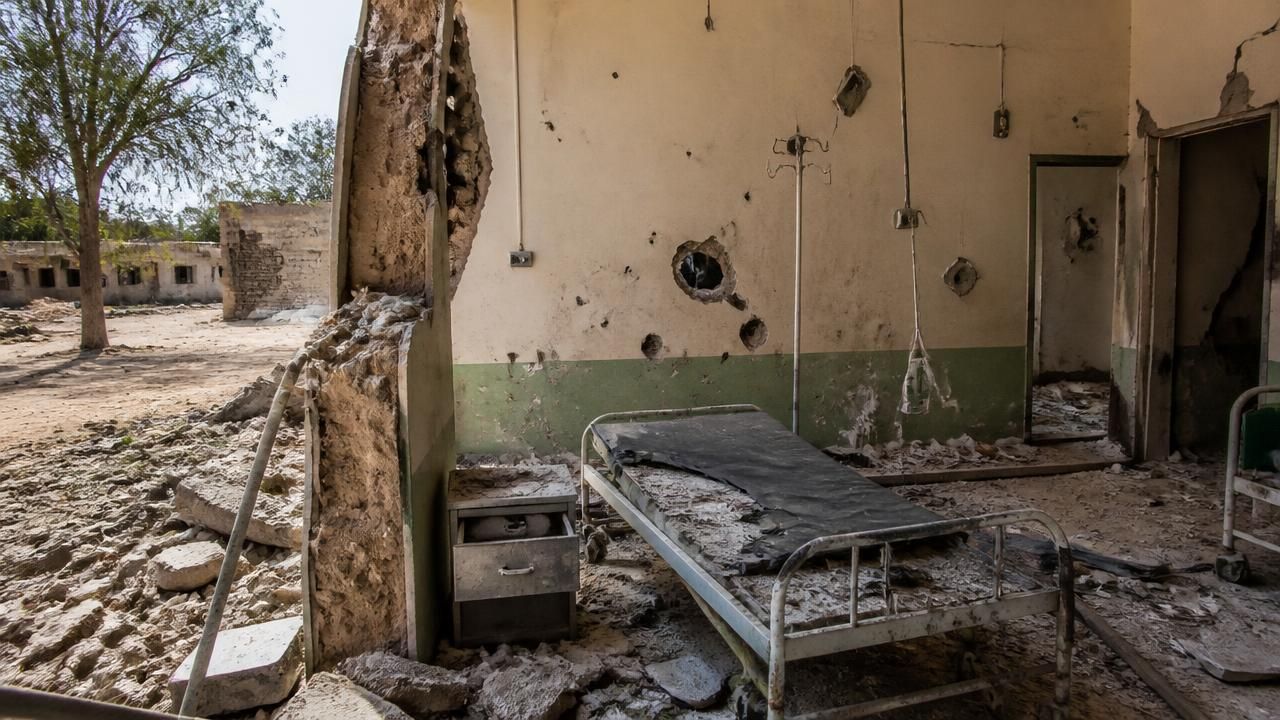
The BBC investigation found evidence that paramilitary fighters systematically destroyed el-Fasher's healthcare system during their long siege and subsequent takeover of the city — a campaign that left doctors treating the wounded in homes and courtyards once the hospitals were no longer usable.
The accounts gathered by the BBC describe a deliberate dismantling: equipment looted or destroyed, generators and oxygen supplies removed, and medical personnel threatened or forced to flee. Doctors who spoke to the broadcaster said the effect was to deny care not only to wounded civilians but to the sick and pregnant women who depend on functioning hospitals — a slower, less visible form of harm that rarely registers in casualty counts.
Competing accounts and the question of intent
The RSF has consistently denied targeting civilians or medical facilities, insisting its fighters are engaged in a legitimate armed struggle against the army and allied militias. Establishing intent is the central difficulty in documenting war crimes in Sudan: the country is largely inaccessible to independent journalists, and both warring parties have restricted humanitarian access and harassed aid workers.
The death toll of 27 cited by the Sudanese medical group — reported in the same news cycle but covering a separate attack on civilians — illustrates how the picture is assembled piecemeal. Such figures are typically compiled by medics, activists and local monitoring groups, and are widely regarded as undercounts given the impossibility of reaching many areas.
The wider context is grim. Sudan's civil war erupted in April 2023 between the army and the RSF, formerly allied paramilitaries. Tens of thousands of people have been killed and more than twelve million displaced, according to UN estimates. Famine has been confirmed in several parts of Darfur, and in early 2025 the United States formally determined that the RSF had committed genocide in the region. Human rights organisations have accused both sides of abuses, though the overwhelming weight of documentation has focused on the RSF and its Arab militia allies.
Why the investigation matters
- Accountability: Detailed documentation of attacks on hospitals builds the evidentiary record that prosecutors and UN investigators could eventually use, even if no court currently has jurisdiction over the fighters involved.
- Precedent: Attacks on healthcare have become a hallmark of modern conflict from Syria to Ukraine to Gaza; Sudan's case is among the least reported relative to its scale.
- Access: The investigation rests on first-hand medical testimony from inside a city that was sealed off for eighteen months, making it rare independent evidence of conditions during the siege.
- Implications for survivors: With el-Fasher's hospitals destroyed, survivors of the takeover face a health system that has essentially ceased to exist — at precisely the moment they need it most.
The challenge now is verification and consequence. The BBC's reporting is unlikely to trigger prosecution on its own, but it strengthens a growing body of evidence that could inform sanctions, arms-transfer restrictions, and the work of international investigators. Meanwhile, for the doctors who spoke, the act of testimony may be the only remedy available — an attempt to ensure that what happened in el-Fasher's wards is not lost among the war's other, louder disasters.