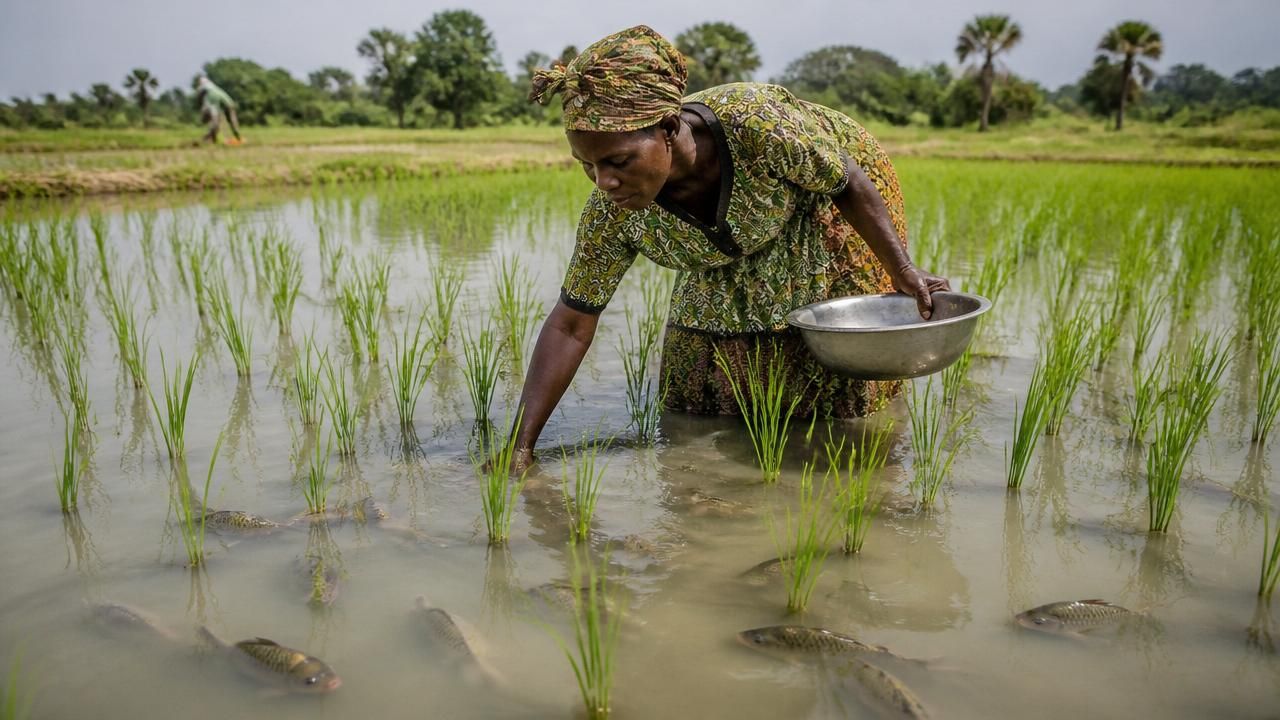
In the lush rice paddies of Senegal's Senegal River Valley, a quiet revolution is taking place. Farmers are welcoming fish into their fields—not just as an extra source of protein, but as a natural ally against a dangerous parasitic worm that has plagued the region for generations. The innovative practice, known as rice-fish farming, is gaining traction as a sustainable solution that could improve food security, nutrition, and public health.
A Dual-Purpose Solution
The concept is elegantly simple: by raising fish in flooded rice paddies, farmers can harvest both rice and fish from the same plot of land. But the benefits go beyond dual yields. The fish—typically species like tilapia—feed on snails that carry the larvae of schistosomes, parasitic worms that cause schistosomiasis, a debilitating disease affecting millions worldwide. As the fish consume the snails, they break the parasite's life cycle, reducing the risk of infection for farmers and their families who wade in the paddies.
“The fish eat the snails, and that reduces the number of snails that can transmit the disease. It’s a win-win,” said Dr. Mariama Diallo, a public health researcher at the University of Dakar, in an interview with NPR.
Schistosomiasis: A Persistent Threat
Schistosomiasis, also known as bilharzia, is caused by parasitic flatworms that enter the body through skin contact with contaminated water. The worms then live in blood vessels, causing chronic illness, anemia, and organ damage. According to the World Health Organization, over 200 million people are infected globally, with sub-Saharan Africa bearing the heaviest burden. Senegal has long struggled with the disease, particularly in rural farming communities where water contact is unavoidable.
Traditional control measures have included mass drug administration with praziquantel, but reinfection rates remain high. Environmental interventions, such as removing snail habitats, have proven costly and difficult to sustain. Rice-fish farming offers a low-cost, self-sustaining alternative that aligns with local agricultural practices.
From Pilot to Promise
The practice is being championed by organizations like the WorldFish Center and Senegal's Institute of Agricultural Research. Pilot projects in the regions of Saint-Louis and Matam have shown promising results. Farmers report not only fewer snails but also improved rice yields due to the fish's fertilization of the paddies. The fish themselves provide a nutritious food source, rich in protein and essential fatty acids.
“Before, we only had rice. Now we have rice and fish. Our children are healthier,” said Amadou Ba, a farmer in the village of Ndioum, who participated in a pilot program. His family now eats fish several times a week, a significant improvement in their diet.
Challenges and Scalability
Despite its potential, rice-fish farming faces hurdles. Farmers need training in fish husbandry and water management. The initial cost of fingerlings and pond construction can be prohibitive for smallholders. Additionally, the practice requires a reliable water supply, which may be affected by climate change and upstream dam projects.
“We need to ensure that the water flow is consistent and that the fish don't escape into natural waterways, where they could become invasive,” cautioned Dr. Fatou Diop, an ecologist at the Senegalese Institute of Agricultural Research.
Scaling up will require government support, extension services, and access to microcredit. Some experts also call for integrating rice-fish farming into national schistosomiasis control programs.
Broader Implications for Global Health
The success in Senegal has drawn attention from other schistosomiasis-endemic countries, including Mali, Burkina Faso, and Ghana. The approach represents a shift toward integrated, ecosystem-based interventions that address both health and agricultural goals. It also aligns with the United Nations Sustainable Development Goals, particularly those related to zero hunger, good health, and life on land.
“This is not just about Senegal. It's a model that could be adapted across the tropics,” said Dr. Alan Fenwick, a leading schistosomiasis researcher at Imperial College London. “We have to think beyond pills. We need to change the environment in a way that reduces transmission.”
Conclusion
As the sun sets over the emerald rice paddies of Senegal, the fish continue their silent work, nibbling at snails and transforming the landscape of public health. While challenges remain, the promise of rice-fish farming offers a glimpse of a future where agriculture and medicine work hand in hand to create healthier communities.