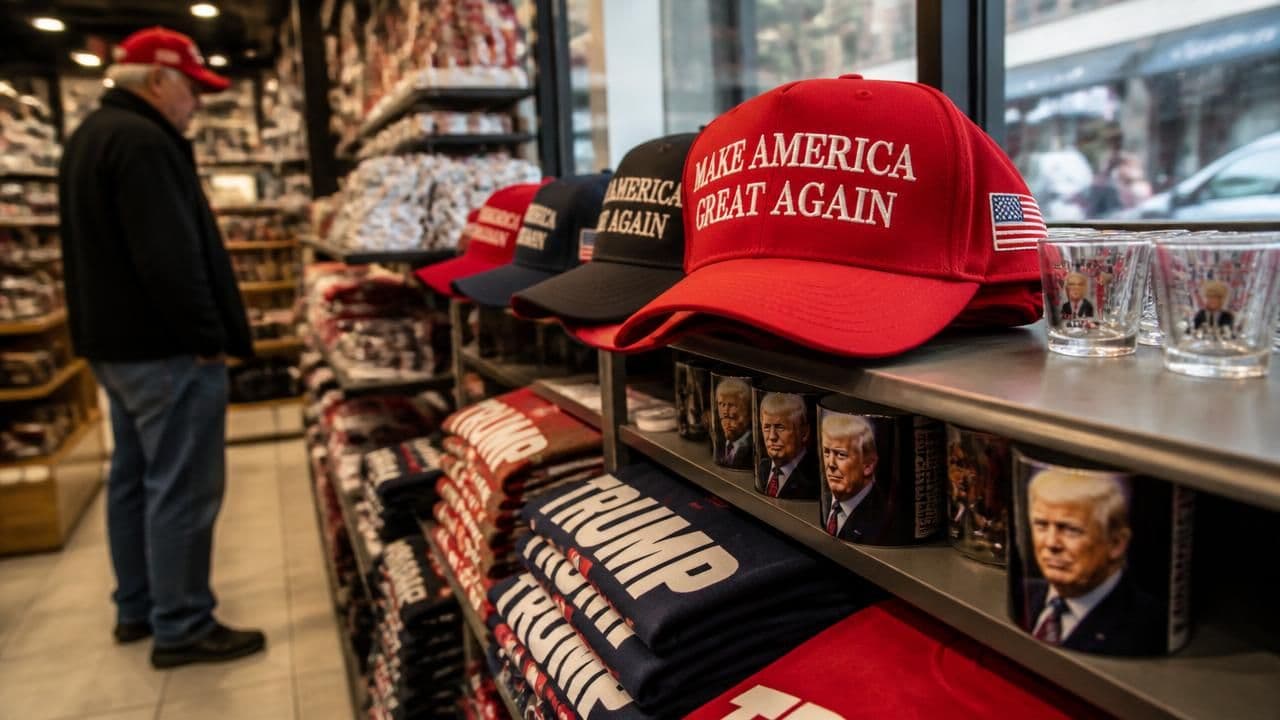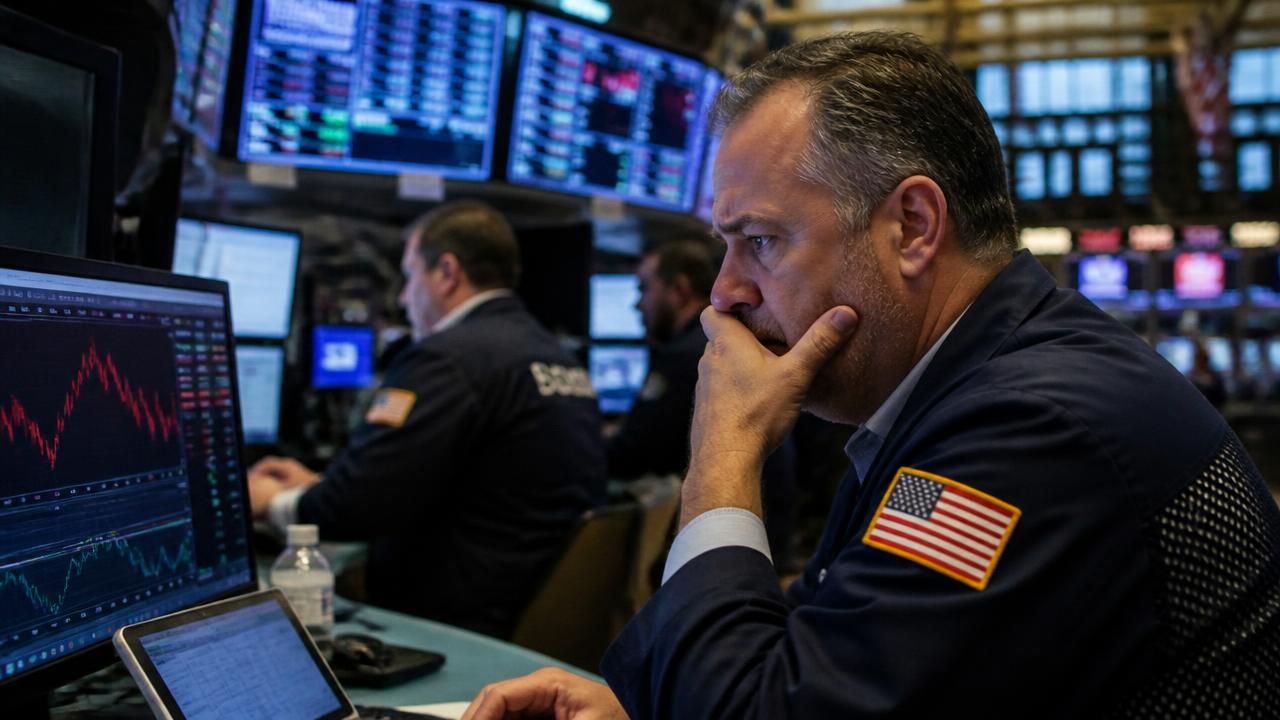
With less than a month to go before Americans cast ballots in the 2026 midterm elections, Wall Street has entered one of its most politically charged stretches in years — and for once the anxiety is not confined to taxes, deficits and regulation. Investors are simultaneously weighing a likely Democratic takeover of the House of Representatives, an unresolved fight for the Senate, a sharp rotation out of technology stocks, and a grassroots backlash against the data centers that underpin the artificial intelligence boom.
The result is a market that is trying to price political risk and earnings risk at the same time — two variables that have become unusually entangled. As one widely circulated market commentary put it:
The midterm result is uncertain, but what comes after is even more so.
A Market Pricing In Political Risk
Bloomberg Markets reported that Wall Street is bracing for stocks to fall if Democrats regain control of both chambers of Congress this November. Voters appear likely to hand the party a majority in at least the House, while the Senate outlook is far less certain — though Democratic candidates have held a polling edge in several key races.
The mechanism matters more than the headline. Control of even one chamber gives a party committee gavities — the power to propose legislation, set agendas and, crucially, hold hearings. For technology and energy companies, that means subpoena power, scrutiny of AI infrastructure buildouts, and a megaphone for complaints about electricity prices and land use.
Yet not everyone on the sell side reads a Democratic wave as bearish. A competing strand of commentary — reflected in MSN's framing of the midterms as a potential strong tailwind for equities — argues that markets historically rally after midterm votes regardless of outcome, simply because the uncertainty that suppresses valuations is removed. The historical pattern: equities have tended to bottom in the weeks before a midterm and climb in the twelve months that follow.
The AI Election
What makes 2026 different is that the defining local issue in many districts is no longer immigration or health care alone — it is data centers. CNBC framed the cycle bluntly as the AI election, with Wall Street bracing for midterms amid mounting local opposition to the enormous power-hungry facilities being built across the country. Voter guides circulating in battleground states now list data centers alongside ICE and overseas conflicts as defining issues for candidates.
The stakes are direct. Yahoo Finance asked how a Democratic sweep could turn the current tech selloff into a full-blown tech crash — a scenario in which new committee scrutiny, permitting delays, rate-case interventions and local moratoria compound an already jittery earnings picture.
Those jitters are visible in the tape. On October 14, the S&P 500 fell on hot inflation data. A day later, the Dow edged higher as the tech sell-off pivoted, and Wall Street opened higher after results from SpaceX and Super Micro rekindled enthusiasm for the AI trade. The swings suggest a market that is not abandoning AI but repricing it — repeatedly.
Three Bubbles, One Faith
Calcalistech captured the underlying tension, arguing that three separate AI bubbles are now testing Wall Street's faith in the boom: a capex bubble in infrastructure, a valuation bubble in equities, and an expectations bubble around near-term monetization. Each is vulnerable to a different shock — and politics is one of them.
The energy complex is a reminder that the cycle is not purely a tech story. Halliburton's third-quarter 2026 sales topped estimates, underscoring resilient hydrocarbon demand even as AI's power needs reshape the electricity landscape.
Polls, Odds and a Betting Boom
Political prediction markets have become a story in themselves. Inside the booming market for US midterm election bets, traders are now pricing seat-by-seat outcomes with a granularity once reserved for earnings. Forecasters broadly converge on a Democratic House and a Senate that remains genuinely uncertain, with several races inside the margin of error.
Democrats, meanwhile, have expanded the map. Reports of a potential blue tsunami describe the party contesting deep-red states that were not expected to be competitive, forcing Republicans to spend defensively. In Texas, the NBC News election hub tracks key races, candidates and past results — a state that has become a test of whether the expansion is real or merely rhetorical.
What to Buy, What to Avoid
Seeking Alpha's midterm playbook and Lansing Street Advisors' third-quarter letter both reflect the same institutional posture: position for policy dispersion rather than a single national outcome. Defense, infrastructure and grid-adjacent utilities are commonly cited as beneficiaries of either result. Solar, storage and transmission stand to gain from Democratic gains; deregulatory names and fossil-fuel producers from Republican holds. The most exposed: highly valued AI infrastructure companies whose valuations embed uninterrupted permitting and cheap power.
What Comes After
Strategists point to a familiar sequence. Political advertising — the New York Times catalogued the cringiest and craftiest spots of the cycle — gives way to post-election clarity. Once the outcome is known, the market typically pivots back to earnings and the Federal Reserve. The American Bazaar's question, whether Wall Street's rally survives the midterms, may be answered less by who wins than by how quickly investors can stop trading the news and start trading the fundamentals.