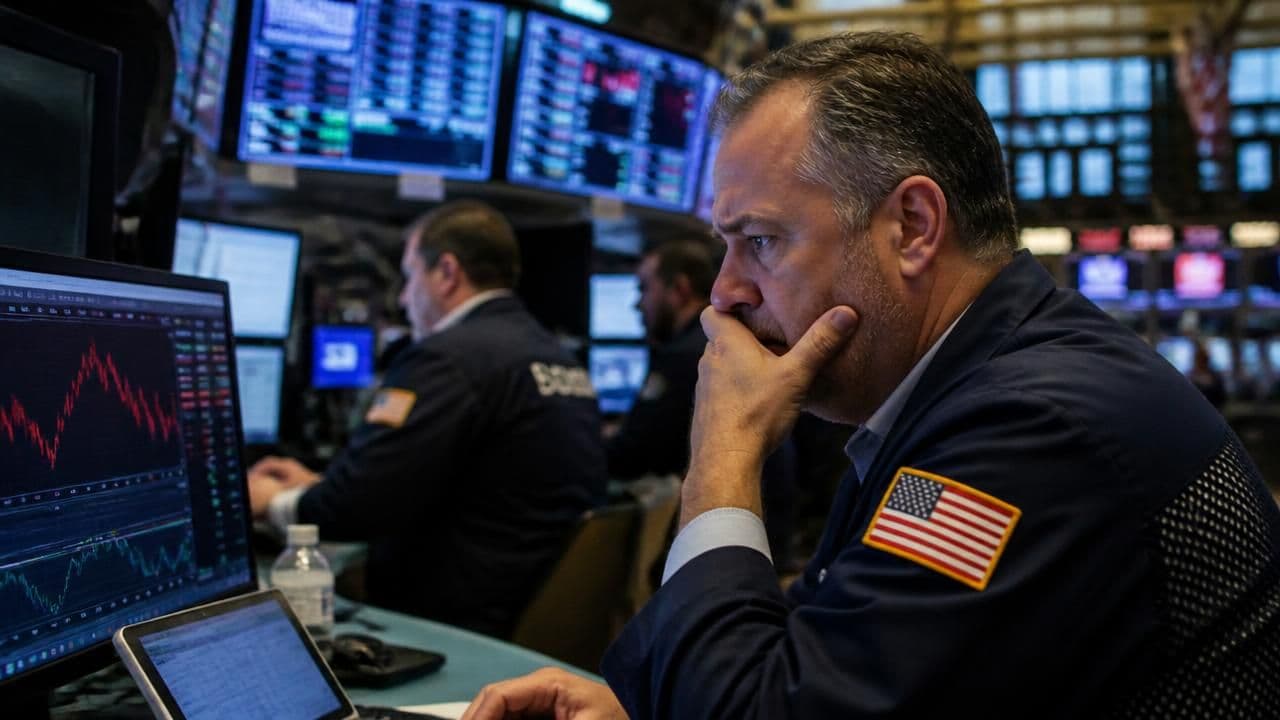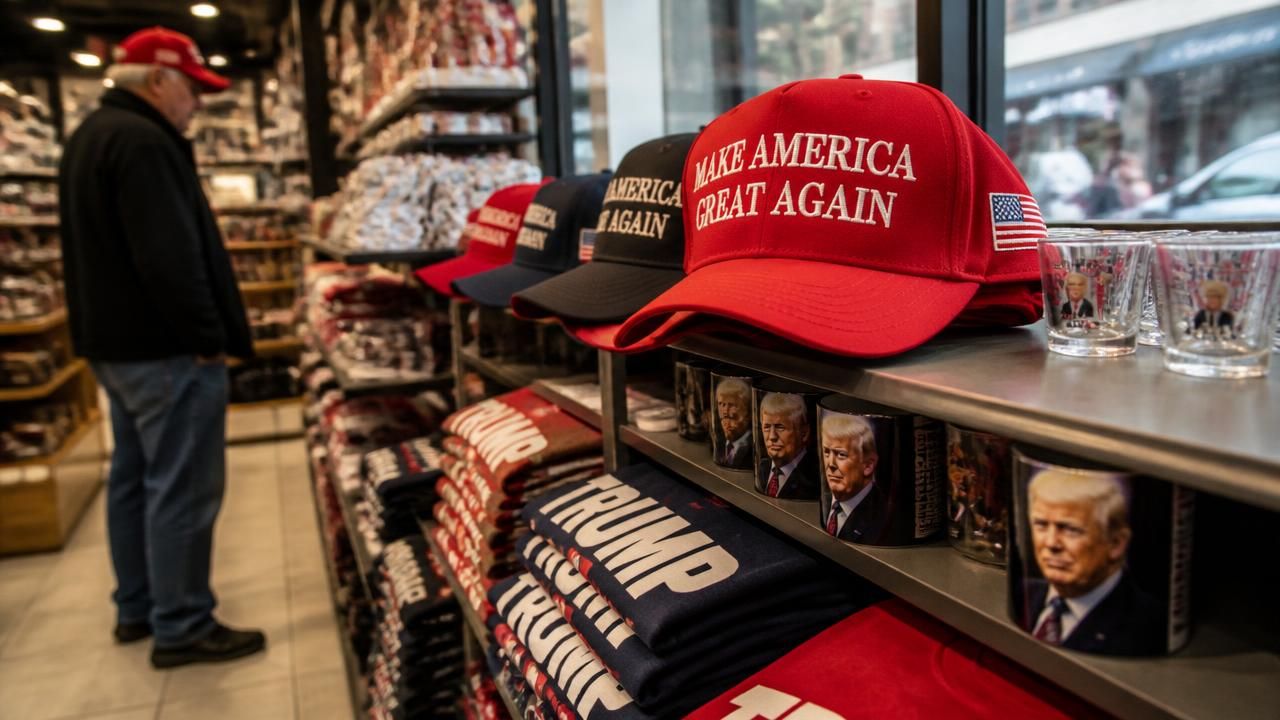
The merchandise economy that has shadowed Donald Trump's political career — the $40 "Make America Great Again" caps, the slogan T-shirts, the commemorative coins and coffee mugs — is showing unmistakable signs of fatigue.
At least four Trump-branded merchandise stores have closed this year, according to reporting by NPR, and owners at surviving shops describe a sharp drop-off in the volume that once defined the business. One store that was taking in roughly $15,000 a day now averages about $1,500, according to accounts reported by MSN — a decline of some 90 percent.
The story has been covered from markedly different angles. NPR and MSN frame it primarily as a supply-side problem: a saturated, post-peak fan market with too many stores and too little new material to sell. CNN, by contrast, frames it through the lens of demand-side backlash, reporting that shoppers at a "Trump Town" merchandise store voiced frustration over the president's policies as sales slipped.
The end of the campaign boom
Political merchandise has long been a cyclical business, tied tightly to campaigns rather than to governing. Presidential swag historically peaks during election years, when rallies, primaries and battleground-state travel generate fresh demand for identity-signaling goods. Once a president is inaugurated — and especially once he is in a final term — the built-in marketing engine of a campaign largely disappears.
Store owners interviewed by NPR described exactly that dynamic. With Trump in his final term and no successor campaign to stoke enthusiasm, they said, there simply isn't as much to fire up his consumer fan base. Sales have softened accordingly.
"He has peaked," one store owner told NPR — a blunt assessment that captures the commercial logic behind the closures.
That remark is less a political judgment than a retail one. Merchants peddle novelty and tribal identity, and both depend on a sense of forward momentum. When the next rally, the next election and the next new design stop arriving, the register slows.
From $15,000 to $1,500 a day
The numbers reported by MSN illustrate how steep the drop has been for individual operators. A store averaging $15,000 in daily receipts has settled into a $1,500-a-day rhythm — a level that, for many brick-and-mortar retailers, barely covers rent, payroll and inventory in a mall or strip-center location.
Merchandise businesses face several compounding pressures once a political cycle turns:
- Inventory risk. Slogan goods are dated the moment a campaign ends; unsold stock cannot easily be repriced or returned.
- Fixed costs. Storefront leases and staff remain constant even as foot traffic evaporates.
- Competition from online sellers. Unofficial vendors and print-on-demand platforms undercut physical stores on price and speed.
- Novelty decay. The same hat, flag and T-shirt lose their urgency after years on the market.
The result, owners say, is a shakeout — the weaker and more leveraged shops close first, while better-capitalized or higher-traffic locations hang on.
Frustration at 'Trump Town'
CNN's reporting adds a second, less discussed variable: customer sentiment. At a store branded "Trump Town," shoppers expressed frustration over the president's policies, suggesting that at least some of the sales decline is not merely cyclical exhaustion but active disaffection.
That framing matters because it points to a different diagnosis. NPR's sources describe a market that has simply run its course — peak reached, demand normalized. CNN's sources suggest something more corrosive: supporters or former supporters registering discontent through their wallets.
"He has peaked," says one owner; CNN's shoppers say something else — that the merchandise no longer feels like a statement they want to make.
Both explanations can be true at once. Political merch is a discretionary purchase that sits at the intersection of identity and enthusiasm. It falls when novelty fades, and it falls again when the political brand itself takes on friction.
What the swag slump signals
Analysts of political consumerism note that merchandise sales have never been a reliable proxy for electoral support — the correlation between bumper stickers and ballots is loose at best. But as a barometer of grassroots energy and small-business risk-taking, the trend is instructive.
For the entrepreneurs who built storefronts around a single political brand, the downturn is a cautionary tale about concentration risk. Several owners who spoke to reporters described having invested savings and signed multi-year leases during the boom years of 2016 to 2024, when demand seemed inexhaustible.
The closures also ripple outward: landlords in strip malls and tourist districts lose tenants, and the informal network of printers, embroiderers and wholesalers that supplies the trade loses orders.
For now, the surviving shops are adapting — narrowing inventory, pivoting to general patriotic goods, or leaning on online sales. But the message from the register is consistent across the coverage: the merchandise boom that once produced $15,000 days has cooled, and the stores that sold it are counting the cost.