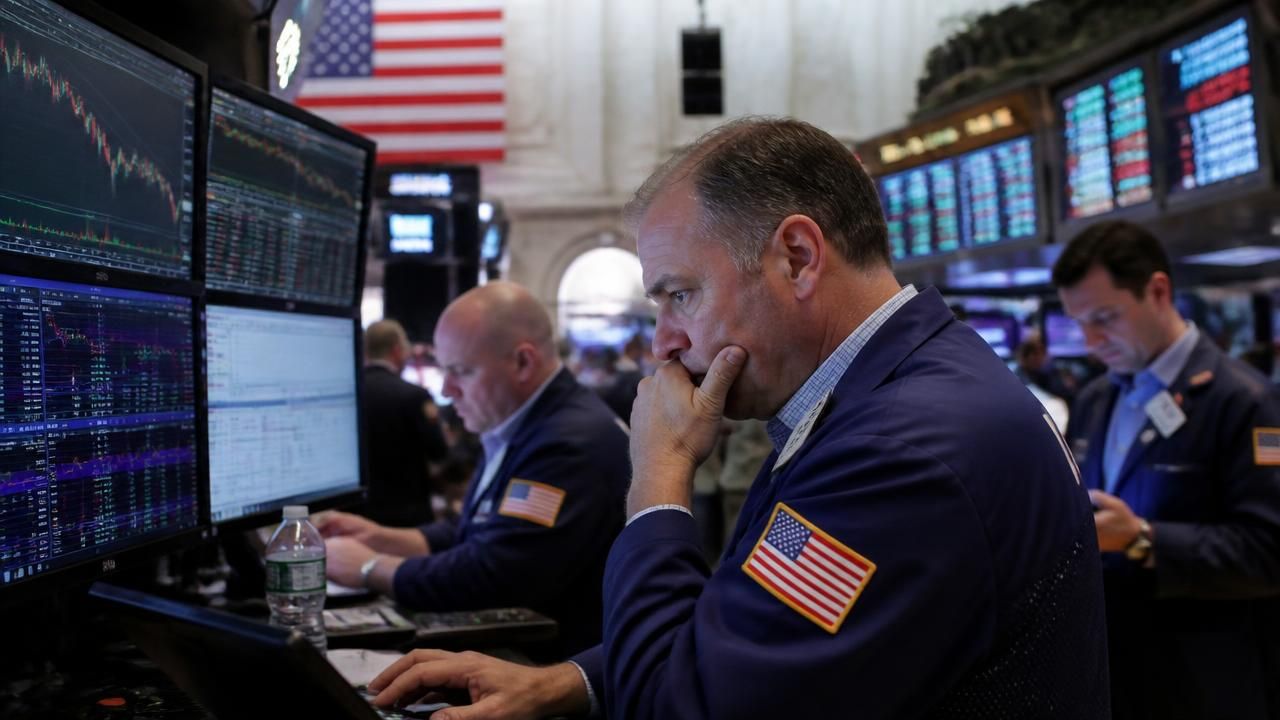
Wall Street entered a new trading session on uncertain footing, with the artificial intelligence trade that powered much of the recent bull run showing fresh signs of fatigue. Nasdaq 100 futures fell as much as 1.8% in early dealing, according to Bloomberg Markets, as investors rotated toward the safety of Treasuries — a defensive posture that stood in sharp contrast to several other headlines circulating through the session.
Indeed, the story that reached investors depended heavily on when and where they looked. One aggregator headline blared that Nasdaq futures had gained 145 points, another reported that Wall Street had opened higher as AI stocks advanced and oil slid, while a third declared that a "global AI selloff" was intensifying. The divergence was not a contradiction so much as a snapshot of a whipsawing tape — a market oscillating between dip-buying and de-risking, with each headline capturing a different few hours of the same turbulent day.
A rally searching for a floor
The core of the story is the AI trade itself. After a powerful rebound that lifted megacap technology shares back toward record territory, momentum has stalled. The proximate cause, per Bloomberg, was the latest round of earnings from the companies spending most aggressively on AI infrastructure — the hyperscalers and chipmakers whose capital expenditure budgets have become the sector's double-edged sword.
"The rebound in the artificial intelligence trade is faltering after earnings from some of the sector's biggest spenders failed to sustain the positive mood, with investors turning to Treasuries for safety."
That framing captures a subtle but important shift in market psychology. For much of the past two years, heavy AI spending was read as a signal of confidence — a down payment on future earnings power. Increasingly, though, investors are asking when that spending converts into demonstrable revenue and margin expansion. When quarterly results deliver massive capex guidance without an equally dramatic payoff, the market's patience thins.
The pattern is familiar from previous technology cycles. The buildout of cloud infrastructure in the mid-2010s produced similar anxiety before yielding years of outsized returns; the dot-com era produced the opposite lesson. Today's debate hinges on whether AI monetization will follow the cloud trajectory or arrive later than the bull case assumes.
Treasuries as the tell
Perhaps the most telling detail is where money went. Rather than rotating into cyclicals or small caps — the classic "risk-on within risk" move — investors sought the safety of government debt. Demand for Treasuries alongside falling equity futures signals genuine hedging rather than simple sector rotation, a distinction portfolio managers watch closely as a gauge of conviction.
The safe-haven bid also reflects the second force pressing on equities: geopolitics. Reports of heightened tensions involving Iran, alongside firmer oil prices in some sessions, weighed on sentiment. Higher crude acts as a tax on consumers and a threat to the disinflation narrative that underpins hopes for central bank easing — a link traders rarely ignore for long.
The oil picture, though, was itself inconsistent across the day. One outlet reported crude sliding as equities opened higher; others cited higher oil as a headwind. Both can be true within a single session's swings, but the inconsistency underscores how headline-driven the tape has become.
What the bulls are watching
- Dip-buying discipline: Each intraday bounce — including the 145-point futures gain cited by one outlet — has been met with renewed selling, a sign that buyers are not yet confident the correction is complete.
- Earnings follow-through: Upcoming guidance from major AI spenders will determine whether the current pullback is a pause or the start of a deeper repricing.
- Breadth: A rally carried by a handful of megacaps remains vulnerable. Any broadening beyond AI leaders would be a constructive signal.
- Macro backdrop: Treasury yields, oil prices and geopolitical headlines remain the dominant swing factors for near-term direction.
The bigger picture
The conflicting coverage of this session is instructive in itself. Financial news consumers today receive headlines generated across global trading hours, each describing a moment rather than a trend. The honest summary of this week's action is not that stocks fell or rose, but that conviction has eroded — the market is no longer willing to underwrite AI spending on faith alone.
None of this amounts to a verdict on the technology. Capital continues to flow into data centers, chips and models at an extraordinary pace, and few strategists argue the long-term promise has diminished. What has changed is the price of patience: investors are demanding evidence, and in the absence of it, they are quietly moving to the sidelines — one Treasury purchase at a time.