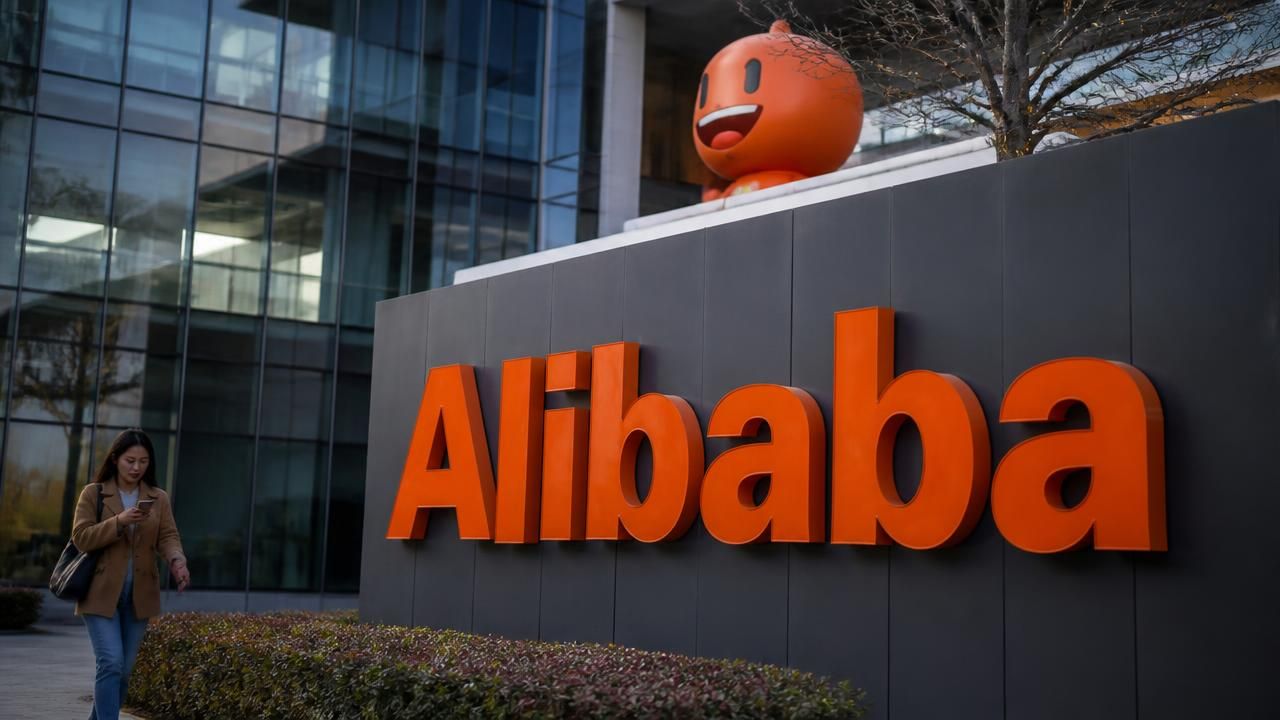
Alibaba Group Holding Ltd. became the epicenter of a broad selloff across Chinese and Hong Kong equity markets this week, after the e-commerce and cloud giant launched a multi-billion-dollar share placement in Hong Kong to bankroll its artificial intelligence ambitions — a move that coincided with fresh regulatory pressure from Beijing on the country's online retail sector. The combination proved toxic for sentiment, sending Alibaba's shares down by their steepest margin in two months and pulling the wider Hang Seng Tech complex lower.
The Deal: A $10 Billion Bet on AI, Priced at a Discount
According to Reuters, Alibaba priced the offering at roughly $10.2 billion, selling new Hong Kong-listed shares at a sharp discount to the prevailing market price — a structure that maximizes the certainty of raising capital but immediately dilutes and re-prices existing shareholders. Yahoo Finance framed the transaction around its purpose rather than its mechanics, headlining the deal as a $10 billion Hong Kong share placement explicitly designed to fund AI spending. The slight variance in the headline figures reflects how the deal is being counted — gross proceeds versus net of fees and expenses — rather than any disagreement over the scale of the raise.
The placement was struck at a steep discount to the last close, the kind of pricing that guarantees a filled book but instantly resets the market's reference point for the stock — and, by extension, for every comparable Chinese tech name.
The capital raise lands at an awkward moment for Alibaba, which has been forced into a costly arms race in cloud computing and generative AI against domestic rivals and well-funded startups alike. Data-center buildouts, advanced chip procurement and model development are capital-intensive endeavors with long payback periods. Investors have broadly endorsed the strategic logic of that spending — Chinese policymakers have made AI a national priority — but they have grown increasingly restive about the pace of expenditure relative to visible revenue returns, particularly in a segment where pricing competition is fierce.
The Regulatory Overhang
Bloomberg Markets placed the emphasis elsewhere: on regulation. Chinese authorities summoned e-commerce operators and called for tighter product-quality standards, a signal that Beijing's supervisory gaze on the platform economy remains active rather than retired. For a sector that endured a multi-year crackdown beginning in 2020 — which erased hundreds of billions of dollars in market value and culminated in a record antitrust fine against Alibaba — any summons or directive carries outsized psychological weight. The timing, arriving in the same news cycle as a dilutive equity raise, amplified the negative read-through on both fronts.
The divergence in framing across outlets is itself instructive. Bloomberg treated the story as a regulatory event that happened to hit a stock; Reuters treated it as a capital-markets event whose discount did the damage; Yahoo Finance treated it as a strategic-financing story about AI investment; and MSN treated it as a market-contagion story, in which an Alibaba rout dragged Chinese and Hong Kong indices lower. Each lens captures a genuine part of the whole: the shares fell because a discounted, dilutive sale met a reawakened regulatory signal in a market already anxious about the return profile of AI capex.
Contagion Across the Complex
Alibaba's weight in the Hang Seng and in the broader China internet index means its moves are rarely contained. The stock's slide dragged Hong Kong's tech benchmark and mainland proxies lower, with the weakness spilling into peers perceived to face the same pressures: heavy AI capital expenditure, exposure to consumer e-commerce margins, and susceptibility to regulatory instruction.
- Dilution risk: A discounted placement immediately lowers the per-share earnings math, regardless of how well the capital is ultimately deployed.
- Spending skepticism: Markets are increasingly discriminating between AI investment that shows near-term revenue and investment that does not.
- Regulatory re-rating: The summons over product quality reminded investors that policy risk in China's platform sector has not been fully priced out.
- Index mechanics: Alibaba's weighting means institutional flows amplify moves in both directions, magnifying single-stock news into benchmark-level events.
Why It Matters Beyond One Company
The episode tests a thesis that has driven much of the 2024–2025 re-rating of Chinese tech: that the regulatory cycle has turned, that companies are free to invest aggressively in AI, and that investors will reward growth capital deployed at scale. Alibaba is effectively asking shareholders to fund that thesis with fresh equity. If the stock stabilizes after the placement digests, it will signal that conviction in China's AI buildout remains intact. If the weakness persists, it will suggest that the market's tolerance for open-ended spending — and for regulatory surprise — is thinner than the rally implied.
For now, the picture is one of a company making a deliberate, expensive bet on its own AI future, and a market that has not yet decided whether to applaud the ambition or charge for the dilution and the risk. The next several sessions — as the placement's new shares begin trading and as investors parse what, precisely, the Beijing summons portends — will determine which framing wins.