Barclays' top research executive used a high-profile appearance at the bank's Asia Forum this week to deliver a message that was simultaneously reassuring and cautionary: the global expansion is still intact, the AI trade still has room to run — but investors have grown too comfortable about the risks in between.
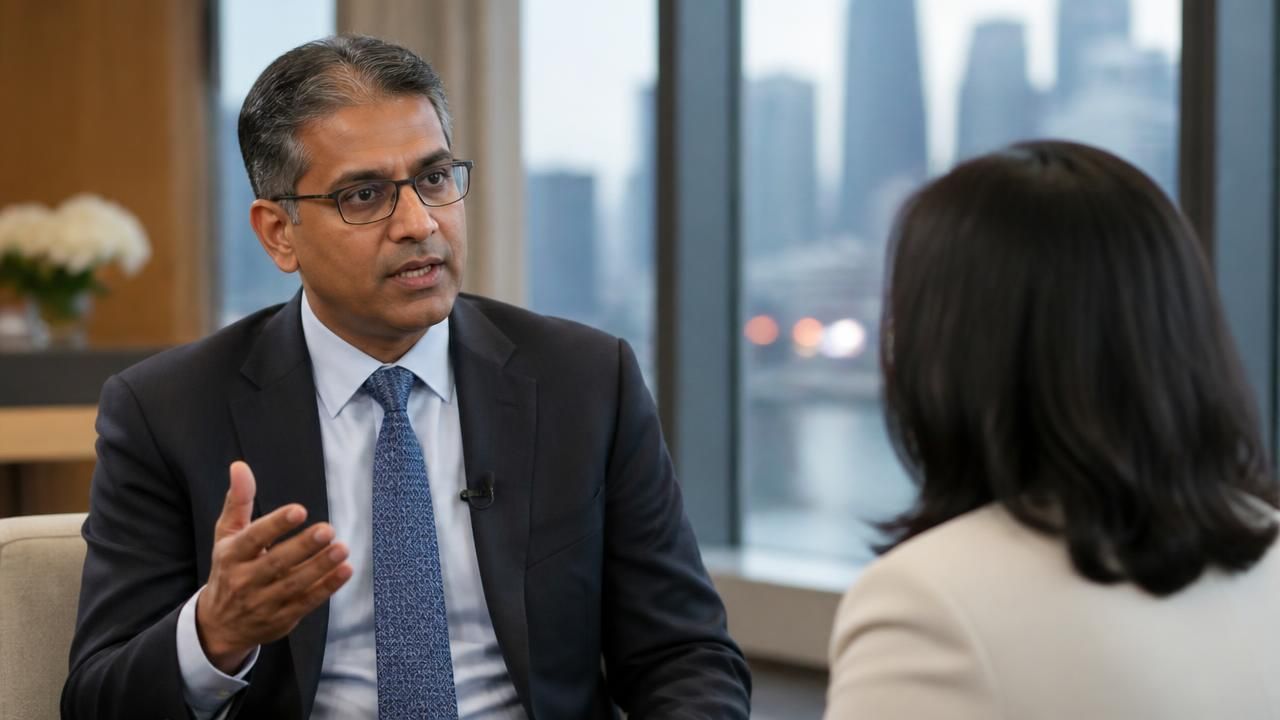
Ajay Rajadhyaksha, Global Chairman of Research at Barclays, sat down with Bloomberg's Haslinda Amin on the sidelines of the Barclays Asia Forum for an extended conversation on the global market outlook, touching on everything from equity positioning and the next leg of the artificial-intelligence trade to the market's read on the conflict with Iran. The interview, carried on Bloomberg's "The Asia Trade," was quickly picked up across financial media, with Yahoo Finance, CNBC and MSN each extracting a different headline from the same wide-ranging set of remarks.
A Bullish Base Case, With a Warning Attached
The through-line of Rajadhyaksha's argument, as reported across the outlets, is that the macro backdrop remains supportive. Barclays' research house sees the global expansion continuing rather than rolling over — a view that puts it at odds with the more defensive camp on Wall Street, which has spent months warning that tighter financial conditions and stretched valuations must eventually bite.
The bank's message: the expansion is intact and equities can keep grinding higher, but complacency is now itself a risk factor rather than a source of comfort.
That framing — constructive on growth, anxious about positioning — is a familiar one from Barclays, which has consistently argued that the biggest danger to portfolios is not an imminent recession but an overcrowded consensus. When investors agree too strongly on a benign outcome, the cost of being wrong rises sharply, and the market's buffer against surprise shrinks.
The Next Leg of the AI Trade
Perhaps the most closely read element of the interview was Rajadhyaksha's suggestion, reported by Yahoo Finance, that the next phase of the AI trade may belong to a market that has so far been on the periphery of the boom. Investors, in his framing, have spent the first stage of the cycle concentrated on the largest US technology names — the chip designers, cloud platforms and hyperscalers that underpin the build-out.
The implication is that as the AI capital-expenditure cycle matures, leadership could broaden geographically, rewarding markets with cheaper valuations, supply-chain leverage or fast-adopting enterprise bases. Asia — where the Barclays forum was convened — is the natural candidate, given its role in semiconductor fabrication, components and data-center infrastructure. That's a meaningful shift in the narrative: for two years the AI trade has been framed as an American story with global spillovers, rather than a genuinely global story.
What Markets May Be Underestimating
Speaking to CNBC, Rajadhyaksha focused on a different angle altogether: what investors have underestimated amid the war with Iran. Details of the conversation were limited in the network's published clip, but the framing points to a persistent complaint among strategists — that markets have treated the conflict as a contained, headline-driven event rather than a structural risk to energy supply, shipping routes and inflation expectations.
That matters because the two theses are not independent. A sustained rise in crude prices would feed directly into the inflation path that determines how far central banks can ease, which in turn governs the discount rate applied to long-duration growth stocks — precisely the AI-linked names carrying the index.
Big Tech's Earnings Engine
Yet equity optimism has proved remarkably durable, and MSN's coverage highlighted why: Big Tech expansion continues to underwrite the bull case. Hyperscaler capital spending plans remain the single largest source of visible earnings growth in global equities, and as long as those budgets expand, the AI infrastructure supply chain — chips, networking, power, cooling, real estate — keeps its revenue visibility.
The tension, as Barclays frames it, is that this same expansion is what keeps valuations elevated and complacency cheap. Investors are effectively being paid to stay optimistic, right up until the moment the spending cycle decelerates.
How the Street Is Framing It
- Bloomberg treated the appearance as a broad macro outlook interview, emphasizing the global investing lens.
- Yahoo Finance zeroed in on the contrarian call — that the next chapter of AI leadership may lie outside the US mega-cap complex.
- CNBC led with geopolitics, framing the conversation around the Iran conflict and market mispricing.
- MSN highlighted the corporate earnings bedrock, with Big Tech expansion keeping the equity bull case alive.
That fragmentation is itself instructive: the same set of remarks produced four distinct headlines, reflecting how investors are currently filtering information through whatever risk dominates their own book.
Implications and What to Watch
For allocators, the practical takeaways are threefold. First, stay invested but diversify the AI exposure — concentration in the largest US names is the crowded trade Barclays is warning about. Second, treat energy and geopolitics as a live variable rather than a background noise. Third, watch hyperscaler capex guidance closely; it is now the load-bearing wall of the global equity rally.
Rajadhyaksha's forum appearance ultimately amounts to a nuanced call: neither the recession nor the melt-up is the base case, but the market's serene confidence in that middle path is exactly what makes it fragile.