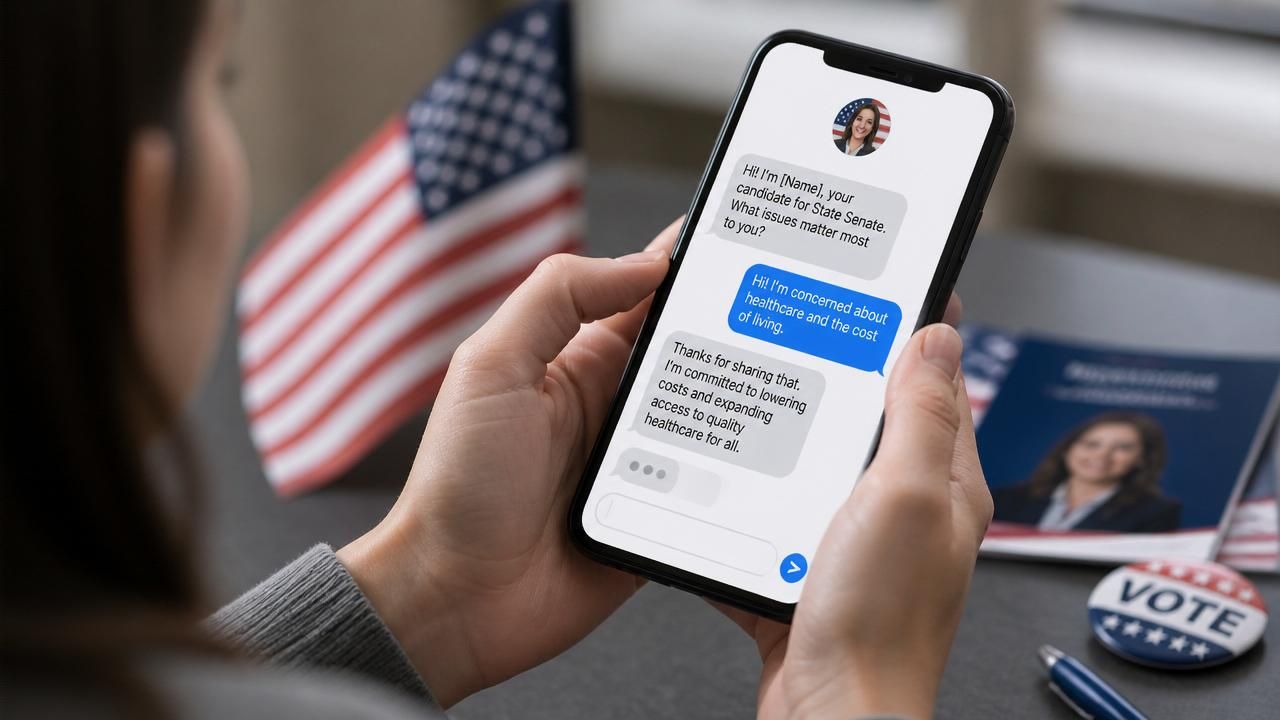
As the 2024 election cycle heats up, political campaigns are increasingly turning to artificial intelligence to personalize voter outreach at scale. AI-generated text messages, designed to mimic the tone and style of candidates, are becoming a new frontier in political communication. However, this innovation is raising significant ethical and legal questions about transparency, consent, and the potential for manipulation.
The Rise of AI Political Texting
According to reports from NPR and KPCW, political campaigns are deploying AI-powered chatbots that can engage voters in one-on-one text conversations. These bots are trained on candidate speeches, interviews, and social media posts to replicate their voice and policy positions. The goal is to create a sense of personal connection with voters, even when human staffers are unavailable.
“It’s like having a conversation with the candidate themselves, but it’s actually a bot,” said a campaign strategist who spoke on condition of anonymity. “It allows us to scale our outreach and respond to thousands of voters simultaneously.”
“Taught to sound like a candidate, bots are engaging voters with personalized text messages making AI-generated texting conversations the latest tool political campaigns are using to connect.” — NPR
Ethical Concerns and Legal Gray Areas
The use of AI in political messaging has drawn criticism from ethics watchdogs and legal experts. One major concern is the lack of disclosure: voters may not realize they are interacting with an AI rather than a human. This raises questions about informed consent and the authenticity of political discourse.
“Voters have a right to know who they are talking to,” said a representative from the Campaign Legal Center. “If a message is generated by AI, that should be clearly disclosed. Otherwise, it’s a form of deception.”
The Chicago Tribune reported that a fundraiser for Illinois GOP gubernatorial candidate Darren Bailey was delayed after the newspaper raised questions about potential violations of state ethics laws. Similarly, NBC News uncovered that officials in the Ron DeSantis administration were soliciting campaign cash from lobbyists, blurring the lines between government and campaign activities.
In another incident, a suicide hotline was found to be sharing user data with a for-profit spinoff, as reported by Politico. While not directly related to political texting, the case highlights broader concerns about data privacy and the ethical use of personal information in automated systems.
Differing Perspectives on Regulation
Proponents of AI political messaging argue that it can increase voter engagement and make campaigns more efficient. They point out that similar technologies are already used in customer service and healthcare, and that political campaigns should not be left behind.
“AI can help campaigns reach voters who might otherwise be ignored,” said a technology policy analyst. “It can tailor messages to individual concerns, potentially increasing turnout and political participation.”
Critics, however, warn that AI-generated messages could be used to spread misinformation or manipulate vulnerable populations. The lack of regulation in this area is a growing concern, with some calling for the Federal Election Commission to update its rules on campaign communication.
“We need clear guidelines on what is and isn’t allowed,” said a law professor specializing in election law. “Without them, we risk eroding trust in the political process.”
Historical Context and Future Implications
The use of technology in political campaigns is not new. From radio addresses to television ads and social media, each innovation has brought new opportunities and challenges. AI texting represents the latest evolution, but its implications are still unfolding.
In a related development, a Muslim educator opened the first Arab Holocaust museum in Nazareth, as reported by Wikinews. While not directly connected to AI, the story underscores the diverse ways in which technology and ethics intersect in the public sphere.
Meanwhile, an artist’s installation featuring “I.C.E. pops” on a Texas campus was shut down after just days, raising questions about free speech and institutional censorship. The incident, covered by Kansas Public Radio, highlights the ongoing tensions around political expression in public spaces.
Conclusion
As AI continues to permeate every aspect of our lives, its use in political campaigns is likely to grow. The ethical questions raised by this trend—about transparency, consent, and manipulation—are not easily resolved. What is clear is that voters, lawmakers, and campaigns alike must grapple with these issues to ensure that the democratic process remains fair and trustworthy.
“We are entering uncharted territory,” said the campaign strategist. “The technology is moving faster than the rules. It’s up to all of us to decide how we want to use it.”