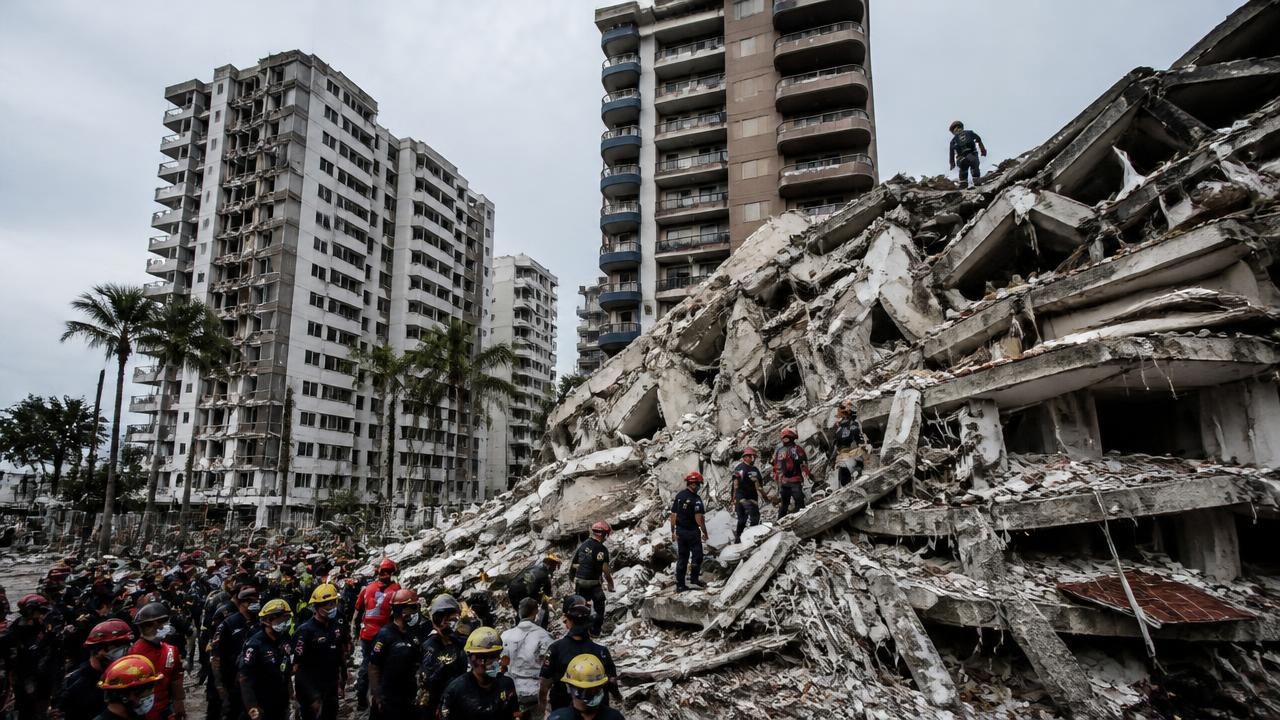
The apartment towers that came down in Venezuela's June earthquakes are emerging as a case study not in the raw violence of nature but in the quieter, human-made failures that precede it. Separate investigations published this week by The Associated Press and The New York Times reach a similar and uncomfortable conclusion: many of the buildings that killed their residents were already vulnerable before the ground began to move.
The New York Times published a three-dimensional reconstruction of the collapses, built by reporter Julie Turkewitz and a visual investigations team, that traces how several residential towers failed. The analysis, the Times said, shows that structural flaws — not just the strength of the quakes — left the towers vulnerable to collapse. The reconstruction examines how load paths, connections and the arrangement of ground-floor space interacted with sustained shaking to produce progressive failure, the chain reaction in which one failed element drags its neighbors down with it.
The Associated Press, meanwhile, framed its findings around forewarning. Its main investigation is headlined "Warnings ignored as Venezuela coastal towers faced quake forces they couldn't take," and a companion piece distills the "takeaways" from that reporting — a package syndicated widely, including by Newsday. The AP's emphasis is on what was known, and by whom, before the quake: that coastal high-rises were exposed to seismic demands beyond what their design appeared to accommodate, and that concerns raised about them did not translate into remediation.
Two Investigations, Two Angles
The divergence in framing is instructive. The Times leads with physics and forensics — a visual, engineering-first account that asks how the towers fell. The AP leads with accountability — who was warned, what was flagged, and why nothing changed. Read together, they form a fuller picture: the technical mechanism of collapse and the institutional mechanism that allowed the vulnerability to persist.
Both outlets also point to a death toll that is itself contested. A separate New York Times report concluded that the number of fatalities from the quakes likely far exceeds the official count — a gap consistent with the difficulty of accounting for residents of densely occupied towers, displaced populations and areas where access and record-keeping broke down after the shaking stopped. Independent seismology and disaster-research conventions suggest official figures in the immediate aftermath of major urban collapses frequently understate final totals, sometimes substantially and sometimes for months.
"Structural flaws — not just the strength of the quakes — left the towers vulnerable to collapse," The New York Times' reconstruction concludes, a finding that shifts the focus from the magnitude of the event to the condition of the buildings that met it.
Why Some Buildings Stand and Others Don't
The engineering questions at the center of the Venezuelan cases are not novel. Coverage of the underlying science — including explainer work on why some buildings collapse in an earthquake while others stay standing — consistently points to a handful of decisive factors.
- Ductility: the capacity of a structure to bend without breaking. Buildings engineered to deform and dissipate energy survive shaking that shatters stiffer, brittle structures.
- Soft-story configurations: open ground floors used for parking, lobbies or retail create a weak plane that concentrates stress and is a notorious cause of pancake collapses.
- Connection failures: collapses often begin at joints — beam-to-column, slab-to-frame — where inadequate detailing turns a localized failure into a cascade.
- Corrosion and deferred maintenance: particularly acute in humid coastal environments, where salt air degrades reinforcing steel and reduces the margin of safety designers assumed.
- Code enforcement: regulations matter only insofar as they are applied, inspected and retrofitted over a building's lifetime.
The AP's focus on coastal towers places several of these factors in direct overlap. Venezuela's Caribbean littoral combines aggressive salt-air corrosion, high seismic exposure and, in many districts, construction that proceeded during periods of weak regulatory oversight and chronic materials shortages. Those conditions compound: a building with a modest design margin, degrading steel and an unreinforced soft story faces a cumulative deficit that no single fix would have addressed.
Context Beyond the Coast
Venezuela's housing stock bears the imprint of decades of policy swings — large public housing programs, informal self-built expansion, and long stretches in which maintenance budgets and building-code enforcement were starved. The result is a building inventory whose seismic performance varies enormously from block to block, and a population with limited ability to demand retrofits.
The regional stakes are considerable. Seismic retrofitting programs across Latin America and the Caribbean have repeatedly demonstrated that targeted interventions — bracing soft stories, confining columns, repairing corroded reinforcement — sharply reduce collapse risk at a fraction of replacement cost. The political obstacle is rarely engineering; it is the cost of acting before a disaster rather than after one.
What Comes Next
The immediate questions are investigative and legal. The AP's reporting on ignored warnings invites scrutiny of which agencies received assessments, when, and what authority existed to compel repairs. The Times' forensic reconstruction provides the technical record against which any such inquiry would be measured. Neither outlet's findings have been fully answered by Venezuelan authorities, and independent verification of building records remains difficult.
The longer-term question is whether the collapse becomes a catalyst. In countries that have dramatically reduced earthquake fatalities — Chile, Japan, New Zealand after successive events — the turning point was rarely a single law. It was a sustained shift toward mandatory retrofitting, transparent building records and enforcement with teeth. Venezuela's towers fell for reasons that were knowable in advance. Whether the next generation of buildings is designed differently depends less on seismology than on whether the warnings this time are read.