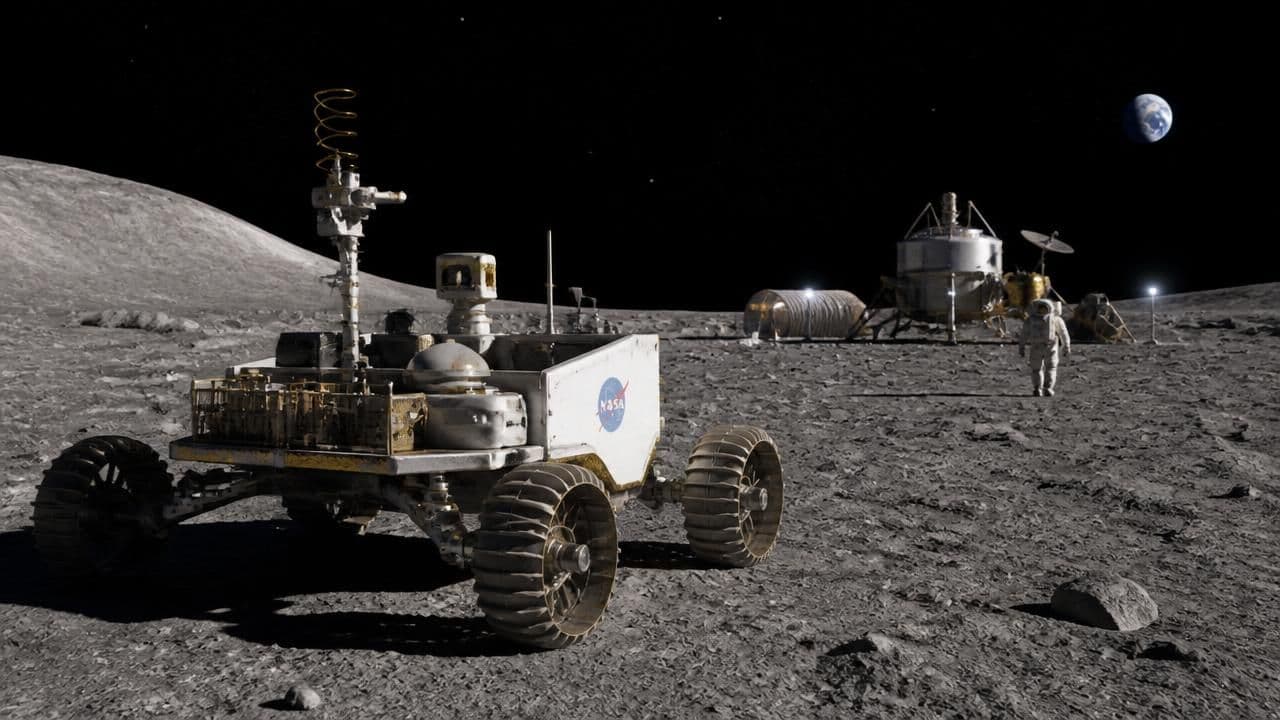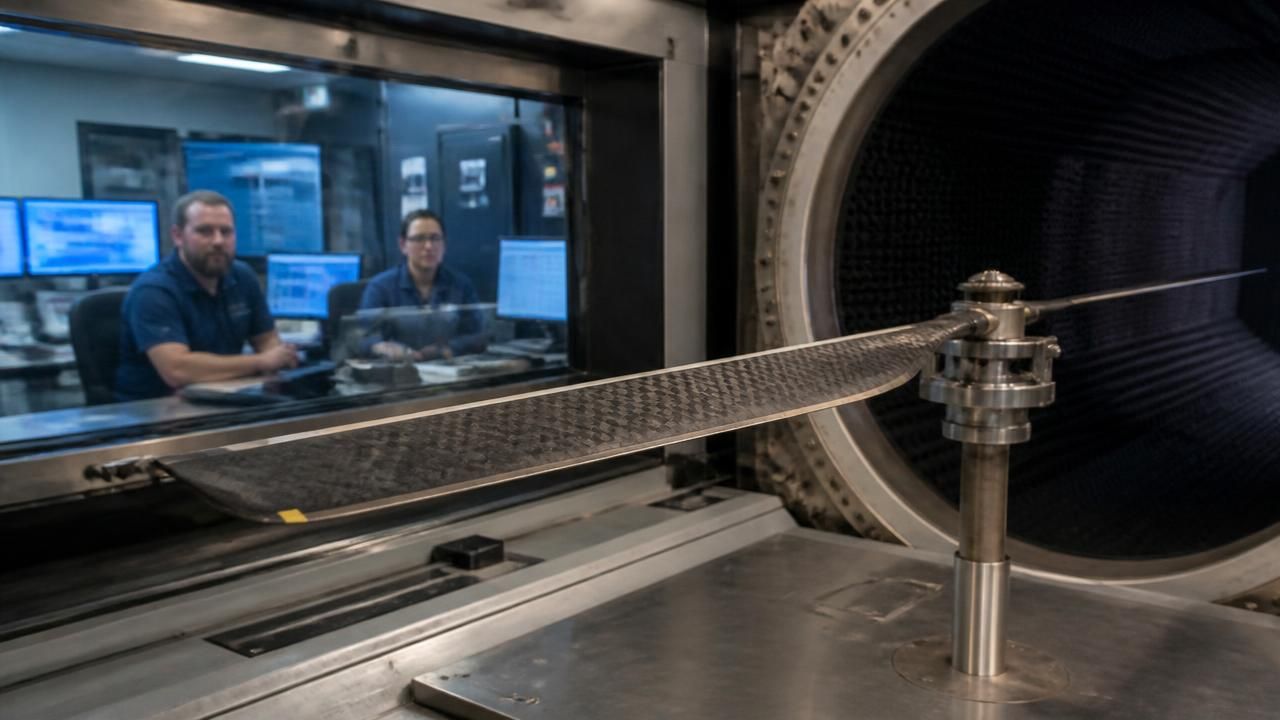
NASA engineers say they have crossed a threshold that could reshape how the agency explores Mars from the air: rotor blades designed for the next generation of Red Planet helicopters have spun past Mach 1 in testing, a milestone that promises longer flights, heavier science payloads and far more ambitious aerial missions.
The work, led by researchers at NASA's Jet Propulsion Laboratory, builds directly on the legacy of Ingenuity, the small technology demonstrator that in April 2021 became the first aircraft to achieve powered, controlled flight on another world. Ingenuity ultimately logged 72 flights over nearly three years before its mission ended in early 2024, far outstripping the five flights its engineers had originally planned.
Thinner Blades, Faster Tips
At the center of the effort is a blade design designated roamx-0201, developed under the Rotor Optimization for the Advancement of Mars eXploration, or ROAMX, project. Where Ingenuity's rotors used a comparatively traditional, rounded airfoil, the new cross-sections are markedly thinner and more sharply profiled — a geometry derived from high-fidelity computer simulations and validated in wind tunnel tests that replicate the thin, cold Martian atmosphere.
"Rotor blade cross-sections highlight the thinner profile of the roamx-0201 design compared to the more traditional, rounded shape used by NASA's Ingenuity Mars helicopter." — NASA
The distinction matters because Mars' atmosphere is roughly one percent as dense as Earth's. To generate lift, a Mars rotorcraft must spin its blades far faster than a terrestrial helicopter — and the Martian speed of sound is also lower, at roughly 240 meters per second versus about 340 on Earth. The result is that blade tips on an aggressive Mars design naturally approach, and can now exceed, the sound barrier.
Why Supersonic Tips Are a Breakthrough
Historically, rotorcraft engineers treated transonic and supersonic tip speeds as a hazard, producing drag spikes, vibration and noise. NASA's framing — that the new designs "target longer flights" — points to the payoff: blades that remain stable and efficient as they push past Mach 1 can generate more thrust per revolution, which translates into greater lift capacity. That, in turn, allows a helicopter to carry heavier instruments, fly farther from a lander or rover, and operate in seasons and altitudes where thinner air would otherwise ground it.
Coverage of the milestone reflected these differing priorities. NASA's own releases emphasized endurance and science reach, describing helicopters "with the ability to fly higher and farther while conducting science on the Red Planet." Technology outlets such as HotHardware led with the spectacle, reporting that the blades "break the sound barrier" in a record test. Science-focused outlets, including ScienceBlog, framed the advance around payload: pushing rotors past the sound barrier is the key that "unlocks heavier payloads." Trade press, including Ars Technica, characterized the result more soberly as a rotor-technology breakthrough from JPL — a quiet engineering win with large downstream implications.
From Ingenuity to SkyFall
The immediate application is SkyFall, a NASA mission concept scheduled for launch in 2028 that would send a trio of helicopters to Mars. Unlike the 1.8-kilogram Ingenuity — essentially a flying smartphone — SkyFall's aircraft are conceived as true science platforms capable of scouting terrain, imaging outcrops at close range and sampling the atmosphere across regions rovers cannot easily reach.
Both Ingenuity and the new designs share a curved-edge blade planform distinct from, though reminiscent of, blades flown on Earth. But the generational leap lies in the airfoil: thinner sections reduce compressibility drag as tips approach Mach 1, while unconventional planforms and twist distributions help manage the aerodynamic instabilities that plagued earlier transonic rotor concepts.
What Comes Next
- Validation: Continued wind tunnel campaigns at Mars-relevant pressures and temperatures will test whether simulation gains hold in real hardware.
- Integration: Blade designs must be paired with lightweight motors, gearboxes and flight-control software that can manage vibration at supersonic tip speeds.
- Mission design: SkyFall planners will weigh payload mass against altitude and season, trading rotor performance for instrument capability.
The engineering stakes extend beyond Mars. Supersonic-tolerant rotors could inform designs for high-altitude drones on Earth, Titan rotorcraft concepts such as Dragonfly, and future sample-return architectures that need aerial mobility in thin atmospheres.
For now, the milestone is best read as a proof of principle: the physics that once seemed to cap Mars helicopter performance may not be a hard limit at all. If the blades hold up in flight, the next generation of Martian aircraft will not merely repeat Ingenuity's triumph — they will fly farther, carry more, and do more science on the way.