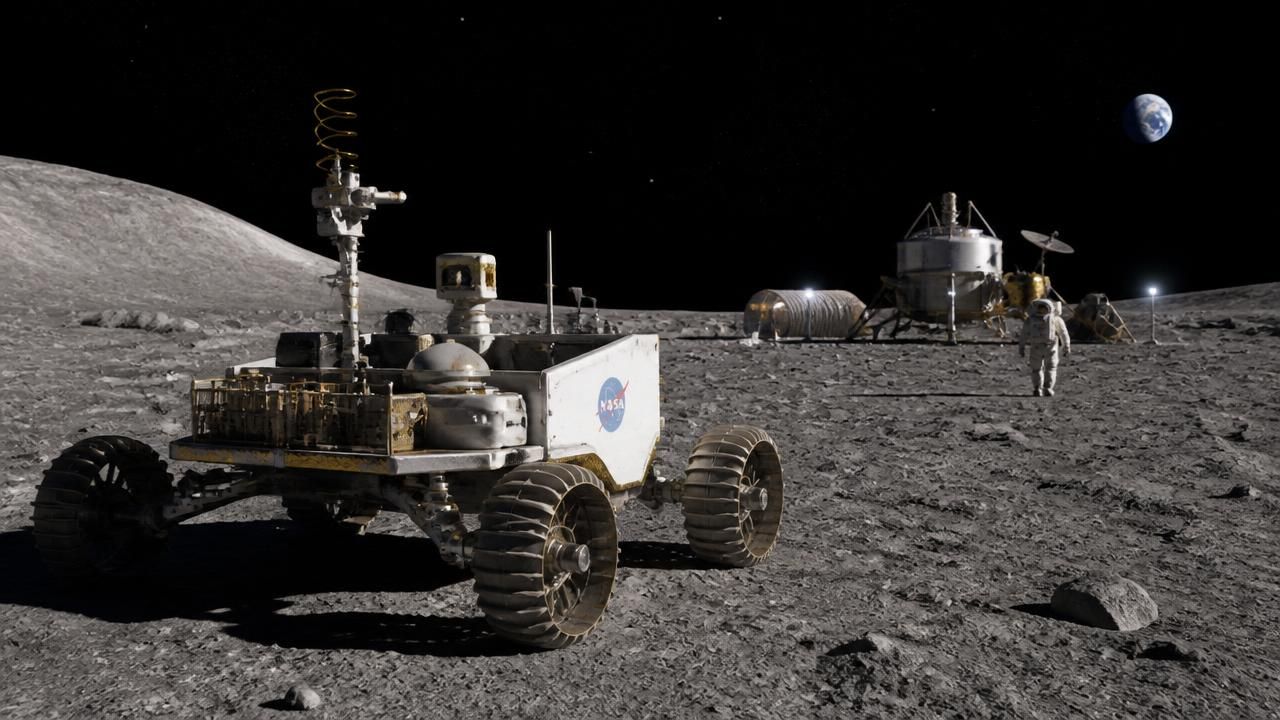
NASA on Tuesday offered its most detailed progress report yet on the mobility hardware meant to underpin humanity's first lunar outpost, releasing a Moon Base video update that showcased commercial lunar terrain vehicles and robotic rovers now in development. The briefing, which the agency framed as a status check on surface mobility, arrived alongside a wave of related news: nearly $600 million in new contracts, a leadership roadmap from NASA Administrator Jared Isaacman, and the striking possibility that a spare, nuclear-powered Mars rover could be redirected to the Moon.
Rovers as the Backbone of a Lunar Outpost
At the center of NASA's strategy is a fleet of crewed and uncrewed vehicles intended to carry astronauts, map terrain, conduct science and prospect for resources during the base's early construction. According to the agency, data from these first missions will directly shape the larger mobility systems and infrastructure needed for long-duration stays.
"Lunar rovers are central to our surface mobility strategy," said Robert Pickle, director of the Surface Mobility Office within NASA's Moon Base Program. "Their performance will lay the groundwork for the mobility systems that will define the next era of exploration and ultimately determine how effectively we can build, operate, and expand the infrastructure required for long-duration exploration."
Among the robotic precursors is VIPER, the Volatiles Investigating Polar Exploration Rover, designed to hunt for water ice and other volatiles near the lunar south pole — resources that could one day be converted into drinking water, breathable oxygen and rocket propellant. Spaceflight Now reported that next-generation astronaut rovers are being targeted for deployment ahead of the Artemis 4 crew's arrival, a schedule that ties rover readiness directly to the human landing cadence.
A Mars Rover, Retargeted
The most eye-catching thread came from reporting by The New York Times, Ars Technica and GeekWire: NASA is weighing whether to send a backup Mars rover — a nuclear-powered machine of the Curiosity or Perseverance class, equipped with a radioisotope power system — to the lunar surface instead of keeping it in storage. The idea, as framed by those outlets, is to accelerate preparations for the lunar base by repurposing flight-ready hardware rather than starting from scratch.
The framing differences are revealing. NASA's own materials emphasize incremental technology demonstrations and commercial partnerships. The Times and Ars Technica led instead with the novelty and risk calculus of operating a plutonium-powered rover in a dusty, cold lunar environment, where the long lunar night and abrasive regolith present challenges very different from Mars. The practical appeal is speed: a spare rover could validate surface operations, navigation and science instruments years earlier than a bespoke vehicle.
Contracts, Costs and Competition
NBC News reported that NASA is doling out nearly $600 million in new contracts tied to the moon base effort, while CNN framed the agency's latest moves as an attempt to dodge costly delays on a program projected to reach roughly $30 billion. Yahoo Finance, meanwhile, noted that Intuitive Machines missed out on a NASA rover award even as its broader lunar ambitions remain intact — a reminder that the commercial lunar landscape is already fiercely competitive, with Blue Origin separately reporting progress on its launch pad infrastructure.
Isaacman, according to The Hill, has begun outlining the first concrete steps toward the base, signaling that the program is moving from concept studies toward procurement and architecture decisions. The contracting surge suggests NASA intends to lean heavily on commercial partners for delivery, mobility and surface systems rather than building everything in-house.
Where to Build: The Case for Caves
ScienceDaily highlighted a parallel line of investigation: NASA is searching for hidden caves and lava tubes that could shelter a lunar base from micrometeorites, radiation and extreme temperature swings. The agency has also selected four new Moon missions that will feed into planning for a permanent lunar presence — part of a broader push to characterize the south polar region's terrain, lighting and resources before committing to a fixed site.
Those investigations matter for rovers, too. A base sited near a skylight or cave entrance would require different mobility solutions — shorter range, more rugged, likely teleoperated — than an outpost on open polar terrain. The mobility architecture NASA described Tuesday is deliberately modular, with robotic prospectors scouting ahead of crewed vehicles.
What Comes Next
- Near term: Continued testing of commercial lunar terrain vehicles and completion of robotic precursor missions, including VIPER's resource prospecting at the south pole.
- Mid term: Rover deployment ahead of Artemis 4, and a decision on whether to repurpose a nuclear-powered Mars rover for lunar duty.
- Long term: Site selection informed by cave and terrain surveys, followed by construction of a $30 billion-class outpost intended to support long-duration crews.
The through-line across coverage is that NASA's moon base is no longer purely aspirational — it has contracts, schedules and hardware. But the program also carries familiar risks: budget pressure, schedule slips and the technical uncertainty of operating in one of the harshest environments in the solar system. How effectively the first rovers perform will do much to determine whether the base remains on track or joins the long list of ambitious lunar plans that stalled before reaching the surface.