A federal Australian lawmaker is fighting for her life after being struck by a car outside her electorate office on Monday, an incident Prime Minister Anthony Albanese described as "no accident" and which authorities are now treating as a deliberate attack.
Helen Haines, an independent member of the House of Representatives, was critically injured when a vehicle hit her outside her office in regional Victoria. A man was arrested at the scene. Police have not publicly named the driver, and no charges had been formally detailed at the time of reporting.
What we know
- Who: Helen Haines, a federal independent MP and one of the few crossbench voices in the Australian Parliament.
- What: She was struck by a car outside her electorate office and rushed to hospital in critical condition.
- When: Monday, local time.
- Where: Outside her electorate office in her regional Victorian electorate.
- Suspect: A man arrested at the scene; he remained in custody as investigators worked through evidence.
The Prime Minister told reporters the circumstances pointed to intent rather than misadventure. "This is no accident," Albanese said, according to accounts carried by NPR, The Associated Press and a string of international outlets. The remark, delivered with unusual bluntness, set the tone for how the story was framed worldwide within hours: not a traffic collision, but an attack on a sitting parliamentarian.
Counter-terrorism squad takes the lead
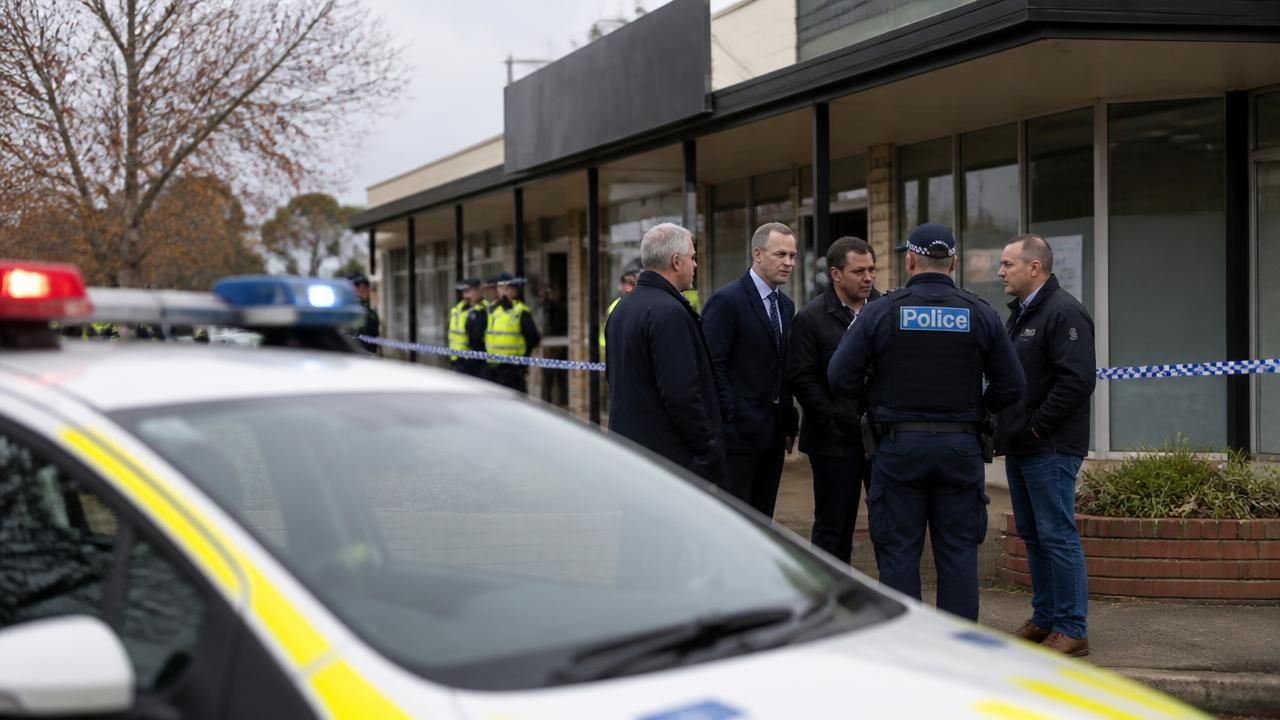
Among the most significant developments was the involvement of Australia's counter-terrorism apparatus. NTD and Yahoo News both reported that the terrorism squad would probe the vehicle attack — a detail that signals how seriously federal and state authorities are treating the case, even before a motive has been publicly established.
The decision to involve counter-terrorism investigators does not automatically mean the incident is being classified as terrorism. Under Australian policing arrangements, specialist squads are frequently brought in early to preserve evidence, examine digital material and assess whether ideological, political or personal grievances played a role. Still, the move underscores the gravity with which the case is being handled and will shape the political conversation in Canberra for days.
How outlets framed it
Coverage varied noticeably in tone and caution. The Associated Press and NPR led with the Prime Minister's "no accident" characterization, framing the story around official confirmation of intent. HuffPost and RTHK described a lawmaker "critically injured in a car attack." Several MSN syndications went further, using the word "ramming" and describing a "deliberate act." The New York Times headline was the most restrained of the major outlets — "Australian Lawmaker Injured After Attack, Prime Minister Says" — attributing the characterization to the Prime Minister rather than stating it as established fact.
Turkish outlet A News and Bulgarian outlet Fakti both emphasized the arrest and the apparent deliberateness of the act, while NTD and Yahoo foregrounded the counter-terrorism dimension. The divergence reflects a familiar pattern in fast-moving breaking news: the underlying facts are the same, but the emphasis on official attribution, the suspect's status and the involvement of specialist police varies by outlet and by the speed of publication.
Who is Helen Haines?
Haines is one of the most prominent independent MPs in the Australian Parliament, part of a crossbench surge that has reshaped federal politics in recent years. She holds a regional Victorian seat and has built a profile around integrity in politics, community-led representation and rural health and services — issues that have particular resonance in a sprawling electorate far from the country's major cities.
Australia's independents occupy an unusual position in the political system: they answer neither to a governing party nor to an official opposition, and they are often more accessible to constituents than major-party figures, running small electorate offices that are, by design, open to the public. That accessibility has long been identified by security analysts as a vulnerability.
"This is no accident." — Prime Minister Anthony Albanese
A wider pattern of pressure on politicians
The attack lands against a backdrop of growing alarm about the safety of elected officials and public-facing staff in Australia and elsewhere. In recent years, Australia has confronted the fatal Wieambilla shootings in Queensland, which authorities classified as a terrorist attack; the stabbing of a bishop at a Sydney church in 2024; and a sustained rise in threats and harassment directed at MPs, particularly women in public life.
Parliamentary authorities have repeatedly tightened security around federal offices and constituency events, and the Australian Federal Police have spoken publicly about the volume of threats referred to them each year. Political scientists have warned that the combination of online radicalization, declining trust in institutions and the highly visible, unguarded nature of electorate work creates a structural risk that cannot be fully engineered away.
What happens next
Investigators will now focus on the driver's movements, motive and any prior contact with the MP or her staff. Any future charges would depend on whether prosecutors conclude the act was intentional, and whether a terrorism nexus can be established — a high legal bar in Australian law.
Politically, the immediate effect will be a renewed push for security funding for MPs, particularly independents and those in regional seats who operate with smaller staffs and lighter protections. Crossbench colleagues are likely to demand a coordinated federal response rather than a piecemeal, office-by-office approach.
For the moment, though, the focus is on the hospital in Victoria and on a community waiting for news of a lawmaker who built her career on being reachable. As Albanese's words echoed across the world's front pages, the question hanging over Australian politics was stark: how do you keep an open democracy open when the people inside it become targets?