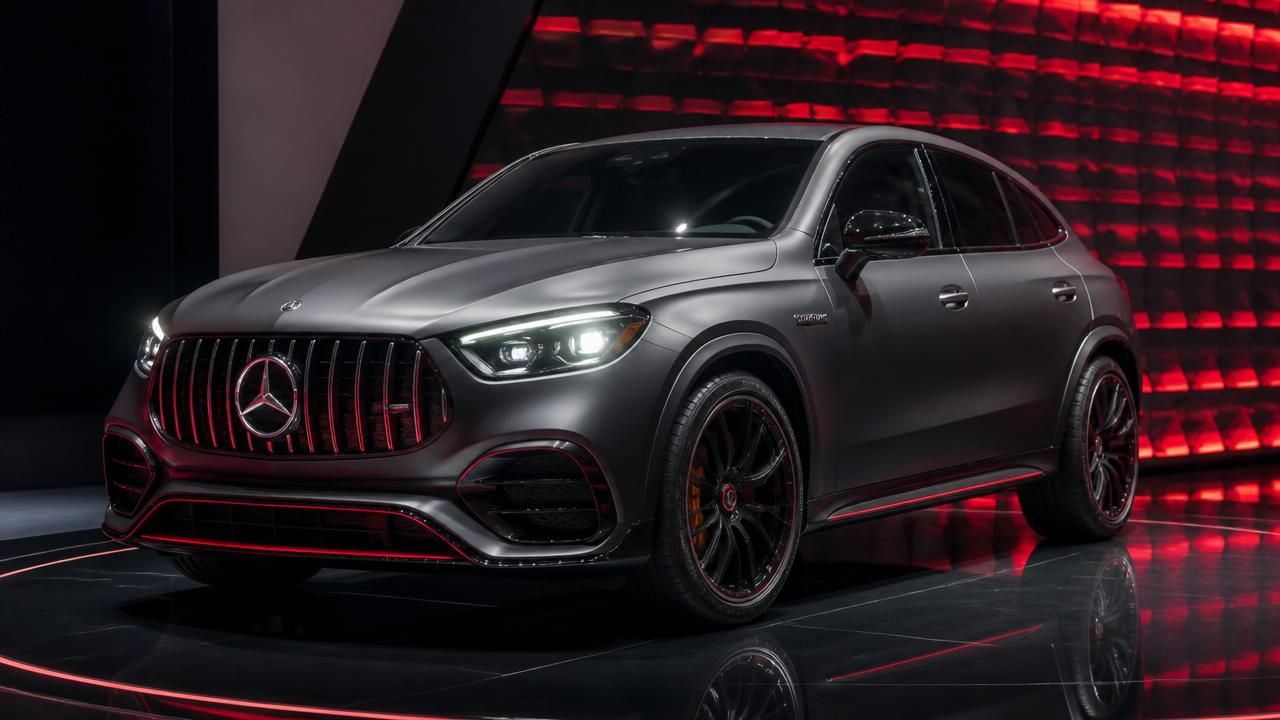
Mercedes-AMG has pulled the cover off the most powerful vehicle it has ever built from scratch: an all-electric, full-size performance SUV that produces roughly 1,150 horsepower and marks the first time in the performance brand's 59-year history that it has developed an SUV entirely in-house.
The vehicle — referred to variously as the 2028 Mercedes-AMG GT SUV, the AMG GT 63 SUV, and simply AMG's first stand-alone electric SUV — is scheduled to reach US customers next summer, following a reveal that multiple outlets had reported was set for October.
A First for AMG — And a Statement of Intent
Since its founding in 1967, AMG has largely been a modifier of Mercedes-Benz hardware — taking sedans, coupes and SUVs from Stuttgart and injecting them with hand-built engines, aggressive bodywork and track-tuned chassis. The new GT SUV breaks that mold.
According to The Verge, the vehicle is built on Mercedes' high-performance AMG.EA architecture, an EV platform designed specifically to pair sports-car handling with the packaging demands of a full-size people-hauler. It is the SUV counterpart to the AMG GT four-door coupe unveiled earlier this year, which also delivers over 1,150 horsepower from a tri-motor setup.
The Powertrain: Three Axial-Flux Motors
The headline number is the output — quoted by The Verge at 1,150 horsepower and by MSN, autoevolution and AutoGuide at 1,153 hp, a rounding difference likely reflecting metric versus imperial conversion. Either way, it places the GT SUV in territory occupied by only a handful of hypercars.
The motors are axial-flux units, a design that is lighter and more power-dense than the radial-flux motors used in most EVs. AMG has been developing the technology with partner YASA, the UK-based specialist Mercedes acquired in 2021. Three motors allow for sophisticated torque vectoring across the rear axle.
Performance claims are equally aggressive: MSN reports the SUV will hit 60 mph quicker than a Chevrolet Corvette — a benchmark that would put it comfortably under three seconds. Mercedes also promises ultra-fast charging, a necessity given that high-performance EVs are frequently criticized for thermal limitations on long drives.
The Sound of Silence — Sort Of
Perhaps the most controversial detail comes via autoevolution, which reports that the GT SUV will feature a synthesized V8 soundtrack. Synthetic powertrain audio has become common in performance EVs — Porsche, BMW and Hyundai have all experimented with it — but piping a fake V8 note into an AMG is a loaded proposition for a brand whose identity was built on hand-assembled eight-cylinder engines.
"AMG's first ground-up electric SUV isn't just a Mercedes with more power." — Autoblog
That framing, from Autoblog, cuts to the central question reviewers will ask: whether the GT SUV is a genuinely distinct machine or a badge-engineered product. AMG's decision to build it on a dedicated performance architecture — rather than adapting an existing EQ model — is the strongest argument in its favor.
How the Coverage Differs
- The Verge emphasizes lineage, positioning the SUV as the beefier cousin of the GT four-door coupe and stressing the historic first: an AMG developed from the ground up.
- Forbes frames the vehicle as a new pinnacle for electric high-performance, treating it as a benchmark-setting luxury product.
- MSN leads with the drag-strip statistic — quicker to 60 mph than a Corvette — appealing to performance enthusiasts.
- autoevolution focuses on the sensory details, highlighting the synthetic V8 sound alongside the power figure.
- AutoGuide and other outlets keep it straightforward, leading with the 1,153-hp number and the model name.
Why It Matters
The GT SUV arrives at a delicate moment for Mercedes-Benz. Global EV demand has cooled in several markets, prompting the company and rivals to soften or delay electrification targets. At the same time, the ultra-luxury and performance segments have proven more resilient to price pressure than the mass market — and far more willing to pay a premium for exclusivity.
For AMG specifically, the stakes are existential in a narrower sense: the brand must convince its traditional buyers that electric performance can be as emotionally compelling as a hand-built V8. The tri-motor layout, the dedicated architecture and the synthetic soundtrack are all evidence of how seriously Affalterbach is taking that conversion.
The GT SUV will also serve as a technology flagship for the wider Mercedes range, previewing the AMG.EA platform that will underpin future performance EVs. Axial-flux motors, 800-volt-class charging and advanced torque vectoring are expected to cascade down the lineup in the years ahead.
What's Next
Mercedes has not yet confirmed pricing, range or final trim designations, and the naming remains unsettled across outlets. Journalists will be watching for range figures — the persistent weak point of large, high-output EVs — and for curb weight, which typically blunts the handling gains that dedicated performance platforms promise.
What is already clear is that the first ground-up AMG SUV signals a shift in how the performance division sees its future: not as the modifier of Mercedes-Benz cars, but as a manufacturer of electric performance vehicles in its own right.