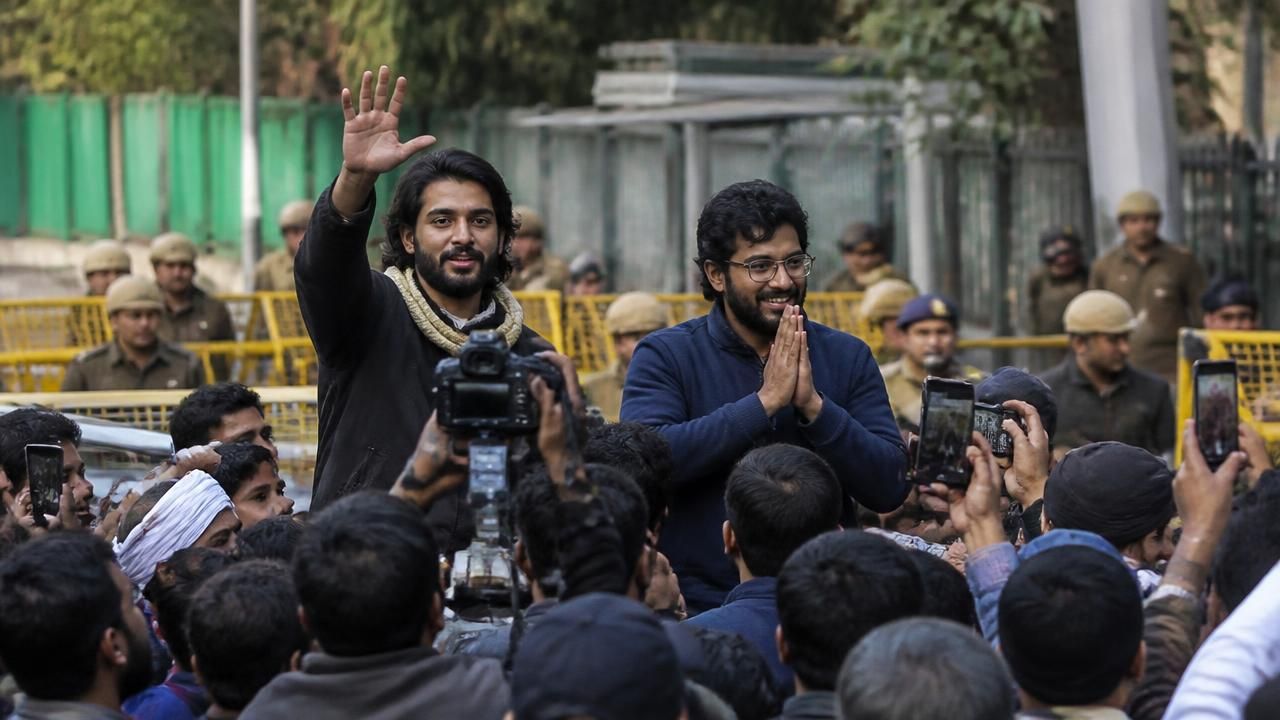
NEW DELHI — Two jailed leaders of India's Cockroach Janta Party were freed from detention on Sunday, according to the movement's legal head, closing a brief but volatile chapter of arrests that had turned parts of the capital into a fortified zone and thrust a dispute over the country's voter rolls onto the international agenda.
The releases, described by several outlets as bail, came as police barricades and a heavy security presence remained in place across New Delhi, underscoring that the underlying confrontation between the movement and the authorities is far from resolved. The Associated Press reported that the freed leaders left detention vowing to continue demonstrations, setting up what organizers and officials alike expect to be another week of confrontation.
A movement with an unlikely name
The Cockroach Janta Party — a satirical moniker that its supporters have adopted as a badge of defiance — emerged as one of the more unusual political phenomena in recent Indian memory: a youth-driven protest outfit whose profile is inseparable from social media and whose leadership skews toward Generation Z. The New York Times, in its coverage, described the central figure simply as an "Indian Gen Z protest leader," a framing that captures how the movement is understood abroad as much as a generational revolt as a conventional political campaign.
That framing matters. Bloomberg Markets referred to the leadership cohort as "'Cockroach' leaders" — quotation marks that signal the label's satirical origin — while CNN's headline placed "cockroach" in quotes as well, an acknowledgment that the name is at once a joke, a provocation and, for its adherents, a statement about resilience under pressure.
The voter-roll dispute at the center
At the heart of the standoff is a contentious revision of India's electoral rolls. Protesters argue that the changes risk disenfranchising voters and have demanded that the country's election chief resign over the process. MSN reported that "'Cockroach' protesters demand India's election chief resign over controversial voter list changes" — a demand that no election official has shown any sign of meeting.
The technical details of the revision are dense, but the political stakes are not. Voter registration is the plumbing of any democracy, and disputes over who appears on a roll — and who is quietly removed — have a way of determining electoral outcomes long before a single ballot is cast. For a movement built around young, first-time and marginal voters, the mechanics of the roll are not an abstraction.
Arrests, releases and a pattern
The sequence of events has been repetitive enough to become a pattern. Before the latest round of demonstrations, CNN reported that Indian police had again detained the founder of the "cockroach" movement ahead of a planned protest — an "again" that speaks to a cycle of detention and release that has defined the standoff.
"Indian police again detain 'cockroach' movement founder ahead of protest" — CNN
By Sunday, that cycle had turned once more. Bloomberg Markets reported that two jailed leaders were expected to be released, citing the party's legal head, and multiple outlets subsequently confirmed the exit from custody. MSN's headline summarized the arc: "India's 'Cockroach' movement founder and leaders released from detention after Delhi protest crackdown."
The differing emphasis across outlets is instructive. Financial press coverage, led by Bloomberg, treated the story primarily as a question of political risk and stability in the capital. Wire services such as the Associated Press emphasized the movement's stated intention to keep protesting. The New York Times centered the generational profile of the leadership. Indian-adjacent aggregators on MSN foregrounded the specific grievance — the electoral roll — that brought people into the streets.
Why it matters beyond the capital
India is the world's largest democracy by electorate, and any controversy touching the integrity of its voter registration touches the credibility of its elections more broadly. A protest movement that successfully links a procedural dispute to public mobilization has the potential to shift the political conversation well beyond New Delhi's barricades.
- The Grievance: A voter-roll revision that protesters say risks removing legitimate voters.
- The Demand: Resignation of the country's election chief.
- The Method: Repeated street demonstrations, met with repeated detentions.
- The Leadership: A young founder and senior figures of the Cockroach Janta Party, now released on bail.
There is also a practical dimension. Each detention and release cycle raises the movement's profile and replenishes its moral capital, a dynamic familiar from protest movements worldwide. Authorities appear to be weighing public-order concerns against the cost of escalating a confrontation with a young, media-savvy leadership that benefits from visibility.
What comes next
The immediate question is whether Sunday's releases defuse the situation or simply reset it. With barricades still up and the leadership publicly committed to continuing demonstrations, the more likely outcome is a continuation of the standoff at a slightly lower temperature — at least until the next scheduled protest.
The larger question concerns the voter rolls themselves. Unless the election authorities offer a public accounting of the revision process — and so far there is no indication they intend to — the issue is likely to remain a rallying point, one that has already converted a satirical party name into a genuine political force in the Indian capital.
For now, the "cockroach" label appears to be earning its keep: the movement has been stepped on, and it has not gone away.