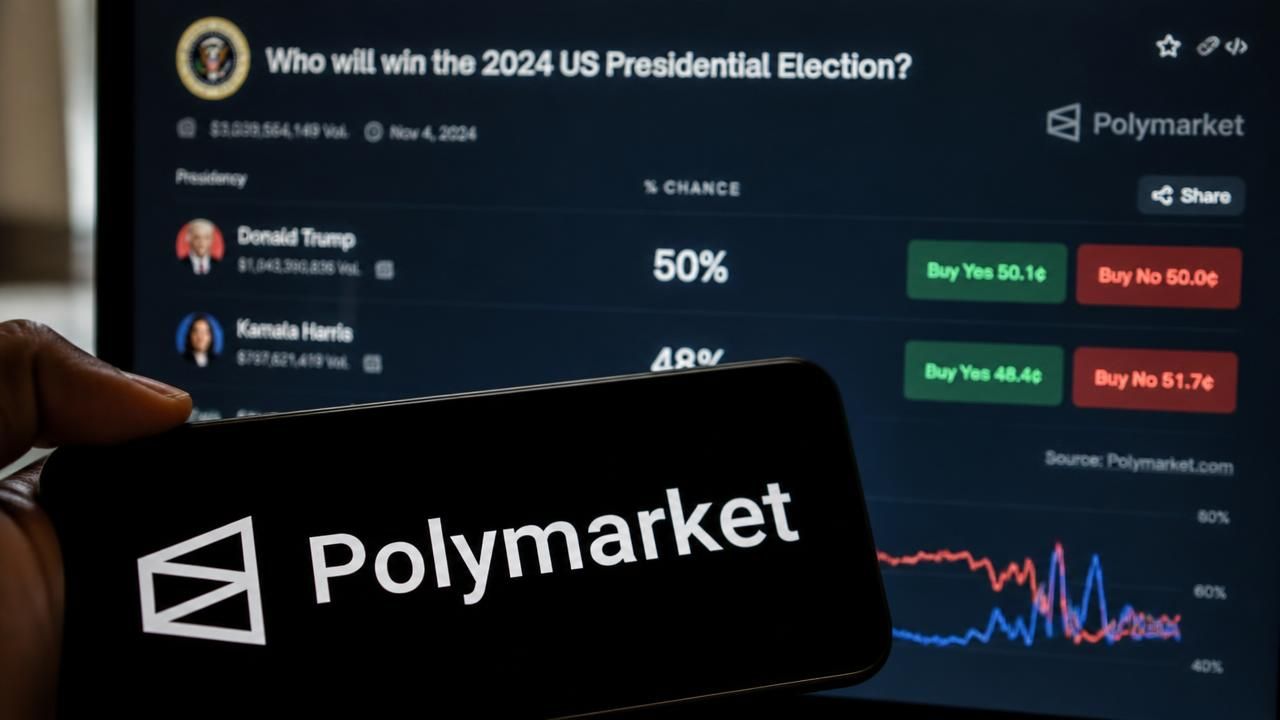
Prediction markets have long been promoted as real-time barometers of public opinion, capable of outperforming polls and pundits. But a striking pattern on Polymarket, the offshore betting platform, is complicating that narrative. Two global election markets generated more than $600 million in trading volume—far more than most political markets typically attract—yet most of the activity flowed into contracts tied to long-shot candidates who ultimately lost.
The anomaly is not merely a curiosity. It raises fundamental questions about whether trading volume on prediction markets reflects genuine insight or something else entirely: speculation, entertainment, market manipulation, or automated strategies that can distort the signal.
The Ethiopian Election That Defied Market Logic
This summer, Ethiopian Prime Minister Abiy Ahmed’s Prosperity Party cruised to victory in federal elections, winning 438 parliamentary seats and paving the way for another five-year term. The closest competitor won just 13 seats. The outcome was never seriously in doubt.
On Polymarket, however, the trading told a different story. Only about $173,000 was wagered on Ahmed winning. By contrast, more than $41 million was traded on his chief of staff, Shimelis Abdisa, becoming the country’s next leader. Altogether, the Ethiopian market saw over $285 million in volume—nearly all of it on candidates who lost.
That pattern contradicts a basic rule of prediction markets: volume typically tracks probability. Frontrunners attract the most money, while long shots draw modest sums. When the opposite happens, something is off.
Why Prediction Markets Are Supposed to Work
The theory behind platforms like Polymarket and Kalshi is simple. When people put money behind their beliefs, they reveal information. Crowds can aggregate that information more efficiently than individual experts. In 2024, Kalshi correctly forecast the outcome of the U.S. presidential race, beating many traditional pollsters. That success cemented the reputation of prediction markets as "truth machines."
Prediction market boosters often tout the platforms as barometers of public opinion, or even "truth machines" offering a clearer picture of where things are headed than polling or other data.
But the Ethiopia case shows that volume alone is not a reliable indicator. If millions of dollars can flow to a candidate with virtually no chance of winning, then the market’s price—not just its volume—must be scrutinized. And if the price itself is distorted by thin liquidity or erratic trading, the entire signal weakens.
What Explains the Mismatch?
Several factors could account for the unusual trading activity. One is the "long-shot bias" familiar from sports betting, where punters overpay for lottery-like outcomes that promise huge returns. Another is entertainment value: users may simply enjoy betting on unlikely scenarios, especially in markets that lack the liquidity of major U.S. elections.
Automated bots and arbitrage strategies could also play a role. On offshore platforms, where regulatory oversight is lighter, wash trading—buying and selling to create artificial volume—is a known concern. Polymarket has previously faced questions about whether some of its volume is genuine. The company settled with the U.S. Commodity Futures Trading Commission in 2022 and blocked American users, though it remains accessible through VPNs and offshore entities.
None of these explanations has been confirmed for the Ethiopian market. But the scale of the discrepancy—$41 million on a chief of staff versus $173,000 on the sitting prime minister—suggests that something beyond normal informed trading was at work.
The Broader Implications
The $600 million figure across two global election markets is notable not just for its size but for its timing. Much of the trading appears to have occurred after the elections were effectively over, when the outcomes were already known. That raises the possibility of late arbitrage, or simply users buying and selling contracts for reasons unrelated to prediction.
For journalists, analysts, and decision-makers who cite prediction markets as evidence, the lesson is caution. Volume is not the same as conviction. A market can be liquid and still be wrong—or at least not meaningfully right. The Ethiopia anomaly is a reminder that these platforms are not magic. They are financial markets, with all the imperfections that entails.
- Data point: Polymarket’s two global election markets drew over $600 million in volume.
- Ethiopia market: Over $285 million traded, with $41 million on a losing chief of staff.
- Winner’s wager: Just $173,000 on Prime Minister Abiy Ahmed, who won 438 seats.
- Historical parallel: Kalshi’s 2024 U.S. election success boosted the "truth machine" narrative.
Prediction markets can still offer valuable signals, especially in high-liquidity, well-regulated markets. But the Polymarket episode shows that when the money flows to losers, the wisdom of crowds can look more like the madness of crowds. Until platforms and regulators can explain such anomalies, the "truth machine" label should come with an asterisk.