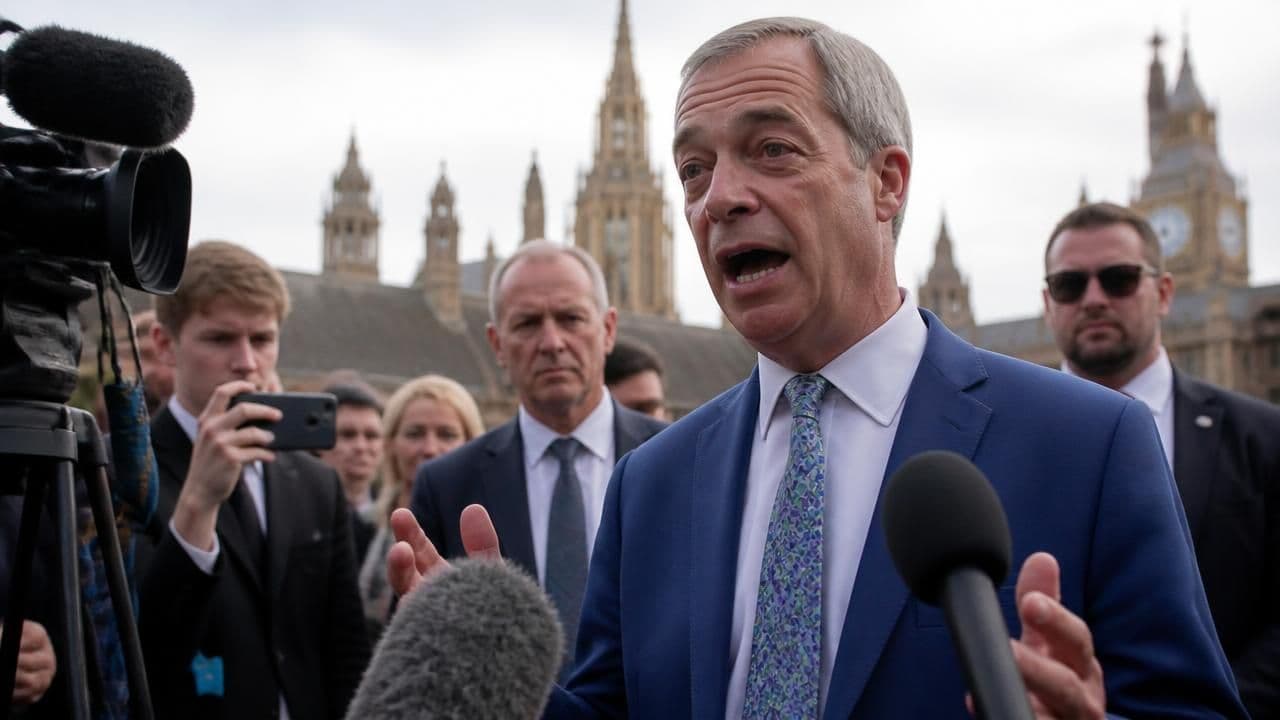
A New York Times investigation has thrust a little-watched corner of the Balkans into the center of Washington's political maelstrom, revealing that a widening circle of Donald Trump's political operatives — including the daughter of his White House chief of staff — spent time in Republika Srpska, the Serb-dominated entity of Bosnia and Herzegovina, working alongside figures aligned with its pro-Russian president, Milorad Dodik.
The revelation, first reported by The Times and picked up within hours by outlets ranging from MSN to Al Jazeera, has prompted the president to privately float firing senior political advisers and to publicly threaten to "terminate" those involved, even as his midterm operation enters a critical stretch.
What the Report Alleges
According to The New York Times, the daughter of the president's chief of staff traveled to Republika Srpska alongside an American businessman as he explored a natural gas pipeline project in the region. Separately, six current and former Trump campaign advisers recently made the trip for an election connected to Dodik's political apparatus.
The report does not allege that the advisers broke any law. But it raises pointed questions about whether individuals simultaneously advising a foreign, Moscow-aligned government and a sitting U.S. president's political operation created conflicts of interest — or, at minimum, a perception problem that the White House has struggled to contain.
Subsequent coverage aggregated by MSN framed the story in distinctly sharper terms, with headlines describing a White House in "panic mode," aides "busted helping" a pro-Putin regime, and a president who "humiliated" his own MAGA advisers over the affair.
What were Trump operatives doing for pro-Russian politician Dodik in Bosnia?
That question, posed by Al Jazeera, captures the ambiguity at the heart of the story: no outlet has yet established precisely what the advisers were paid to do, who funded the trips, or whether any of the work touched on U.S. policy toward the Balkans or sanctions on Dodik himself.
A President's Fury — and a West Wing on Edge
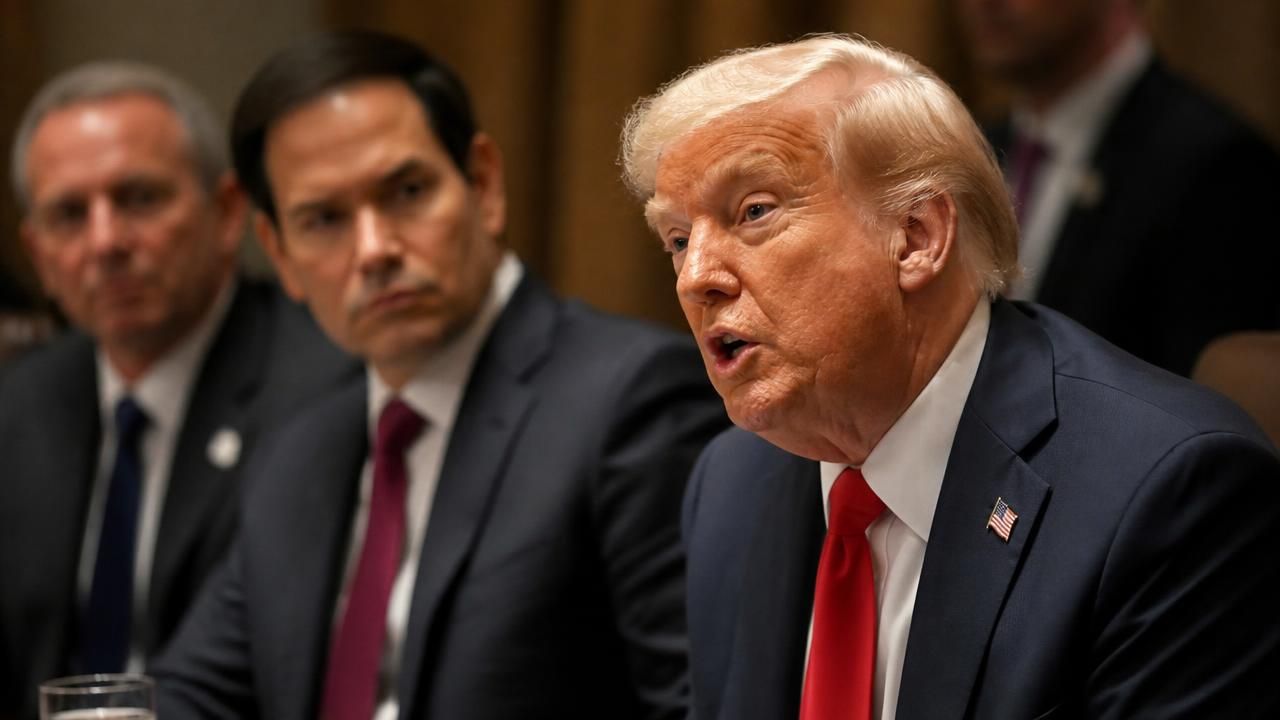
Trump's response was swift and characteristically blunt. According to reporting summarized by Yahoo and MSN, the president floated firing his top political advisers after learning of the arrangement, and threatened to "terminate" aides who had also advised the pro-Putin state. One aggregated headline described the president as having "humiliated" the aides at the center of the story.
The reaction underscores a recurring tension inside Trump's orbit: a broadly non-interventionist, "America First" foreign policy message that coexists with individual advisers' private commercial and political work overseas. Aides have historically been permitted considerable latitude in outside consulting, but the Bosnia episode appears to have crossed a line — not because of its substance, but because of its optics during an election cycle.
Why Republika Srpska Matters
Republika Srpska is one of two entities that make up post-war Bosnia and Herzegovina, a fragile consociational state constructed by the 1995 Dayton Accords after a brutal ethnic war. Dodik, who has led the entity for years, has repeatedly threatened secession, cultivated close ties with Moscow, and been sanctioned by the U.S. Treasury — first in 2017 and again in 2023 — for corruption and for undermining regional stability.
That context makes any American political involvement in the entity especially sensitive. The gas pipeline exploration mentioned in the report also gestures at a broader geopolitical competition: Russia has long used energy infrastructure in the Balkans to maintain leverage, and Western firms have sought to counter that influence. An American businessman scouting pipeline opportunities in a Russian-aligned entity therefore carries both commercial and strategic weight.
- Who: Six current and former Trump campaign advisers, plus the daughter of the White House chief of staff.
- What: Travel to Republika Srpska tied to an election and a gas pipeline exploration.
- Where: Republika Srpska, Bosnia and Herzegovina.
- Why it matters: Potential conflicts of interest, sanctions exposure, and the appearance of U.S. political operatives aiding a Kremlin-aligned leader.
How the Story Is Being Framed
The Times' coverage has emphasized the breadth of the circle involved — the phrase "more Trump allies" implying that this is not an isolated incident — and has anchored the story in the granular detail of who traveled where and when. Al Jazeera has foregrounded the foreign-policy question, treating the episode as a window into the entanglement of American political consulting and Balkan ethno-nationalist politics.
Aggregators and tabloid-adjacent outlets, meanwhile, have leaned into the intramural drama: a president reportedly furious at advisers whose outside work has handed opponents a ready-made attack line. The framing is notably different — one story about foreign influence, another about White House dysfunction — but both point to the same unresolved set of facts.
What Comes Next
It remains unclear whether any formal review, ethics inquiry or congressional oversight will follow. The White House has not detailed what, if any, consequences the advisers face, and it is not evident that the work violated any rule governing campaign personnel.
What is clear is that the episode has injected the Balkans — a region Washington has largely treated as a settled, if frozen, post-war problem — back into American domestic politics. For Republicans heading into a demanding midterm cycle, the story carries an unwelcome echo of past debates over Trump-world contacts with foreign, Russia-linked actors. For Dodik, the attention is likely more useful than harmful: it reinforces his standing as a figure of international consequence, courted by Americans and Russians alike.
The next chapter will turn on two questions the reporting has not yet answered: who paid for the advisers' travel and counsel, and whether the pipeline interest was ever more than an exploratory venture.