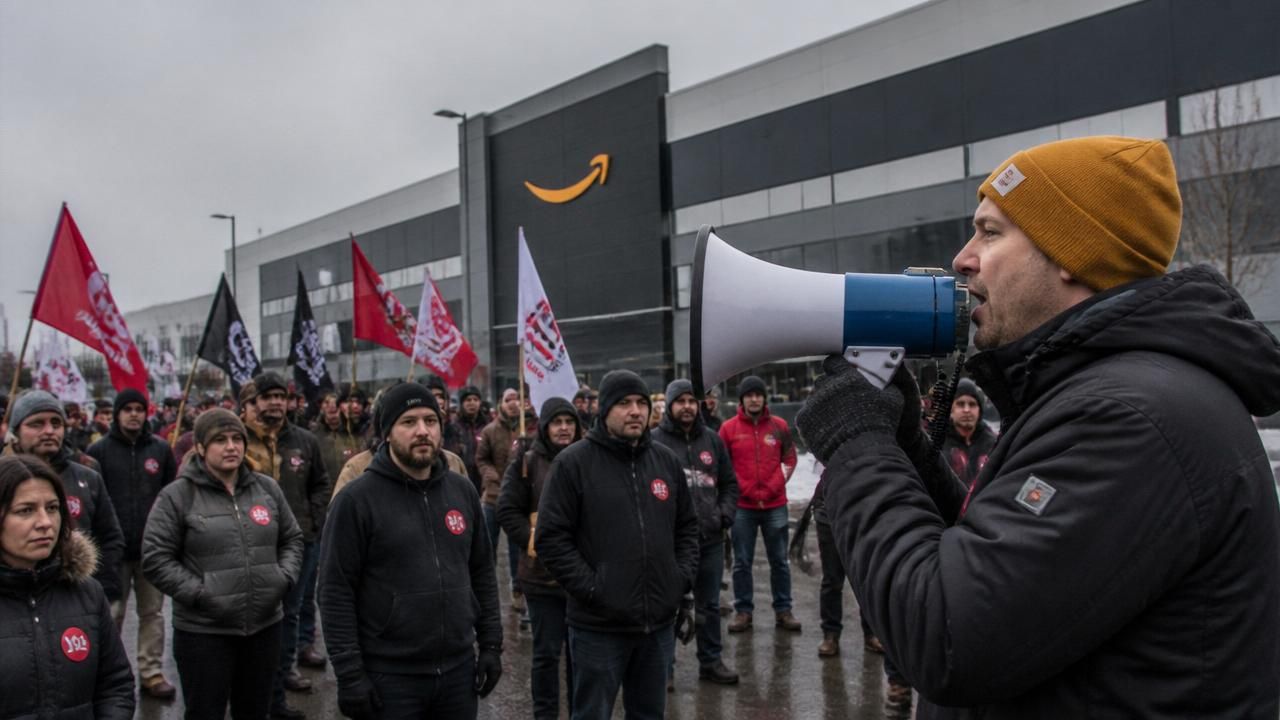
Canada's federal government has launched a review of its business contracts with Amazon's cloud-computing unit, Amazon Web Services (AWS), following the e-commerce giant's abrupt decision to close all seven of its warehouses in Quebec, resulting in the layoff of 1,700 workers. The move has ignited a political firestorm, with unions calling it a 'slap in the face' and opposition leaders demanding Ottawa reconsider its procurement ties with the company.
Government Response and Contract Review
According to sources familiar with the matter, the Canadian government has formally warned Amazon that it is reviewing its contracts with AWS. The review encompasses a range of cloud services used by federal departments, though the exact value of the contracts has not been disclosed. A spokesperson for the Treasury Board of Canada Secretariat confirmed the review, stating, 'The Government of Canada expects its suppliers to uphold the highest standards of corporate responsibility, including fair treatment of workers.'
The decision to shutter the Quebec facilities was announced in January 2025, catching local officials and labor groups off guard. Amazon cited 'operational efficiency' and a shift toward third-party delivery partners as reasons for the closures. However, critics argue the timing is suspicious, coming just months after workers at one of the sites had begun the process of unionizing.
Union Outrage and Worker Impact
Union representatives have condemned the closures as a direct attack on workers' rights. 'This is a slap in the face to every Quebec worker who helped build Amazon's success in Canada,' said a spokesperson for the Confédération des syndicats nationaux (CSN), which represents some of the affected employees. The CSN had been assisting workers at the DXT4 warehouse in Laval, who were seeking to form the company's first unionized facility in Canada.
Workers at the Laval site had filed for union certification with Quebec's labor board just weeks before the closure announcement. While Amazon denies any connection, labor experts say the timing raises red flags. 'It's a textbook case of union busting,' said Dr. Marie-Claude Bélanger, a labor relations professor at Université de Montréal. 'By eliminating the entire facility, Amazon effectively nullifies the unionization effort without having to negotiate.'
Amazon's Position and Broader Context
Amazon has maintained that the decision was purely operational. In a statement, the company said, 'We regularly evaluate our network to ensure it meets customer needs and business requirements. The changes in Quebec reflect our commitment to efficiency and long-term growth.' Amazon has agreed to meet with government officials to discuss the closures, but has indicated that the plans remain unchanged.
The Quebec closures are part of a larger trend of layoffs across Amazon's global operations. In 2024 alone, the company cut more than 45,000 jobs across various divisions, including its seller services unit. Analysts point to a post-pandemic recalibration as Amazon rightsizes after a period of rapid expansion. 'Amazon is under pressure to cut costs and boost profitability,' said retail analyst Sarah Johnson of GlobalData. 'But the optics of closing facilities in a region where workers are organizing are terrible for its public image.'
Political and Economic Implications
The federal government's contract review could have significant financial implications for Amazon. AWS is a major provider of cloud services to the Canadian government, with contracts valued at hundreds of millions of dollars. Opposition parties have called for a complete suspension of new contracts until the labor dispute is resolved.
Quebec's provincial government has also weighed in, with Premier François Legault expressing disappointment and urging Amazon to reconsider. 'We will do everything we can to support affected workers and explore all legal avenues to hold Amazon accountable,' he said.
The closures have also raised concerns about the broader impact on Canada's logistics sector. While Amazon has stated that the Quebec facilities will be replaced by third-party delivery partners, critics worry about the loss of stable, well-paying jobs. 'This sets a dangerous precedent,' said economist David MacDonald. 'If Amazon can walk away from 1,700 workers without consequence, other companies may follow suit.'
What's Next?
As the government review proceeds, Amazon faces mounting pressure from both labor groups and politicians. The CSN has filed a complaint with the Quebec Labour Relations Board, alleging that the closures were motivated by anti-union animus. A ruling could take months, but if the board finds in favor of the union, Amazon could be forced to reinstate workers and recognize the union.
Meanwhile, affected employees are left in limbo. Many have been offered severance packages, but some say the compensation is insufficient. 'I've given five years to Amazon, and now I'm being let go with a few weeks' pay,' said former warehouse worker Jean-Pierre Lefebvre. 'It feels like a betrayal.'
The outcome of this dispute could have lasting implications for labor relations in Canada's tech and logistics industries. As one union leader put it, 'This is not just about 1,700 jobs. It's about whether workers have a voice in the future of work.'