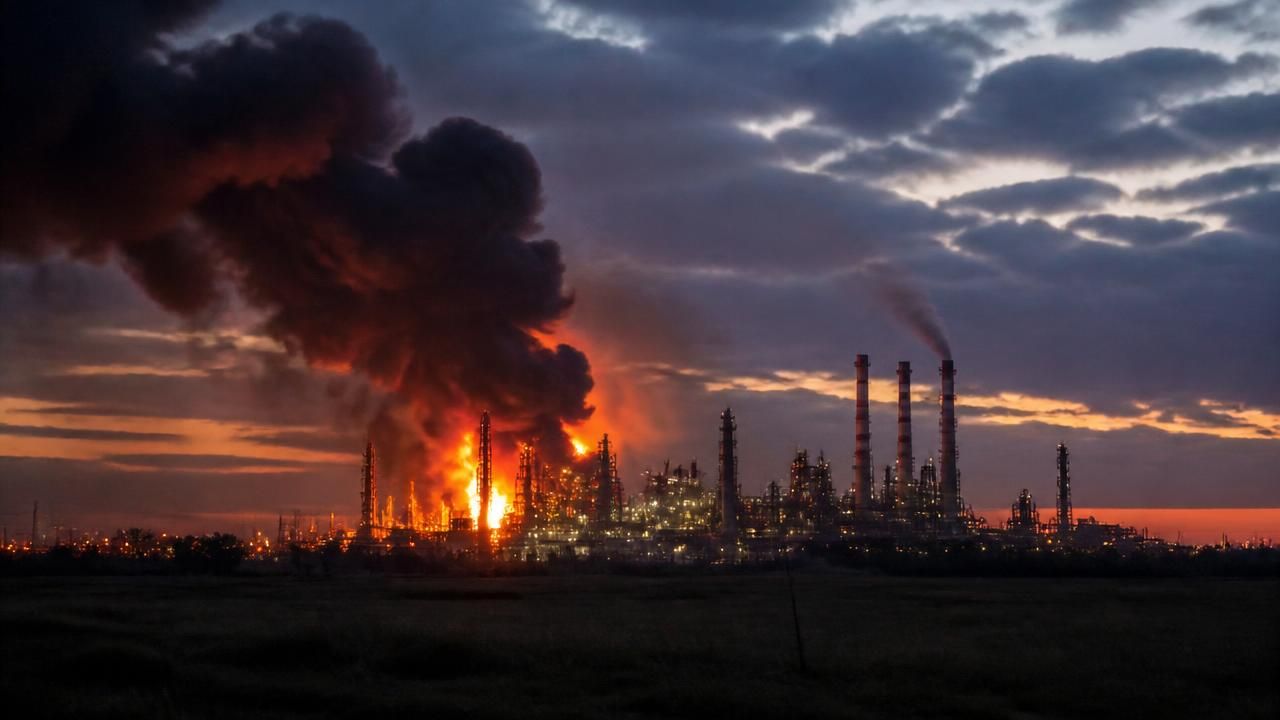
Ukrainian drones struck an oil refinery in Russia's Ryazan region early Thursday, Ukrainian officials said, hours after President Volodymyr Zelensky declared that a short-lived truce — which he said Moscow had already spurned — was over. The strike marks the formal resumption of a campaign against Russian energy infrastructure that Kyiv had paused in hopes of preserving a fragile diplomatic opening brokered, in part, by the Trump administration.
The attack, reported by NPR, The Associated Press and other outlets, is the first confirmed refinery strike since the pause began. It also lands amid a sharp deterioration in relations between Kyiv and Washington, with multiple outlets reporting that Zelensky has grown openly frustrated with President Donald Trump — and, in one account, feels "betrayed" after a US decision that followed a Russia-related fuel arrangement.
A Brief Truce, Quickly Undone
According to reporting from NPR and the Financial Times, as relayed by Luxembourg's Chronicle, Zelensky said Ukraine would resume strikes on Russian refineries after concluding that Russia had violated the terms of what had been described as an "energy ceasefire." Several MSN-distributed reports framed the moment in blunt terms, quoting Zelensky's declaration that "we're done" — language that underscores how quickly a diplomatic off-ramp has become a dead end.
"We're done."
The ceasefire's collapse shatters what some analysts had billed as the most tangible de-escalation of the war in months. It also exposes a widening gap between Washington's push for a negotiated freeze and Kyiv's conviction that any pause benefits Russia, which can use the interval to repair refineries, replenish stocks and continue striking Ukrainian cities.
The Ryazan Strike and the Logic of Refinery Targeting
The Ryazan refinery, located southeast of Moscow, is among Russia's larger downstream fuel facilities. Ukraine has targeted Russian refining capacity repeatedly over the past two years, calculating that hitting distillation units degrades Russia's ability to export refined products — a key revenue stream — while forcing Moscow to divert air defenses away from the front line.
The strategy is not costless. Russia has responded by hardening facilities, dispersing operations and, crucially, escalating its own attacks on Ukrainian infrastructure. Inkl, summarizing the latest developments, reported that Ukraine's vow to resume refinery strikes came as Moscow hit Kyiv's infrastructure — a reminder that each side's escalation invites a mirror-image response.
The New York Times put the dynamic in stark terms in a companion analysis, headlined "It's Hard to Bomb a Country Into Submission. But Russia Is Trying." The piece raises a question that now applies equally to both capitals: How much coercive pressure can air and drone campaigns actually generate, and at what diplomatic cost?
Anger Mounts in Kyiv — and Toward Washington
The most consequential subplot is the state of US-Ukrainian relations. The Associated Press noted that the resumption of strikes came "as US relations teeter." Multiple MSN-aggregated reports went further, describing Zelensky as losing patience with Trump and condemning the withdrawal of US intelligence support. One headline summarized the mood bluntly: "Zelensky says he feels betrayed by Trump after Russia fuel deal."
The New York Times framed the decision as a direct act of defiance: Zelensky's announcement, its headline read, came "Defying Trump." The FT's reporting, echoed by Chronicle, confirmed the substance of the announcement — that Ukraine would resume refinery strikes — while underlining that the decision was made despite, not because of, American urging.
- What changed: Ukraine says Russia violated the energy ceasefire, removing any reason to hold fire.
- What followed: Drone strikes on the Ryazan refinery early Thursday.
- What's at stake: US intelligence sharing, future aid, and the credibility of any future negotiations.
- What Russia did: Continued attacks on Ukrainian infrastructure, per inkl.
How Outlets Framed the Story
The coverage reveals distinct editorial priorities. Wire services such as AP and NPR emphasized the operational facts: drones, a region, a struck facility. The New York Times emphasized the personal and geopolitical rupture with Trump. MSN's aggregation leaned into the emotional register, foregrounding betrayal, lost patience and the death of the "energy ceasefire." The FT, via Chronicle, treated the announcement as a matter of high policy — a presidential decision with market and military implications.
The divergence matters. Read together, the sources describe not a single event but a pivot: Kyiv has concluded that restraint buys nothing, and that its leverage lies in economic pain inflicted on Russia rather than in the good faith of mediators.
The Road Ahead
Several unknowns will shape what happens next. It is unclear how many refinery strikes Ukraine has queued up, whether new long-range drone variants are in play, or how Russia will retaliate. It is equally unclear whether Washington will further reduce intelligence cooperation — a step that would blunt Ukraine's ability to find and hit deep targets.
What is clear is that the window in which an energy ceasefire could have been salvaged has closed. Ukraine is back to hitting Russian refineries, Russia is back to hitting Ukrainian cities, and the relationship between Kyiv and the White House is now itself a front in the war — one measured not in kilometers, but in trust.