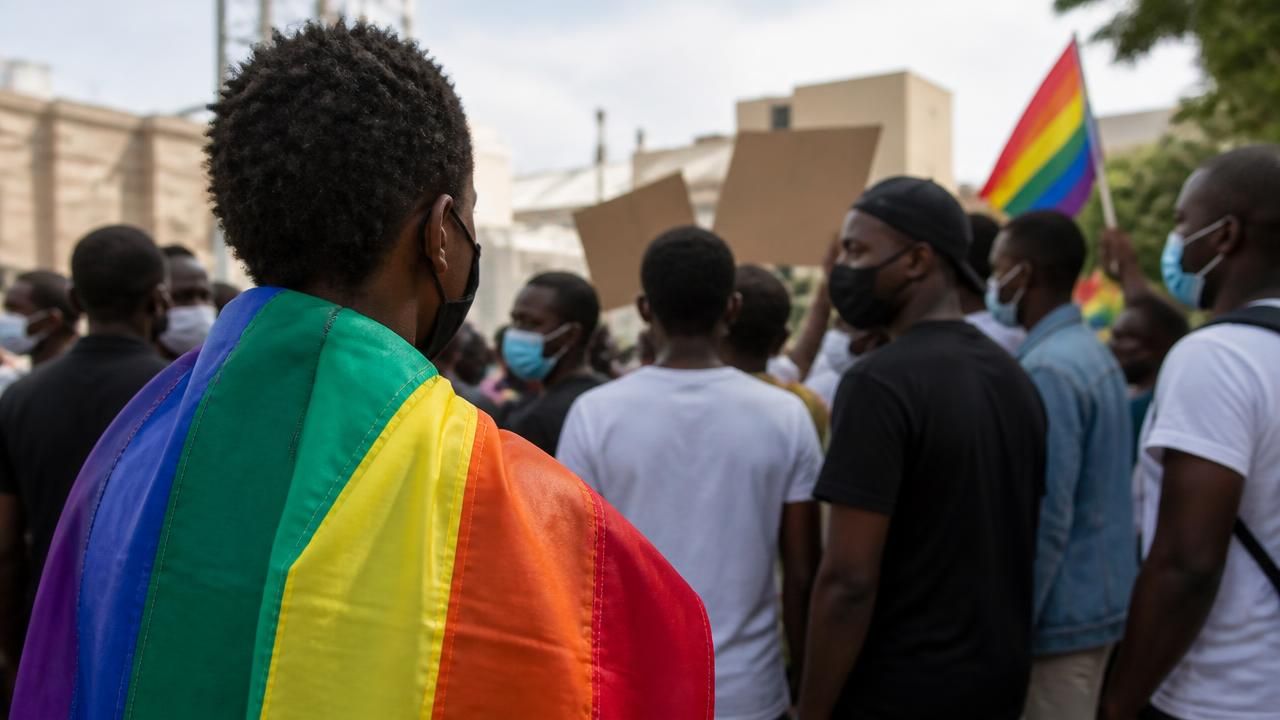
Senegalese LGBTQ+ people are deleting social media accounts, abandoning apartments and moving between the homes of trusted relatives as a widening government crackdown sends hundreds into detention, Human Rights Watch said in a report released this week.
The report, drawn in part on data compiled by the HIV Justice Network, documents at least 320 people arrested and detained on allegations of "acts against nature" since February — a figure rights groups describe as the largest wave of prosecutions the West African nation has seen in decades.
A Campaign of Arrests and Forced Testing
According to the findings, the detentions are accompanied by a set of tactics that advocates say are designed not only to punish but to expose and isolate a community that has long lived quietly on the margins of Senegalese society.
- At least 320 people detained on suspicion of "acts against nature" since February.
- At least 84 of those arrested were charged with "voluntary HIV transmission" — solely on the basis of their HIV-positive status, according to the report.
- Forced HIV testing of detainees, often conducted without consent or legal counsel present.
- Systematic barriers to legal representation, including limited access to lawyers and delays in bringing suspects before a judge.
"It threatens everyone's rights," rights advocates warned, arguing that a legal apparatus built to target one group inevitably expands to threaten the freedoms of the wider population — from the presumption of innocence to the right to medical privacy.
At least 84 people were charged with voluntary HIV transmission solely on the basis of their HIV status, a practice rights groups describe as a form of double punishment.
The charge of "voluntary HIV transmission" has alarmed public health specialists in particular. Criminalising a person for their serostatus, they argue, punishes people for seeking testing and care in the first place and drives the epidemic further underground.
The Legal Architecture Behind the Crackdown
Same-sex conduct has been illegal in Senegal since the colonial era, codified in Article 319 of the penal code, which punishes "improper or unnatural acts" with up to five years in prison and substantial fines. What has changed, according to the report, is the intensity of enforcement — a toughening of the law accompanied by a sharp rise in arrests, raids on private homes and prosecutions.
Senegal is a majority-Muslim country of roughly 18 million people where religious authorities wield significant social and political influence. Successive governments have tolerated a long-standing public silence around sexual minorities rather than active persecution. The current campaign marks a departure from that uneasy accommodation, rights groups say, and has pushed a community that once maintained a fragile visibility into full retreat.
HIV Justice Network, whose data underpins much of the report, has tracked what it describes as a pattern of prosecutions that conflate public health with criminal justice. Human Rights Watch echoed that framing, warning that the crackdown threatens Senegal's standing as one of the continent's more effective HIV responders.
How the Story Is Being Framed
Outlets across the world have approached the story from different angles, reflecting distinct editorial priorities. The Guardian led with the human cost — the flight into hiding and the arrests of more than 320 people — deliberately placing the HIV-related charges alongside the broader detention figures. The Associated Press foregrounded the watchdog's central finding: that Senegal's crackdown has forced LGBTQ+ people underground, framing the report as a formal indictment of state policy rather than a chronicle of individual suffering.
Metro Weekly, an LGBTQ+ publication, emphasised the scale of the arrests themselves — "hundreds" — situating Senegal within a wider continental rollback of sexual-minority rights. Aggregators including MSN carried the coverage to a general audience with headlines centred on the phrase "threatens everyone's rights," a framing that positions the crackdown as a universal civil-liberties issue rather than one confined to a single community.
Across the coverage, a common thread emerges: the story is no longer only about LGBTQ+ Senegalese, but about the country's legal system, its public health infrastructure and its international reputation.
Regional and Global Context
Senegal's crackdown arrives amid a broader regression across Africa. Uganda's Anti-Homosexuality Act, signed in 2023, introduced the death penalty for so-called aggravated homosexuality and triggered similar waves of arrests, evictions and public "outing" campaigns. Ghana's parliament passed a sweeping anti-LGBTQ+ bill the same year. In each case, rights groups have documented the collapse of HIV prevention programmes that had focused on men who have sex with men, a population where prevalence is far higher than in the general public.
Public health experts warn that criminalisation is epidemiologically self-defeating. When testing becomes evidence, and treatment becomes a record of a crime, people avoid clinics — and transmission rises. The 84 "voluntary transmission" charges cited in the report may, paradoxically, be the most consequential number in it.
The report also lands during a period of acute uncertainty for global HIV funding, with major donor programmes facing budget cuts that threaten the community-based organisations best placed to reach people now in hiding.
What Comes Next
Human Rights Watch has called on Senegalese authorities to release those detained solely for their sexual orientation or HIV status, halt forced testing and end prosecutions based on serostatus. So far, there has been no indication the government intends to change course.
For Senegalese LGBTQ+ people, the immediate calculation is simpler and more brutal: whom to trust, where to sleep, and how long the crackdown will last. The report's conclusion is that a community once able to live discreetly is now being forced to disappear entirely — and that the legal tools assembled to make that happen will not stop at one group's door.