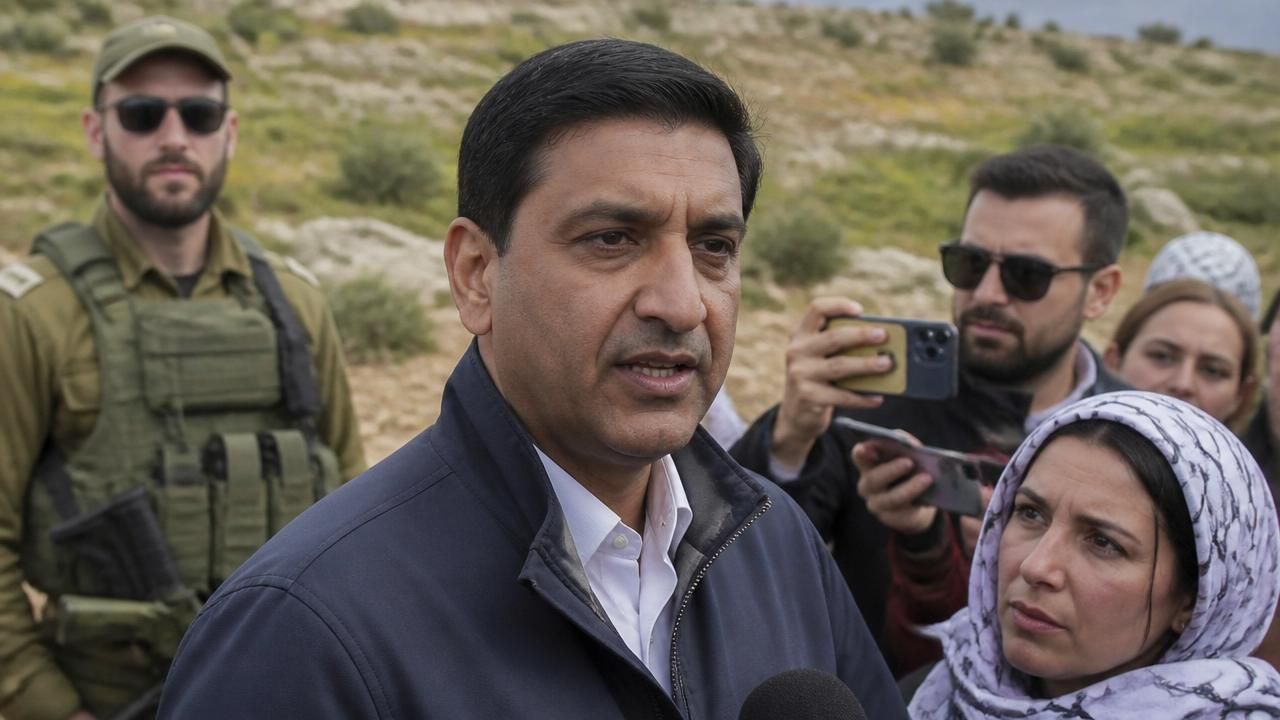
In a dramatic incident that underscores the volatile reality of the occupied West Bank, U.S. Representative Ro Khanna (D-Calif.) says he was detained by armed Israeli settlers for over an hour on [date]. The congressman, a prominent progressive and potential presidential aspirant, was traveling near the settlement of [location] when settlers blocked his vehicle, brandishing rifles—which Khanna noted were U.S.-made—and refused to let him pass. The Israel Defense Forces (IDF) were present but did not intervene, according to Khanna's account.
What Happened
Khanna described the incident in a series of social media posts and interviews. He said his convoy was stopped by a group of settlers who had blocked the road. When his team asked to pass, the settlers became aggressive, pointing weapons at the vehicle. Khanna stated that IDF soldiers arrived but did not order the settlers to disperse, leaving him effectively trapped for 90 minutes. "They blocked the road, they had U.S.-made rifles, and they detained a sitting member of Congress," Khanna told CNN. The congressman eventually was allowed to leave after intervention by U.S. diplomatic officials.
Political Context
The incident comes amid a sharp shift in how American politicians engage with the Israeli-Palestinian conflict. As the New York Times noted, past U.S. leaders toured the region to show support for Israel; today, Democratic presidential aspirants like Khanna are increasingly positioning themselves as critics of Israeli policy, particularly regarding settlements and Palestinian rights. Khanna's visit was part of a fact-finding trip organized by J Street, a liberal Jewish advocacy group that opposes settlement expansion.
"This is what Palestinians face every day—the humiliation and danger of being blocked by armed settlers with impunity," Khanna said. "It's unacceptable and it must stop."
Official Reactions
The Israeli government has not officially commented on the incident. However, the U.S. State Department confirmed it was aware of the matter and had provided assistance. The Biden administration has recently imposed sanctions on Israeli extremist settlers accused of attacking humanitarian aid convoys, as reported by the Los Angeles Times. This incident may further strain relations between the U.S. and the far-right elements of Israeli society.
Broader Implications
The detention of a sitting U.S. congressman by settlers is unprecedented and highlights the growing power of settler groups in the West Bank. The Economist recently reported on America's efforts to rein in settler violence, noting that the U.S. has imposed travel bans on some settlers. Khanna's experience may galvanize congressional action. "We need to hold the Israeli government accountable for allowing these armed militias to operate," Khanna said. He has called for a formal investigation and for the U.S. to condition aid to Israel on curbing settler violence.
Differing Perspectives
While Khanna's account is supported by his staff and U.S. officials, some Israeli media outlets have downplayed the incident, questioning whether it constituted a 'detention.' Right-wing commentators have accused Khanna of exaggerating to score political points. However, human rights groups say the incident is emblematic of a system where settlers operate above the law. "Settlers know they have impunity, and that's what makes this so dangerous," said an analyst from the Israeli rights group B'Tselem.
Historical Background
The West Bank, occupied by Israel since 1967, is home to over 400,000 Israeli settlers living in communities deemed illegal under international law, though Israel disputes this. Settler violence against Palestinians has surged in recent years, with the UN reporting a record number of attacks in 2024. The U.S. has historically shielded Israel from international criticism, but the Biden administration has taken a tougher stance on settlements, though it has not significantly altered military aid.
What's Next
Khanna has vowed to raise the issue in Congress and push for legislation that would require the State Department to report on settler violence and its impact on U.S. citizens. He also plans to meet with Secretary of State Antony Blinken to discuss the incident. For now, the congressman's ordeal serves as a stark reminder of the complexities and dangers of the Israeli-Palestinian conflict—and the changing dynamics of American politics in the region.