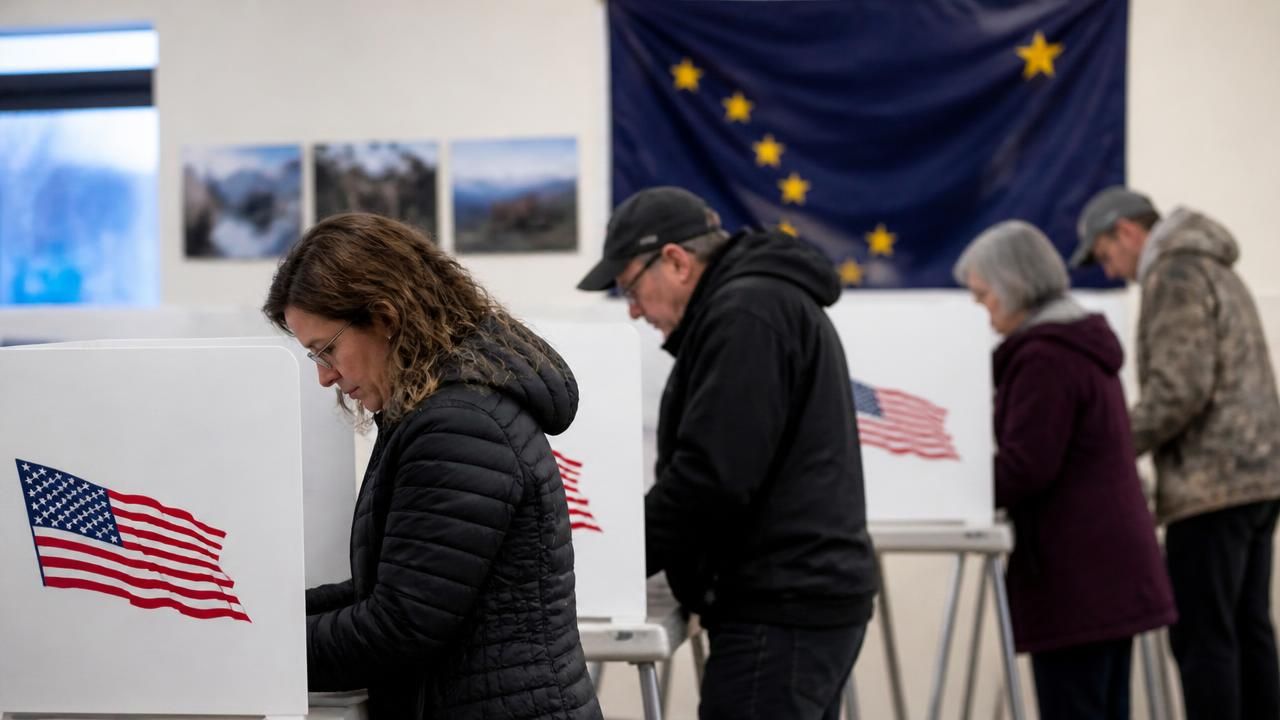
Alaska voters have once again declined to dismantle the state's distinctive election system, rejecting a ballot measure that would have repealed the open top-four primary and ranked choice voting (RCV) framework they approved in 2020. The result, confirmed across a spread of national and local outlets, marks the second time in as many cycles that repeal forces have come up short — a fact that supporters of the system are treating as a durable verdict rather than a fluke.
NPR emphasized the persistence of the outcome, noting that Alaskans had now voted down a repeal effort twice, with the earlier attempt failing narrowly. Politico's headline compressed the story to two words — "again" — framing the result as a recurring rebuke to reform opponents. PBS anchored its coverage in the mechanics of the vote, reporting that Alaskans rejected the measure seeking to repeal open primaries and the ranked voting system, while other syndicated reports described voters opting to "stick with" the current rules after what several outlets characterized as a chaotic election cycle.
A System Under Scrutiny — and Reaffirmed
Alaska's system, adopted by initiative in 2020, is among the most closely watched electoral experiments in the United States. It combines two changes: an open primary in which all candidates appear on a single ballot regardless of party, with the top four advancing, and a general election decided by ranked choice voting, in which voters order candidates by preference and ballots are transferred in rounds until someone crosses a majority threshold.
The 2020 initiative passed narrowly, and almost immediately became a target. Critics — including state Republican leaders and national conservative groups — argued the system is confusing, dilutes party accountability, and produces outcomes voters cannot easily anticipate. Defenders argue it rewards coalition-building, punishes extreme candidates, and ensures the winner has majority support rather than a plurality.
Twice now, Alaska voters have been asked whether they want to keep the system they approved in 2020. Twice, they have declined the invitation to repeal it.
How Alaska's System Works
- Open primary: Every candidate runs on one ballot; the top four advance regardless of party affiliation.
- Ranked general election: Voters rank candidates; if no one wins a majority of first choices, the last-place candidate is eliminated and those ballots are reassigned.
- Majority requirement: Tabulation continues in rounds until a candidate clears 50 percent.
- Slower counts: Because rankings must be processed in rounds, and because Alaska accepts absentee and mail ballots that arrive after Election Day, tabulation can stretch for days or weeks.
A Count That Takes Time
The repeal vote did not unfold in isolation. Alaska's Senate contest proved unusually slow — and, in the framing of some local coverage, potentially controversial — to call, a delay that is partly structural. Ranked choice tabulation cannot be finalized until every valid ballot is in hand, and Alaska's mail-heavy voting patterns mean late-arriving ballots can shift first-choice totals and, more importantly, the distribution of second and third preferences.
That lag created space for litigation. A Democratic-aligned challenge seeking to force the counting of rejected ballots was denied by a judge in a last-ditch effort as tallying concluded, according to syndicated reporting. The ruling closed off one avenue for contesting the outcome, but it also illustrated how the extended timeline inherent to RCV can become a venue for legal and political pressure.
Who Benefits? The Sullivan Analysis
Complicating the partisan shorthand around the repeal fight, analysis reported by the Alaska Beacon found that ranked choice voting may actually help Republican U.S. Sen. Dan Sullivan. The finding cuts against the assumption that RCV uniformly disadvantages Republicans — a premise that drove much of the national conservative opposition to the system. Instead, the Alaska evidence suggests the effects are candidate-specific: RCV can advantage incumbents with broad, cross-partisan appeal, even as it can hurt candidates whose support is concentrated in a narrow primary base.
That nuance helps explain the odd politics of the repeal campaign. The measure's defeat was not a clean partisan win. Some Republicans opposed repeal, and the pro-repeal coalition drew heavily on activists who argued the system was imposed on voters without sufficient understanding of its consequences.
What It Means
The outcome carries weight well beyond Alaska. RCV advocates — who have pushed similar models in Maine, Nevada, and a growing list of cities — will cite the repeat result as evidence of durability. Opponents will note that both victories were competitive, and that the repeal coalition has now built a base of support that came close to succeeding.
The broader lesson from the coverage is one of framing. National outlets told the story as a verdict on reform: voters keeping a system they like. Local and regional reporting focused on process: a chaotic election, a slow count, and a courtroom fight over rejected ballots. Both are true. Alaska has now reaffirmed its system while simultaneously demonstrating the friction that comes with it — a trade-off voters appear, for a second time, willing to accept.