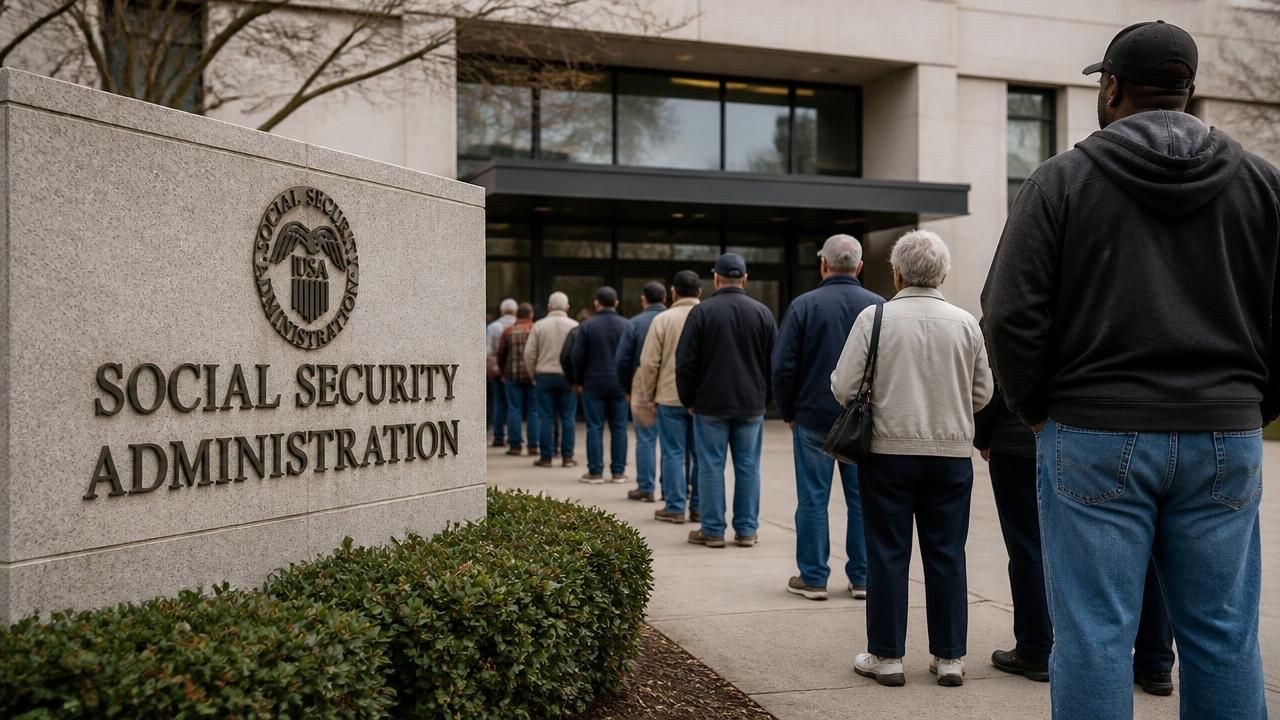
The Social Security Administration has confirmed the annual cost-of-living adjustment that will shape the budgets of roughly 70 million Americans, announcing a benefit increase that forecasts have pegged at about 3.6% for 2027 — a bump that arrives as consumer prices continue to run hot.
The news lands alongside fresh inflation data showing consumer prices in September jumped 3.7% from a year earlier, according to the Bureau of Labor Statistics. The two numbers are tightly linked: the COLA exists precisely to prevent retirees, disabled workers and survivors from falling further behind as the cost of everyday goods climbs.
For a typical retired worker receiving a monthly benefit in the low four figures, a 3.6% adjustment translates into roughly $60 to $70 more per month — real money, but modest relative to the increases families have absorbed on groceries, rent, insurance and utilities over the past several years.
How the Adjustment Is Calculated
The COLA is not a discretionary decision by lawmakers or the Social Security Administration. It is set by a formula written into law in 1972 and applied automatically since 1975, tying benefits to the Consumer Price Index for Urban Wage Earners and Clerical Workers (CPI-W).
Each year, the agency averages CPI-W readings from the third quarter — July, August and September — and compares them with the same period a year earlier. The percentage difference becomes the following January's COLA. When inflation accelerates, so does the adjustment; when prices fall, benefits generally do not, a quirk that has historically protected recipients during downturns.
That mechanical link explains why this year's 3.7% September inflation reading and the roughly 3.6% benefit increase are not contradictory but two sides of the same coin.
Biggest Increase in Years — But Not Necessarily Enough
Coverage of the announcement has split along a familiar fault line. Financial outlets have emphasized that the 2027 boost is among the largest in years, framing it as a meaningful cushion. Investopedia asked directly whether the increase "will be enough to combat inflation," while MLive's framing was blunter still — "probably not enough."
"Social Security 2027 COLA: How much will benefits go up each month? Probably not enough" — MLive headline
Advocates for seniors point out that the CPI-W measures the spending patterns of working-age households, not retirees, who devote a far larger share of their budgets to health care, housing and food — categories that have outpaced overall inflation. Medicare Part B premiums, which are typically deducted directly from benefits, have also risen in recent years, eroding the net gain.
There is a tax dimension as well. Because the thresholds that trigger federal taxation of Social Security benefits have never been indexed to inflation, a larger COLA can push some recipients into owing taxes on a bigger share of their benefits — a phenomenon critics call a "stealth tax."
The Maximum Benefit Also Rises
The adjustment does not apply uniformly. Workers who claim at full retirement age or later, and who earned at or above the taxable maximum throughout their careers, receive the highest possible payout — and that ceiling rises with the COLA. Regional outlets, including Alabama's AL.com and California papers such as The Californian and the Free Press, have focused on what the change means locally, calculating how much more the highest earners and typical retirees in their states could see in 2027.
Because benefits are calculated from a worker's lifetime earnings, the dollar impact varies widely: a low-earning spouse or survivor may see only a few dollars more per month, while a maximum-benefit claimant could see well over $100.
How Recipients Can Estimate Their Own Number
Consumers looking for a personalized figure have several tools. The Social Security Administration's my Social Security portal shows individual benefit estimates based on actual earnings records. Independent calculators, such as the one highlighted by AS USA, let users model different claiming ages and projected COLA scenarios.
- Check your statement: Log in to your my Social Security account to see your current and projected benefit.
- Factor in Medicare: Part B premiums are deducted before your check arrives, so the net increase is often smaller than the headline percentage.
- Plan for taxes: Depending on total income, up to 85% of benefits can be subject to federal income tax.
- Consider timing: Claiming later increases your base benefit, and every future COLA compounds on the larger figure.
The Bigger Picture
Behind the annual arithmetic lies a more uncomfortable debate. Social Security's trust funds face a projected depletion date in the mid-2030s, after which the program would be able to pay only a portion of scheduled benefits absent congressional action. Neither the COLA formula nor the program's financing has been seriously overhauled in decades, and the politics of touching either remain radioactive.
For now, the takeaway is straightforward: checks will be larger next year, but for many households the increase will largely be absorbed by the same rising prices that made it necessary. As one common framing of the announcement put it, the question is not whether benefits rise — it is whether they rise fast enough.