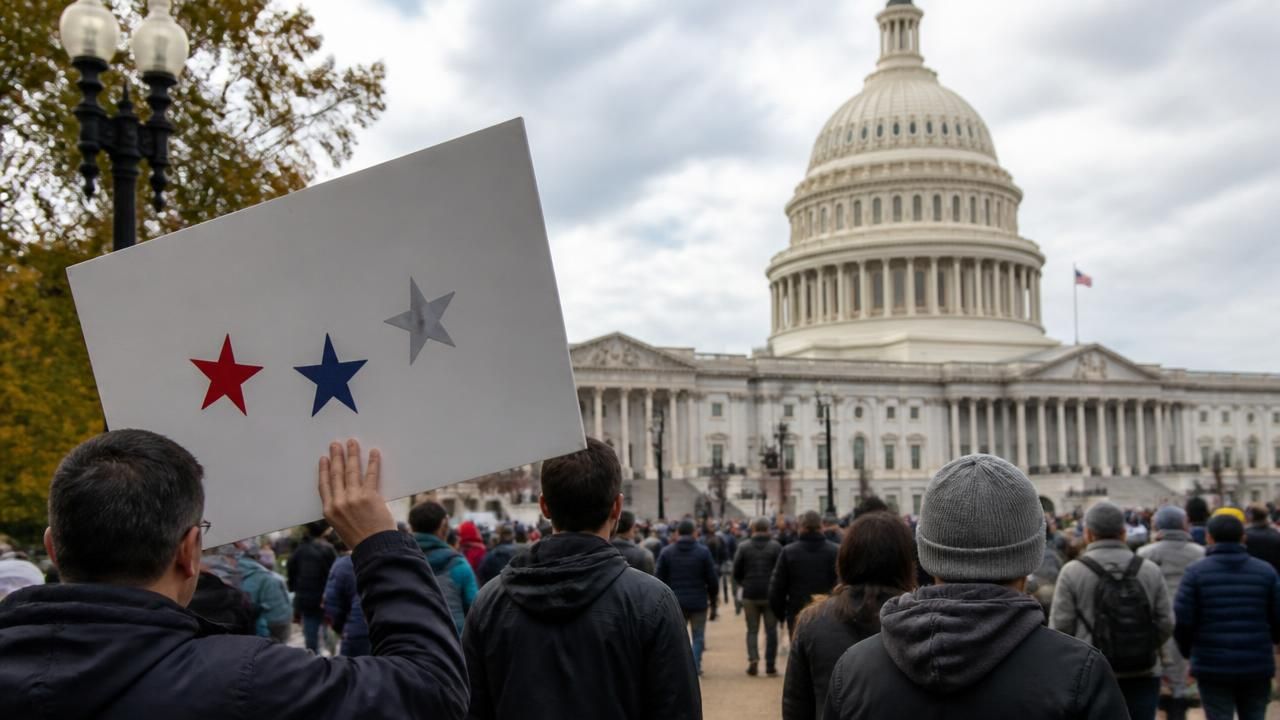
Nearly 200 independent candidates are running in more than 100 congressional races across the United States this cycle, an insurgency that even its own participants describe as long-shot politics — and one that, taken together with a restive bloc of independent and undecided voters, is quietly reshaping how both parties think about the 2026 midterms.
The scale of the independent field, reported by NPR Politics, marks one of the largest coordinated efforts in recent memory to prove there is a viable alternative to the two-party system. The same reporting is blunt about the arithmetic: the chance of any individual independent winning is very low. What the candidates say they want, win or lose, is to meet voters in the middle.
A Field Built on Long Odds
The strategy is less about flipping seats than about realignment — forcing major-party candidates to compete for voters who no longer feel represented. That framing is being tested in a cycle where neither party can count on a reliable coalition. With control of the House and Senate within a handful of seats, even a small independent vote share could decide outcomes.
The Senate Map: Nebraska, South Dakota, Idaho
Vox's coverage focuses on the upper chamber, where independent Senate candidates in Nebraska, South Dakota and Idaho could realistically swing close races. The outlet frames the central question sharply: not merely whether independents can win, but what they would actually do once seated.
That is a harder question than it sounds. Independents who caucus with a party inherit its committee assignments and leadership structure; those who refuse to caucus can find themselves without leverage at all. Historically, independent senators have functioned as pivotal votes — but they have also been absorbed into one caucus or the other, a dynamic that critics say turns the "independent" label into a negotiating position rather than a governing philosophy.
The Voters Who Actually Decide
The candidate story is only half the equation. MSN's reporting identifies the "independent voters" most likely to determine which party triumphs in the 2026 midterms — a group that is disproportionately skeptical of both major parties and unusually volatile in its preferences. NBC News, meanwhile, has been tracking 16 undecided voters through the cycle, a running snapshot of how the remaining persuadable slice of the electorate is weighing its options.
Focus-group reporting of this kind tends to produce a consistent portrait: these voters are not ideologically centrist so much as distrustful of institutions, and they respond to candidates who appear to be operating outside party machinery.
Cracks in the Republican Coalition
A new poll adds pressure from inside the majority. According to MSN, roughly one in four Trump voters say Republican candidates should break from the president — a finding that complicates the GOP's assumption of a unified base heading into the midterms.
Poll: 1 in 4 Trump voters say GOP candidates should break from the president
The number is not a revolt, but it is a warning. Candidates in competitive districts must decide whether loyalty to the White House energizes their base or alienates the independents they need.
The Radical Case: Abolish the Parties
The most aggressive framing comes from a USA Today "Your Turn" opinion piece arguing that political parties should be abolished outright to "set voters free." The argument goes well beyond supporting independent candidacies: it attacks the structural privileges parties enjoy — ballot access, debate thresholds, gerrymandered districts drawn to protect incumbents — as distortions of democratic choice.
That position remains far outside the mainstream, but it captures a mood that the other reporting documents more cautiously: a rising demand for alternatives rather than a coherent alternative itself.
What History Suggests
Archived Wikinews coverage offers a useful mirror. The outlet's "On the campaign trail" dispatches from 2012 and its later May 2024 installment followed the same questions now being asked — how third-party and independent movements gain traction, and why they so often fade. Its interview with Indiana State Senator Mike Delph reflects the local-level version of the same tension, in which state legislators balance party discipline against constituent frustration.
Perhaps the most instructive precedent is Wikinews' account of the 2008 McCain–Obama debates. Those forums were built around two candidates and largely excluded everyone else — a reminder that the debate stage itself is a structural barrier for independents, and one that matters more than any single policy position.
A Note on Sourcing
Several source pages for this story were not fully accessible. Wikinews entries were served behind a robot policy, the USA Today opinion page returned an access restriction, and MSN and NBC pages delivered only skeleton markup. In those cases, headlines and accompanying summaries were used, and no claims have been attributed to unsourced text.
What to Watch
- Ballot access: How many of the nearly 200 independents survive signature challenges and filing deadlines.
- The Senate trio: Whether Nebraska, South Dakota and Idaho independents draw enough support to shift margins.
- The president's drag: Whether the one-in-four figure grows into a genuine split among Republican candidates.
- Debate thresholds: Whether any independent clears the polling bar required to reach a national stage.
None of this predicts a breakthrough. But the convergence of a swelling independent field, a clearly pivotal independent electorate and measurable slippage inside one party's coalition suggests that the two-party system's grip is being tested from both outside and within — and that the 2026 midterms may be remembered less for who won than for who refused to pick a side.