Apple opened preorders today for the HomeView, the company's first smart display — a 7-inch, $299 touchscreen-and-speaker hub that Apple hopes will become the command center of the connected home. The device represents Apple's most significant new hardware category in years and its most direct challenge yet to Google's Nest Hub and Amazon's Echo Show.
The launch drew immediate coverage across the technology press, with hands-on impressions, buying guides and competitive analyses arriving within hours. Forbes called it Apple's "smart home comeback" and paired the announcement with a broader refresh that includes new Apple TV hardware, while CNN described the HomeView as "the company's biggest new release in years."
A hub designed for the whole household
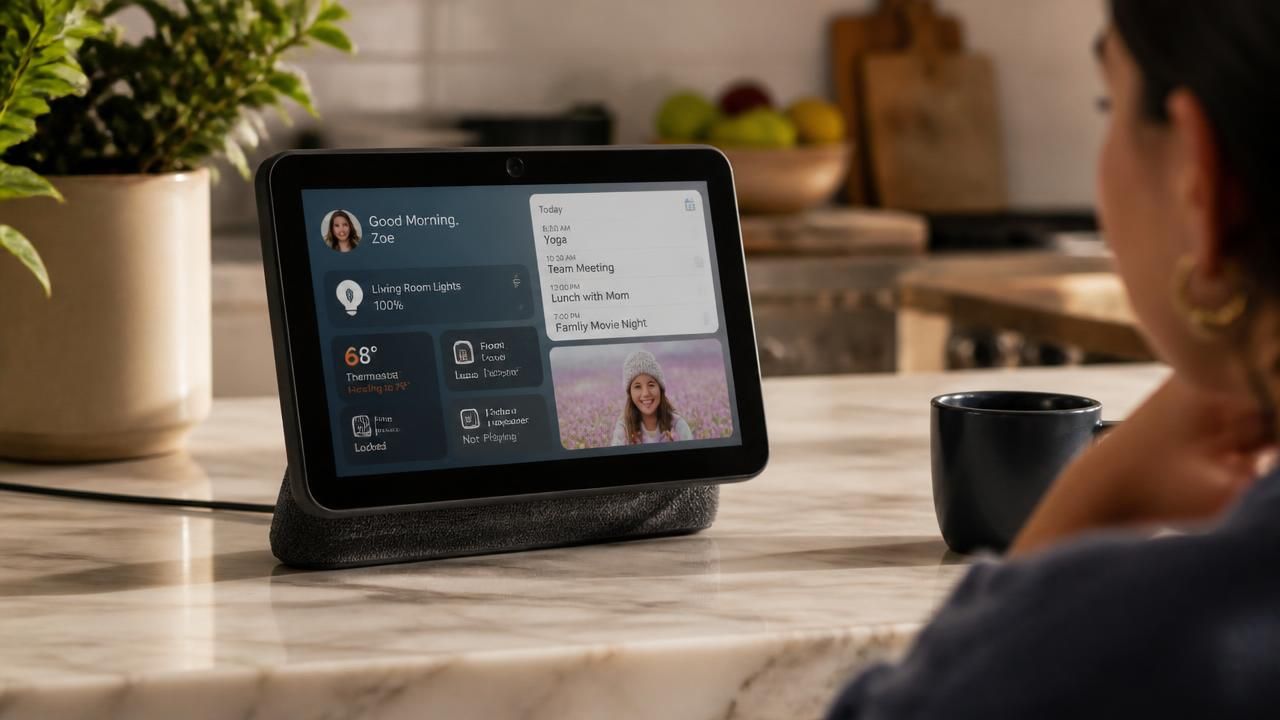
According to Ars Technica, the HomeView is a 7-inch smart display and speaker built to serve as a central access point for up to six members of a family, giving each person a way to reach and control Apple's ecosystem of devices, apps and the Siri generative AI chatbot. The framing is deliberate: rather than a single-user accessory, Apple is positioning the HomeView as shared family infrastructure.
That shared-household pitch rests heavily on recognition. MSN's headline promises a device "that knows who's looking at it," and the Daily Mail reports the £299 unit can recognize six family members and surface a personalized experience for each — calendars, reminders, controls and content tuned to whoever is standing in front of the screen. It is a familiar idea in the smart-display category, but Apple's implementation leans on the same biometric and on-device processing story it has told across iPhone and Apple Watch.
Apple wants HomeView at the heart of your smart home — Cult of Mac
Siri gets a face, and a room
The HomeView is, in effect, the first piece of hardware designed around the generative AI version of Siri. Users can speak to the display to control smart home devices — Ars Technica cites closing smart blinds or activating smart locks as examples — and the assistant responds with the more conversational, context-aware behavior Apple has been promising since it announced its AI overhaul.
Mashable framed the launch simply as Apple releasing "a smart display with Siri AI," underscoring how tightly the two are coupled in the marketing. For Apple, the HomeView is as much a vessel for proving Siri's revival as it is a piece of home hardware — a point that matters given how long the assistant lagged rivals.
Control, cameras and nine live feeds
Beyond voice, the HomeView is built as a monitoring and entertainment surface. Key capabilities reported across outlets include:
- Simultaneous video: the display can show livestreams from up to nine cameras at once, turning a hallway or kitchen counter into a lightweight security console.
- Smart home control: direct manipulation of lights, locks, blinds and other HomeKit-compatible accessories.
- Built-in camera: Gizmochina reports the HomeView includes a camera, enabling FaceTime-style communication and recognition features.
- Wall-mounted option: a variant designed to be fixed to a wall, in addition to the countertop configuration.
- Display and audio: a 7-inch Liquid Retina panel paired with speaker hardware, per Geeky Gadgets.
The combination places the HomeView squarely against the Nest Hub and Echo Show. Android Authority was blunt about the competitive framing, headlining its coverage around a "Nest Hub rival," while Redmond Pie emphasized Apple's arrival in a category — the smart home hub with a display — it had conspicuously avoided.
Why it matters: Apple's smart home restart
Apple's home ambitions have had a mixed record. The original HomePod arrived late and expensive, was repositioned with a cheaper successor, and the HomePod mini became the de facto gateway to HomeKit. The company has long participated in the Matter standard and shipped a Home app, but it never produced the screen-equipped hub that Amazon and Google used to dominate kitchen counters and living rooms.
The HomeView closes that gap. Forbes' framing of a "smart home comeback" reflects a broader read among analysts: Apple is not launching a single product but re-anchoring an entire strategy around a device that can host Siri, HomeKit, Apple TV content and family communication in one place.
How the press is framing it
Coverage clustered into three camps. Hands-on outlets — The Verge, MacDailyNews and CNN among them — focused on first impressions of the hardware and the feel of the interface. Retail-oriented outlets such as Mashable pivoted quickly to where to buy the HomeView, signaling strong consumer interest. Trade and enthusiast sites, including Cult of Mac and Redmond Pie, framed the device strategically, as the keystone of Apple's home ecosystem.
The regional split was also visible: US outlets led with the $299 price, while the Daily Mail led with £299 for UK readers. Several source pages, including TechXplore and CNN, were blocked or gated at the time of collection, a reminder of how fragmented access to the launch coverage remains.
What we still don't know
Apple has not fully answered the questions that will determine whether the HomeView succeeds. Chief among them: how face recognition data is stored and whether it stays on-device; whether personalized experiences require an iCloud+ or Apple One subscription; how well third-party smart home devices are supported beyond HomeKit and Matter; and how the wall-mounted version is priced. Shipping dates, storage tiers and the depth of the entertainment integration also remain only partially detailed.
What is clear is that Apple has decided the smart home is worth another serious bet — and this time, it's putting a screen on it.