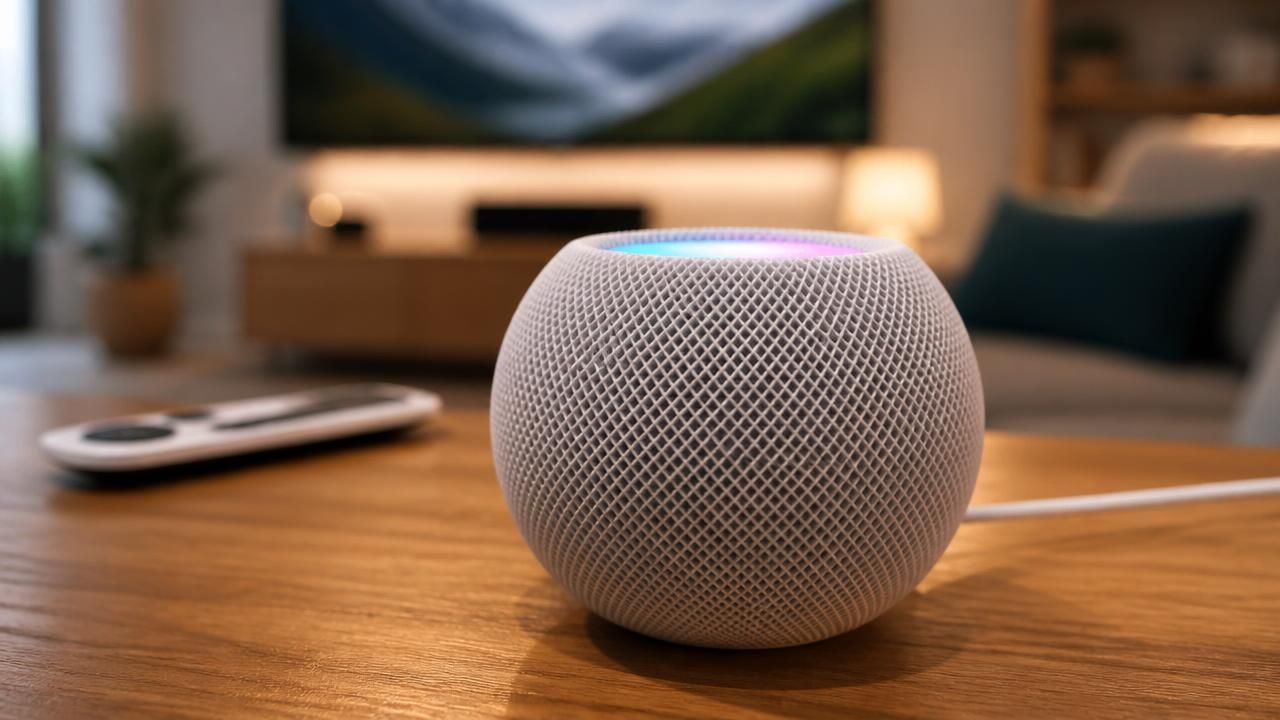
Apple has ended one of the longest waits in its recent hardware history. After nearly six years without a refresh, the company introduced the HomePod Mini 2, a $149 smart speaker that is available for preorder now and is scheduled to launch on Friday, October 30. The announcement arrives alongside a broader home-entertainment push that includes a new Apple TV 4K and a previously unannounced product, HomeView.
The news landed with an unusually split reception across the Apple press, largely because of one conspicuous caveat: Apple's much-hyped Siri AI overhaul will not be ready when the speaker hits shelves.
A Speaker That Waited Six Years for This
The original HomePod Mini debuted in 2020 and, until now, had gone untouched even as Amazon and Google refreshed their entry-level smart speakers multiple times. The second-generation model keeps the $149 price point — a notable decision in a category where competitors routinely undercut $100 — while substantially upgrading the internals.
At the center of the upgrade is the S10 chip, the same silicon that debuted in the Apple Watch Series 10. The Verge noted that the processor "can power a host of features," positioning the speaker less as a standalone music device and more as a computational node inside Apple's home ecosystem. The top of the device retains its touch-sensitive surface for playback and volume controls.
Inside the HomePod Mini 2
According to early hands-on coverage, the new speaker's most consequential capabilities are ecosystem-driven:
- Surround sound: The HomePod Mini 2 can be integrated into a four-speaker surround system paired with the new Apple TV 4K.
- Mac audio: The speakers can serve as external audio for a Mac computer, provided the machine supports Wi-Fi 6E.
- Siri AI (future): Apple says the speaker will support the revamped Siri AI via a software update, pairing owners with a "better, more helpful voice assistant."
- Existing hardware support: The device launched alongside a new Apple TV 4K and HomeView, rounding out a refresh of Apple's living-room and smart-home lineup.
The Siri AI Asterisk
The Verge framed the launch bluntly: "Apple announces the HomePod Mini 2, but it isn't ready for Siri AI at launch." That framing captures the central tension of the release. Apple has spent the better part of two years promising a generative-AI-powered Siri, and the HomePod Mini 2 is the first piece of hardware explicitly designed around that promise — yet buyers who preorder will initially receive the same assistant experience they already know.
The speaker includes the S10 chip, which debuted in the Apple Watch Series 10, and it can power a host of features. It will support Siri AI after a future update, pairing you with a better, more helpful voice assistant.
— The Verge
That gap is significant in a product category where software is the primary differentiator. Amazon's Alexa+ and Google's Gemini-powered Assistant have both begun shipping AI-first experiences, and Apple's willingness to sell hardware ahead of its marquee software feature suggests confidence that buyers will wait — or simply that the company does not want to cede another holiday season to competitors.
HomeView and the Wider Hardware Wave
Appleosophy reported that Apple also announced HomeView, a new product that joins the Apple TV 4K and HomePod Mini 2 in the company's home lineup. HomeView has been the subject of speculation for years — a home hub or display-class device meant to centralize smart-home control, video calls, and ambient computing.
The announcement was not the only Apple hardware news in circulation. MacRumors reported that an iPad Mini with an A20 Pro chip, additional HomePod Mini colors, and the new Apple TV 4K had all leaked, while AppleInsider published a broader shipping timeline covering HomeView, an OLED MacBook Pro, and "the rest of its 2026 hardware."
Conflicting Timelines
Where coverage diverges most sharply is on timing. The Verge's preorder reporting places the HomePod Mini 2 launch firmly on Friday, October 30. But MacObserver reported that a new Apple TV and HomePod Mini are "still expected in 2026," citing a report — a framing that suggests some outlets view these devices as part of a longer roadmap rather than an imminent release. MacRumors, meanwhile, headlined its coverage "New HomePod Mini, Apple TV, and More Coming Soon," hedging on dates entirely.
The discrepancy likely reflects Apple's staggered rollout strategy: announce the full ecosystem vision, make the volume product — the $149 speaker — available first, and sequence more expensive or more complex hardware into subsequent quarters. It is a playbook Apple has used before with the iPhone and Apple Watch.
Why It Matters
Apple's smart-home business has long lagged its rivals in unit share, and the HomePod line has been repositioned repeatedly since 2018. The HomePod Mini 2, paired with a new Apple TV and HomeView, represents the company's most concerted attempt yet to make the home a genuine platform — one where speakers, streaming boxes, and hubs reinforce each other under a single Siri AI layer.
The gamble is that customers will buy the hardware now and trust the software later. For a company that has staked its AI reputation on delayed features, that trust is no longer guaranteed — and the next few months of reviews will determine whether the HomePod Mini 2 is remembered as a long-overdue refresh or a bet placed one update too early.