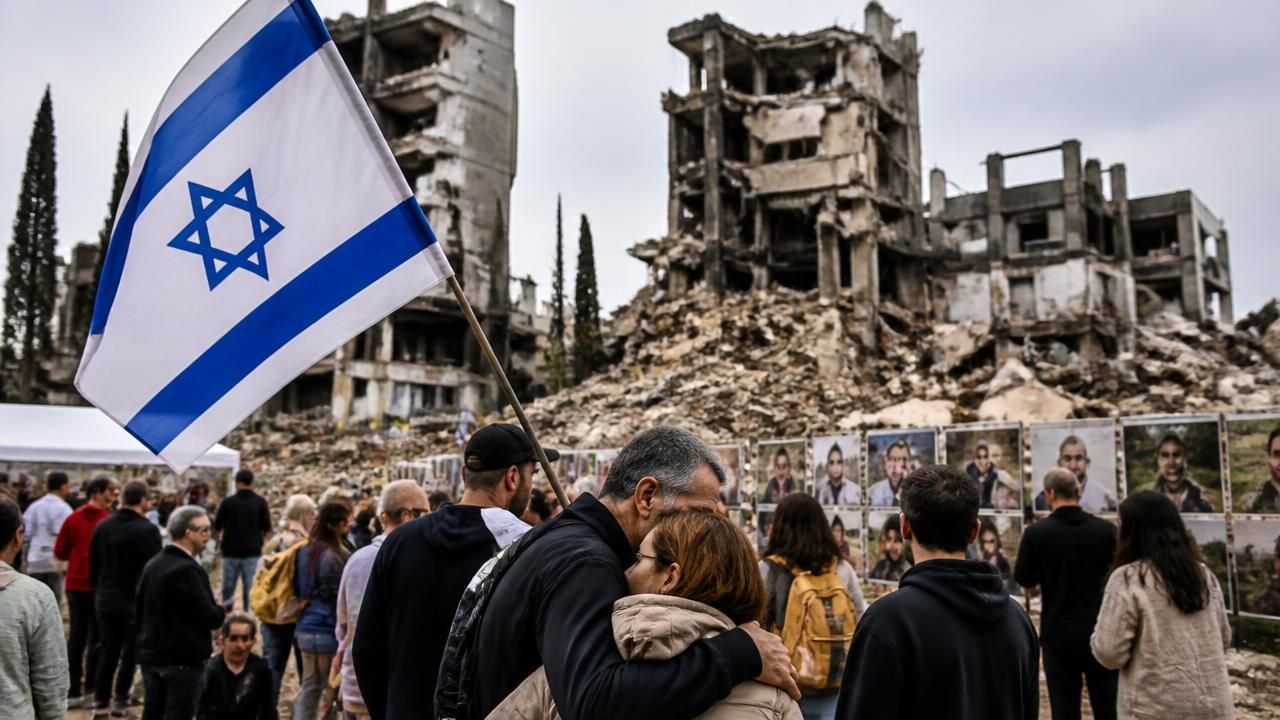
More than two years after the Hamas-led assault that shattered Israel's sense of security, the country is preparing to hold its first national election since Oct. 7, 2023 — a vote that will serve as a collective verdict not only on the war in Gaza but on the meaning of the catastrophe itself. Yet the clearest finding from the coverage surrounding the anniversary is that Israelis remain profoundly divided, and that the attack has transformed the region's politics without resolving the questions it raised.
A Nation Divided Over Blame
The New York Times frames the coming election as a referendum on responsibility — and finds no consensus. Israelis are split, the paper reports, over whether to hold Prime Minister Benjamin Netanyahu personally accountable for the negligence that left the Gaza border communities exposed, or whether to fault what some describe as the “treason” of his generals and the security establishment. That binary — political failure versus military betrayal — has become the organizing fault line of Israeli public life, cutting across the same coalitions that once rallied around the flag.
As Israelis prepare to vote for the first time since the Hamas-led assault, they remain divided over whether to hold Prime Minister Benjamin Netanyahu responsible for negligence or fault the “treason” of his generals.
Israeli journalists covering the prime minister's trajectory describe a paradox: Netanyahu's political survival has repeatedly defied predictions, even as the Oct. 7 failure permanently altered the terms of his leadership. His base has consolidated around the argument that he alone can resist international pressure and secure the country's future, while his opponents argue that the war's unanswered questions — the hostages, the investigations, the reconstruction of the border towns — can only be addressed by a change at the top.
The election itself is a first in another sense: it is the first time the Israeli electorate will render judgment on a government that presided over the deadliest single day in the country's history, and the first in which the politics of the hostages' families, the reservists and the evacuated northern and southern communities will be weighed as a bloc.
Lebanon and Hezbollah's Changed Reality
The Oct. 7 attack did not only rewrite Israeli politics. It also transformed the political reality of Lebanon and Hezbollah, which opened a supporting front the day after the assault and, in doing so, invited a war it has struggled to frame as a victory. The militia's decision to tie its fate to Gaza exposed Lebanon to a devastating Israeli campaign, eroded Hezbollah's domestic standing and forced Beirut's fractured political class to confront questions — about the group's weapons, its role in the state and its regional patrons — that had been deferred for a generation.
The result is a Lebanon in which Hezbollah remains a formidable force but no longer an untouchable one, and in which the argument over disarmament and sovereignty has moved from the margins to the center of national debate. Regional analysts caution that the shift is fragile: the group retains significant military capacity and political leverage, and any attempt to press its disarmament too quickly risks renewed conflict.
Washington's Turnabout
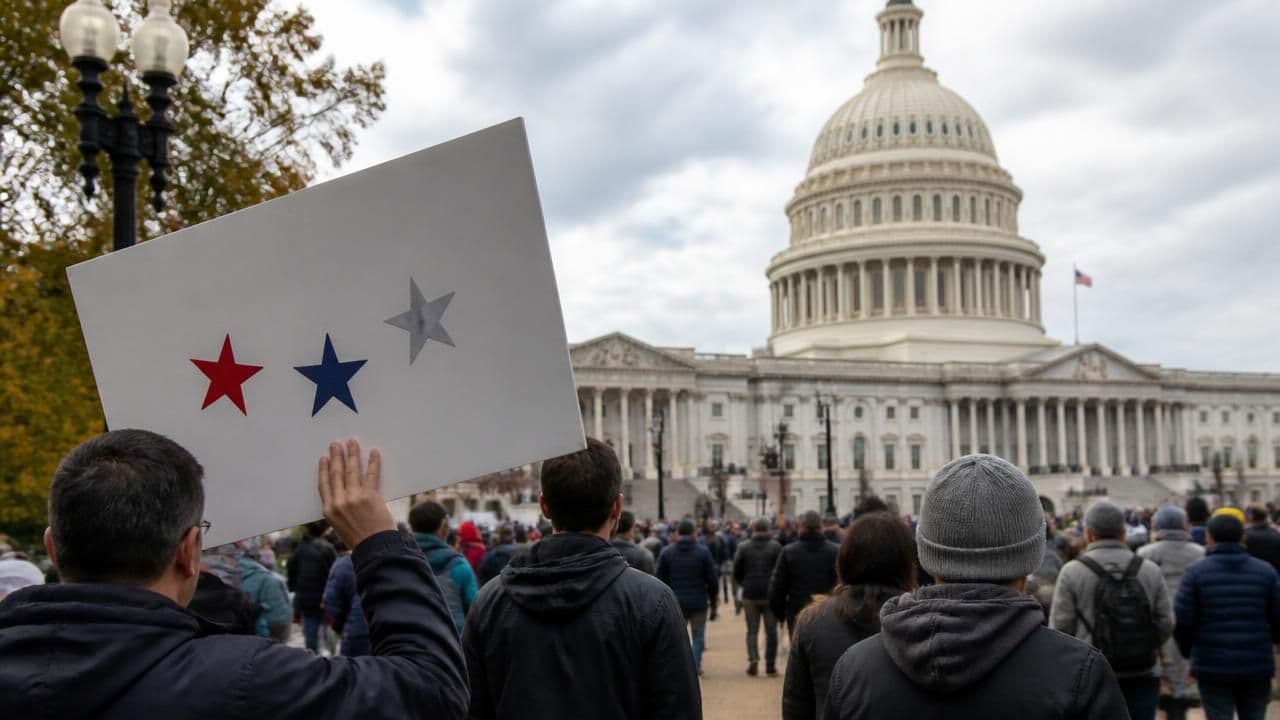
In Washington, the aftermath has produced its own realignment. Sen. Chris Coons, a Delaware Democrat long regarded as one of the party's most dependable friends of Israel, has undergone a notable turnabout — moving from a posture of near-unconditional support toward a more critical stance that conditions assistance on how the war is conducted and how the postwar is planned. His evolution is a useful barometer of the broader Democratic coalition, where younger voters, Arab American and Muslim constituencies and progressive activists have pushed the party's center of gravity away from its traditional position.
The shift is not merely an American story. It reflects a wider recalibration across Western capitals, where governments have struggled to reconcile support for Israel's security with mounting alarm over civilian casualties, the humanitarian crisis and the erosion of any credible political horizon for Palestinians.
Stronger — and More Alone
Not everyone reads the moment as one of decline. One widely circulated American opinion essay argues the opposite: three years after Oct. 7, Israel is stronger militarily — its adversaries degraded, its intelligence rebuilt — and yet more isolated diplomatically than at any point in decades. That formulation captures the central tension of the post-Oct. 7 era, in which battlefield gains have not translated into regional acceptance or domestic consensus.
The differing frames among outlets are themselves revealing. Israeli and U.S. coverage tends to center on Netanyahu's political fate and the question of blame, treating the story as a drama of leadership and accountability. Lebanese and regional coverage focuses on the balance of power between Hezbollah and the state, and on what the war has done to an already collapsed economy. Opinion pages, meanwhile, reach for the grand historical arc — strength and solitude, deterrence and dependence.
What Comes Next
The coming Israeli election will not settle the deeper questions. It may, however, determine whether the country's political system can process the failures of Oct. 7 through institutions — commissions, courts, ballots — or whether those failures remain contested territory in a permanent culture war.
- In Israel: an election framed as a verdict on negligence, with Netanyahu's base and his critics offering incompatible accounts of responsibility.
- In Lebanon: a weakened but undefeated Hezbollah, and a state under pressure to assert sovereignty it has long outsourced.
- In Washington: a Democratic Party renegotiating its relationship with Israel, with figures like Coons moving from loyalty to leverage.
- Regionally: a militarily strengthened Israel facing deepening diplomatic isolation.
The attack of Oct. 7, in other words, changed almost everything about the region's politics except the ability of its leaders — and their publics — to agree on what it meant.