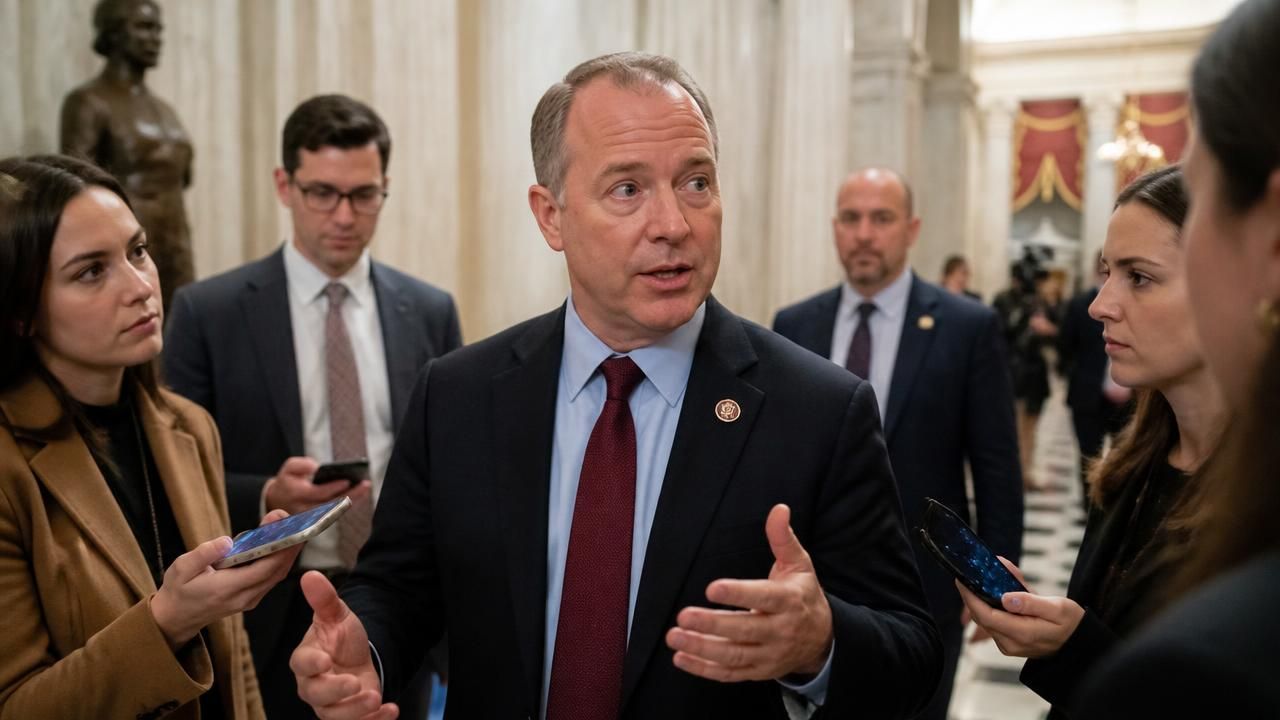
WASHINGTON — Rep. Josh Gottheimer, D-N.J., is co-leading a bipartisan effort to pressure House colleagues into signing a public pledge that they will accept the results of this fall's midterm elections and will not attempt to block the seating of fellow members when the next Congress is sworn in.
The push, first reported by NPR and carried by member stations including Boise State Public Radio and Iowa Public Radio, represents one of the most direct attempts yet by sitting lawmakers to pre-empt a post-election confrontation inside the House itself — a chamber that has become the focal point of disputes over certification since the January 6, 2021, attack on the Capitol.
What the Pledge Would Commit Lawmakers To
According to descriptions of the effort, signatories would make two explicit commitments:
- To accept the certified results of the midterm elections, regardless of which party wins control of the chamber.
- To oppose any effort to block the seating of a duly elected member when the new Congress convenes next year.
The second clause is significant because the House — unlike the Senate — has historically claimed broad authority to judge the qualifications of its own members, a power that has been used only rarely but that carries enormous potential for disruption if a narrow majority decides to weaponize it.
A Bipartisan Duo, and a Debate Over Framing
The Hill characterized the initiative as "bipartisan lawmakers" urging colleagues to accept midterm results, emphasizing the cross-party nature of the appeal. MSN syndicated that straight-news version of the story twice, under headlines stressing the bipartisan pairing and the simple ask that lawmakers promise to accept the outcome.
But a second, sharper MSN framing cast the same development in far more dramatic terms: "GOP rebels plead with colleagues to promise midterm loss won't lead to another coup." That version foregrounds Republican signatories as dissidents within their own conference, implying that the real audience for the pledge is a faction unwilling to concede defeat.
"Stopping Election Theft Before It Starts" — The American Prospect's headline for its coverage of the same effort
The American Prospect's framing goes further still, treating the pledge not as a courtesy but as a form of preventive medicine against a documented threat. Across outlets, then, the same handful of facts produced three distinct narratives: a routine bipartisan civility measure, a rebellion inside the GOP, and an anti-coup insurance policy.
Coverage was uneven in reach. Some syndicated versions of the story were inaccessible to readers because of rate-limiting and paywall errors on aggregator and magazine sites, meaning that for many audiences the pledge registered only through the most dramatic headline attached to it — a reminder of how framing, rather than new information, drives much of the public's understanding of procedural news.
Why Now: The Shadow of 2021
The effort is best understood against the recent history of contested certification. In January 2021, 147 Republican lawmakers voted to sustain objections to electoral votes in at least one state even after a mob overran the Capitol. In 2022, Congress passed the Electoral Count Reform Act, which tightened the rules for how objections can be raised and clarified that the vice president's role in counting electoral votes is ministerial.
That law addressed the presidential certification process, but it did not fully resolve the separate question of how the House handles challenges to the seating of its own members. A member-elect can, in principle, face a vote on whether to be seated, and the House has on rare occasions refused to seat someone — including the 1900 case of Brigham H. Roberts over polygamy and the 1967 exclusion of Adam Clayton Powell Jr., a decision later narrowed by the Supreme Court.
Historians also point to the 1876 Hayes-Tilden dispute, resolved by an extraordinary electoral commission, as evidence that contested transitions can destabilize the country for years. The current pledge effort is an attempt to prevent a modern version of that scenario from playing out at the committee and floor level.
Skeptics Ask: Who Enforces a Pledge?
The obvious objection is that a pledge is not a law. It carries no penalty, no enforcement mechanism, and no binding effect on a future House majority. Members who sign could still vote to challenge a colleague's seating, and members who refuse to sign face no consequence beyond political criticism.
Supporters counter that the value lies in the public record. A signed pledge makes it harder for a lawmaker to later claim that blocking a member was an unavoidable procedural step, and it gives voters a concrete yardstick against which to measure their representatives' conduct.
The effort also lands amid continued pressure on state and local election administrators, who have faced harassment and resource shortages since 2020. A congressional commitment to accept results would not directly address those pressures, but it would remove one avenue for post-election chaos at the federal level.
What Comes Next
The immediate test is how many members sign. A pledge endorsed by a narrow, overwhelmingly Democratic group would be dismissed as symbolic; one with a substantial number of Republicans could change the political calculus for members weighing whether to object next January.
The larger test is whether norms that once went without saying can be restated in writing — and whether, in a polarized chamber, a written promise still means anything at all.