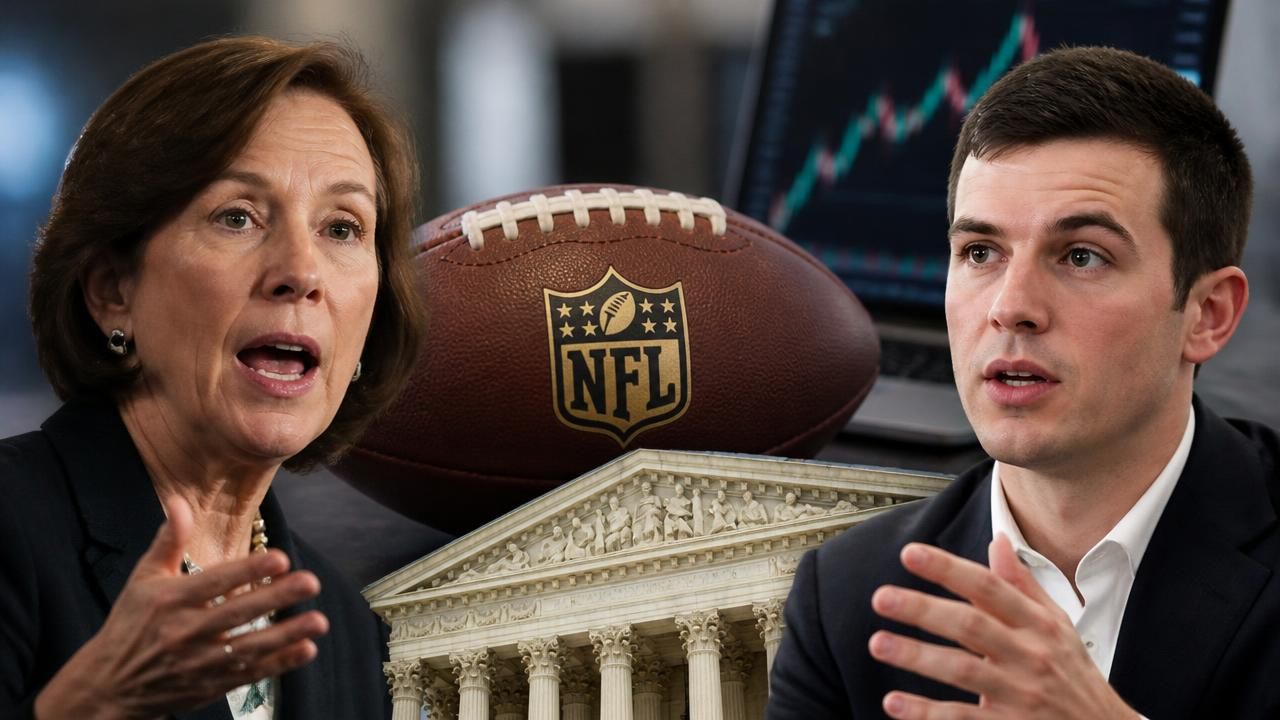
The long-simmering argument over prediction markets has escalated into a full-blown political and legal war, one now headed for the Supreme Court and staffed by an unlikely cast: a former senator who once tried to outlaw the business, the National Football League, and a startup spending millions to convince Washington that betting on the Super Bowl is not gambling.
At the center of the dispute is a deceptively technical question: are “event contracts” — derivatives that pay out based on the outcome of a game, an election or an economic report — regulated financial products, or gambling by another name? Two years of court victories have allowed platforms such as Kalshi and Polymarket to expand rapidly into sports, by far the most lucrative category. That growth has drawn in sports leagues, state gaming regulators, members of Congress and a lobbying operation expanding nearly as fast as the markets themselves.
A senator’s warning, and a lucrative reversal
The fight is not new. In July 2010, during Senate debate on the Dodd–Frank Wall Street Reform and Consumer Protection Act, Sen. Blanche Lincoln (D-Ark.) predicted precisely this outcome. Event contracts, she warned her colleagues, could be used to evade state gambling laws.
“It would be quite easy to construct an event contract around sporting events such as the Super Bowl, the Kentucky Derby, and Masters golf tournament,” Lincoln said. “These types of contracts would not serve any real commercial purpose. Rather, they would be used solely for gambling.”
Lincoln played a key role in drafting the law that now governs prediction markets, giving the Commodity Futures Trading Commission (CFTC) authority over event contracts. Sixteen years later, she has become one of the industry’s most prominent advocates. Her firm has received $480,000 from Kalshi since 2024 to lobby Congress and the CFTC for looser regulation, and she has personally urged the agency to permit sports wagering on the platforms she once warned about. The reversal has become a favorite exhibit for critics who argue the industry is buying the regulatory framework it wants.
The NFL takes the fight to the Supreme Court
The NFL has now asked the Supreme Court to weigh in, arguing that prediction markets are gambling and should be regulated by the states rather than by a federal commodities agency. The league’s position is a direct challenge to the legal theory underpinning Kalshi’s expansion: that event contracts are financial instruments subject to CFTC oversight, not wagers subject to state gaming law.
The stakes extend well beyond one case. If the Court sides with the NFL, prediction markets could face a patchwork of 50 state regimes — some permissive, many hostile — effectively throttling the sports business. If Kalshi prevails, the platforms could entrench a federal carve-out that state attorneys general have spent two years trying to close.
Millions spent, on two fronts
According to filings and reporting on the lobbying campaign, Kalshi is leading a roughly $3 million effort to fend off state-level regulation, part of a broader multi-million-dollar push by the prediction market industry to influence both state and federal policymakers. The spending reflects a dual strategy: fight state cease-and-desist actions and gaming enforcement one legislature at a time, while lobbying federal regulators to bless the underlying product.
State gaming regulators in several jurisdictions have argued that sports-based event contracts are functionally identical to the sportsbooks they already license, and that platforms operating without those licenses are evading tax and consumer-protection obligations. The industry counters that it offers a federally regulated, transparent alternative with different economics and no house edge.
“We want more guardrails”
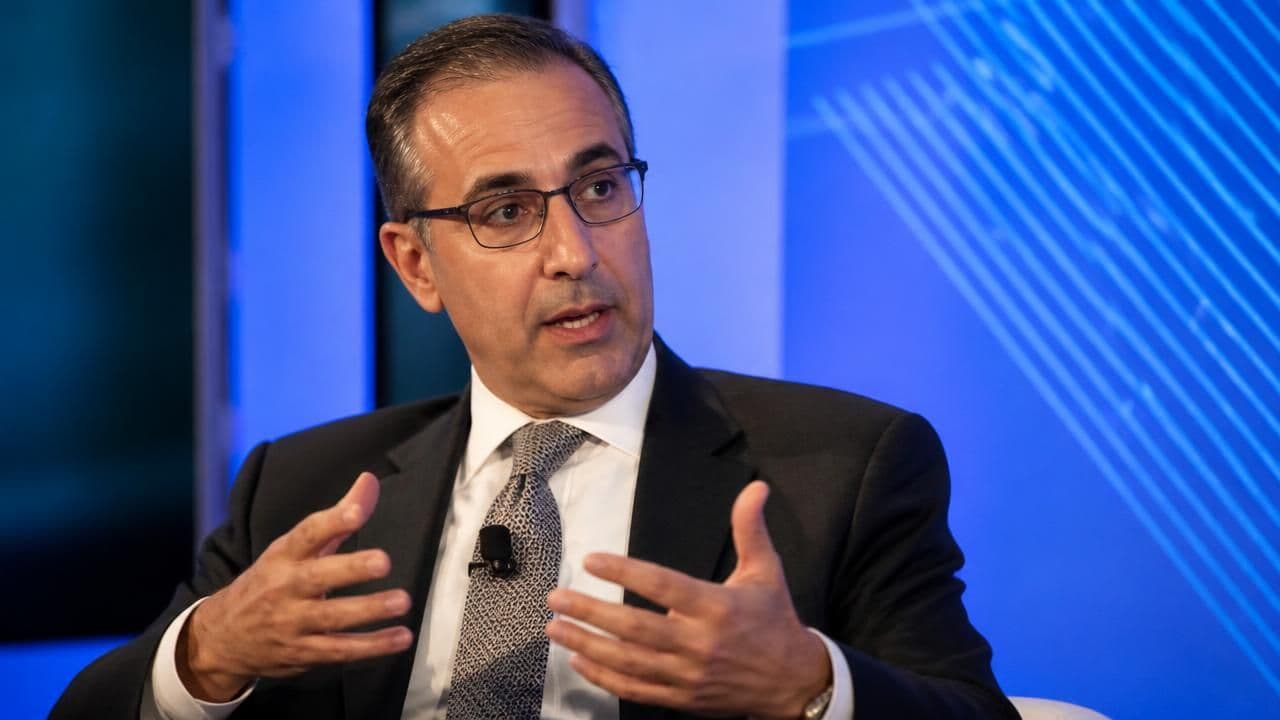
Publicly, Kalshi has tried to occupy the high ground. In interviews, Kalshi CEO Tarek Mansour has acknowledged rising concern about the sector and positioned his company as a willing partner in regulation.
“We want more guardrails,” Mansour has said, as calls for tighter oversight of prediction markets grow.
That message sits awkwardly beside the industry’s lobbying spending and its courtroom strategy, which has so far been aimed at loosening rather than tightening the rules. It also sits awkwardly beside the way the products are being sold. Sports media outlets now publish promotions encouraging bettors to use Kalshi promo codes for Thursday Night Football matchups and Sunday Night Football games, with sign-up bonuses of $55 — marketing language virtually indistinguishable from that of a licensed sportsbook.
Why it matters
The outcome will shape more than the fortunes of two startups. It will determine whether prediction markets remain a federally supervised financial niche or become a full-fledged competitor to the $100 billion American sports betting industry. It will test whether the CFTC — an agency built for commodities — is equipped to police consumer gambling. And it will set a precedent for how quickly a young industry can convert lobbying dollars into regulatory permission.
For now, the two sides agree on almost nothing except the significance of the moment. Lincoln, in 2010, framed the question as whether event contracts “serve any real commercial purpose.” The Supreme Court is about to answer it.