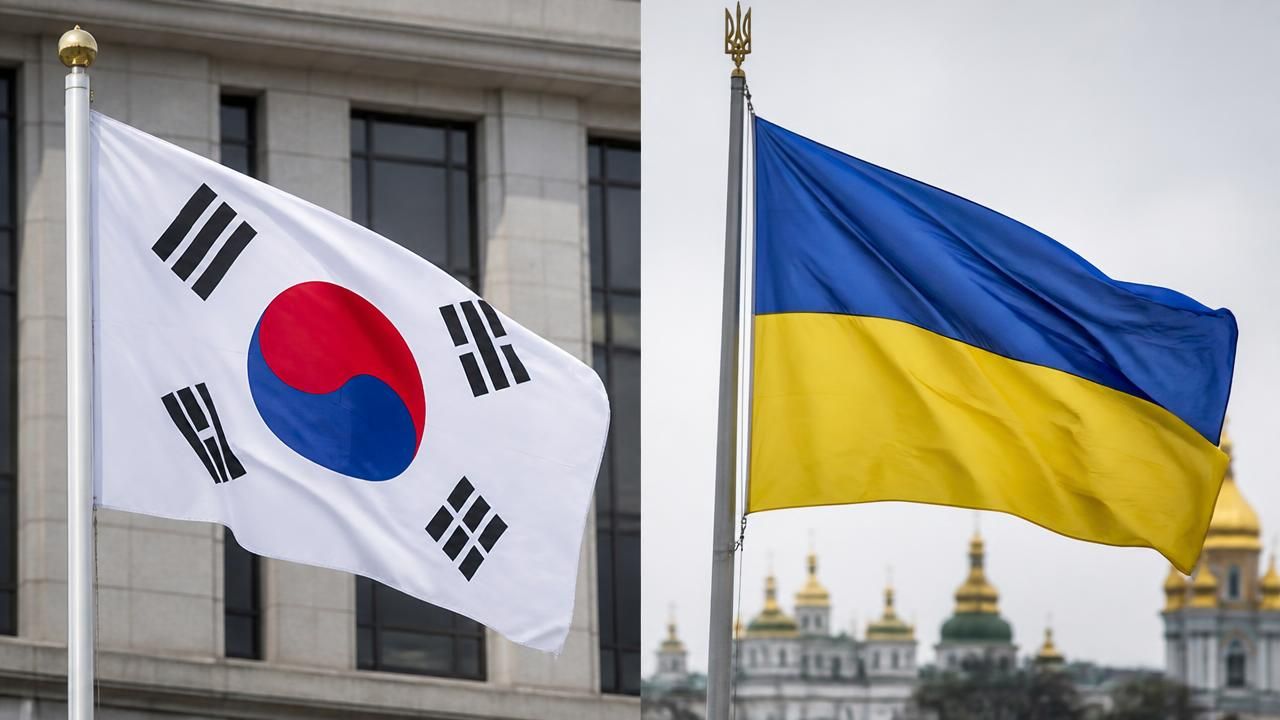
South Korea announced Thursday that it will recall its ambassador to Ukraine, escalating a rare and unusually public feud between two countries that have spent the past two years edging toward closer security cooperation. The decision follows days of mounting friction over Ukraine's handling of information concerning North Korean prisoners of war captured while fighting alongside Russian forces.
The move was confirmed by the South Korean government in what state broadcaster SBS described as a "firm response" to the POW repatriation dispute, and was reported in near-identical terms by Yonhap News Agency, Bloomberg, the Japan Times, the South China Morning Post, UPI and Ukrainian outlets including Ukranews and Hromadske. The unusually broad international pickup reflected how quickly a narrow diplomatic grievance has grown into a test of Seoul's posture toward the war in Ukraine.
A dispute that began with a disclosure
At the center of the row is how and when Ukraine made public details about North Korean soldiers taken captive on the battlefield. According to reports citing South Korean officials, Seoul was angered by what it regarded as an unauthorized and poorly coordinated disclosure — including material associated with Ukrainian President Volodymyr Zelenskyy's address to the United Nations — that touched on the transfer or handling of North Korean POWs.
South Korea first responded by summoning Ukraine's ambassador in Seoul to register its objections, a step reported by MSN and other aggregators. When that failed to produce what Seoul considered a satisfactory response, President Lee Jae Myung warned of unspecified punitive measures if Ukraine did not apologize.
"Additional measures" would follow if Kyiv refused to apologize over the transfer disclosure, Lee warned, according to UPI — language that signaled the dispute had moved beyond routine diplomatic protest.
Ukraine subsequently apologized, according to Ukranews. But Seoul made clear the apology did not close the matter. Yonhap reported that the government would proceed with recalling its envoy anyway, suggesting South Korean officials judged the gesture insufficient in tone, timing or substance.
Why North Korean POWs matter so much to Seoul
The dispute is not merely procedural. Under South Korea's constitution, the Korean Peninsula is treated as a single nation, and North Korean soldiers are regarded in Seoul as citizens of the Republic of Korea. That legal fiction has real consequences: captured North Korean troops who wish to resettle in the South have generally been treated as defectors rather than as enemy combatants to be returned.
Because Pyongyang would almost certainly punish any soldier repatriated north, the question of where captured North Korean troops end up carries enormous humanitarian and political weight. South Korea has an interest in controlling the narrative — and in ensuring that any transfer or handover arrangement protects that principle. Ukrainian officials, meanwhile, face their own constraints: they are managing prisoner exchanges with Moscow, relations with a North Korean government that has supplied troops and munitions to Russia, and pressure from allies who want the POW issue handled quietly.
That asymmetry in priorities helps explain how a single disclosure metastasized into a recall.
How different outlets framed it
South Korean outlets led with the government's firmness. SBS framed the decision as a "firm response," while Yonhap emphasized the dispute over the "disclosure of N.K. POWs" — casting the issue as one of process and trust between allies. International financial media, including Bloomberg, framed it as an escalating "POW spat," using language that underlined the reputational stakes for Seoul.
Ukrainian coverage, by contrast, emphasized that Kyiv had already apologized and that Seoul was nonetheless pressing ahead with the recall — a framing that positioned Ukraine as cooperative and South Korea as escalatory. Regional outlets in Japan and Hong Kong highlighted the "deepening row" and its implications for coordination among countries supporting Ukraine. The gap in emphasis illustrates a familiar dynamic in alliance disputes: each side describes its own restraint and the other's overreaction.
A rare public rift between partners
South Korea is not a direct belligerent in the war, but it has supplied humanitarian aid, joined sanctions against Russia, and faced growing Western pressure to do more — particularly as North Korea deepened its military partnership with Moscow, sending thousands of troops and vast quantities of artillery shells.
Seoul's calculus is complicated by its own politics. President Lee's government must balance domestic anger over North Korean deployments against the risk of damaging relationships with Ukraine and its Western backers. A recall of an ambassador is a measured but symbolic step: it stops short of severing ties or expelling Ukraine's envoy, leaving room for de-escalation while ensuring the grievance is registered publicly.
- What happened: South Korea summoned Ukraine's ambassador, demanded an apology, received one — and still moved to recall its own envoy.
- The trigger: Ukraine's public disclosure of information about North Korean POWs, including in connection with a U.N. address by Zelenskyy.
- The stakes: The status of captured North Korean soldiers, who Seoul considers its own citizens.
- The signal: Lee's warning of "additional measures" if Kyiv did not comply.
What comes next
The practical effect of a recall is limited — ambassadors rotate, and lower-level channels remain open. But the political signal is significant. It tells Kyiv that Seoul expects to be consulted on matters involving North Korean personnel, and it tells Washington and other partners that Seoul is willing to act unilaterally when it feels sidelined.
The more consequential question is whether the episode slows Seoul's drift toward deeper support for Ukraine. Western officials have long hoped South Korea might expand assistance, including lethal aid. A public spat over prisoner handling gives skeptics in Seoul a fresh argument for caution.
For now, the two governments appear to be in a standoff of gestures: Kyiv has apologized, Seoul is recalling its envoy, and neither has indicated the next step. Whether the dispute remains a diplomatic bruise or becomes a lasting rupture may depend less on the prisoners themselves than on how quickly both capitals decide the cost of visibility has outgrown the benefit.