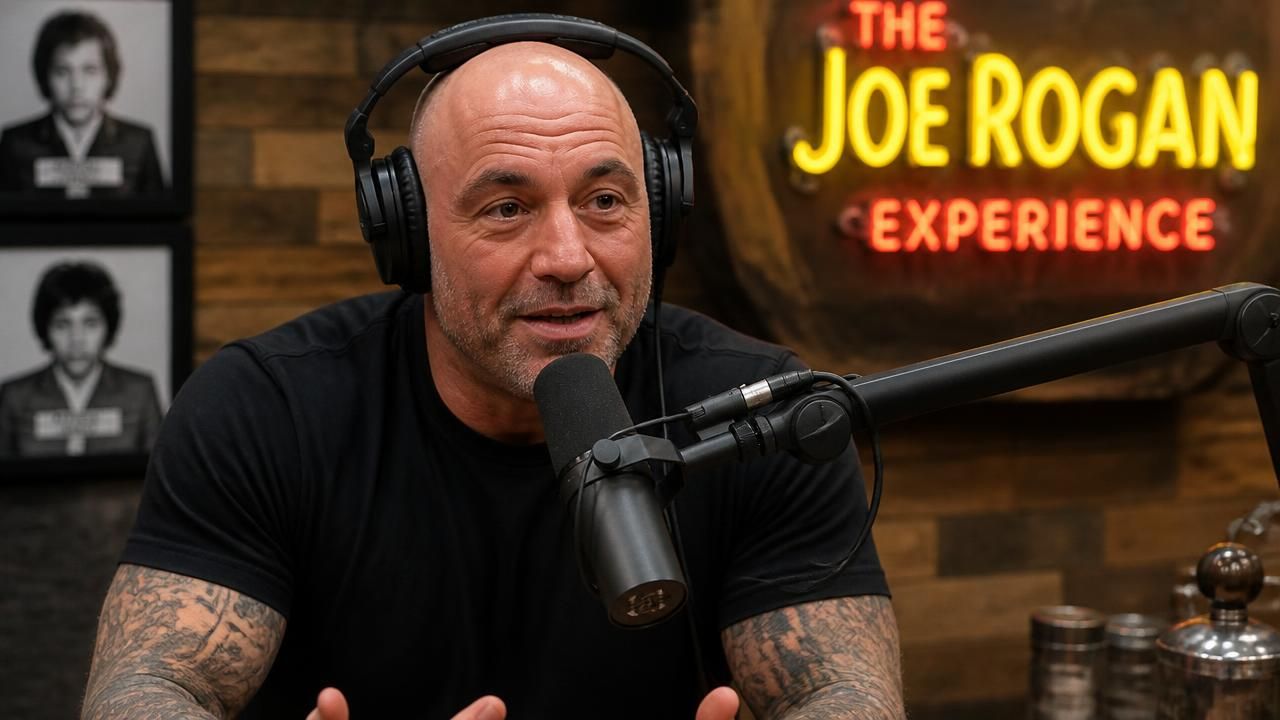
Spotify has renewed its licensing agreement with Joe Rogan, locking in the most-listened-to podcast in the world for a reported quarter of a billion dollars. According to The Wall Street Journal, as reported by The Verge, the multi-year deal is valued at around $250 million and allows new episodes of The Joe Rogan Experience to continue appearing weekly on Spotify — and simultaneously across other platforms.
The renewal cements a relationship that has shaped the modern podcast industry, transforming Spotify from a music streamer with a side interest in talk audio into a dominant force in on-demand spoken-word content.
A quarter-billion-dollar vote of confidence
The structure of the deal marks the culmination of a strategic reversal. When Spotify first signed Rogan in 2020, the agreement was an exclusive: The Joe Rogan Experience could be heard only on Spotify, a bet that a single marquee host could drag listeners away from YouTube, Apple Podcasts and every other rival. That exclusivity was relaxed under a subsequent 2024 agreement, which pushed the show back out to YouTube, Apple and the wider podcast ecosystem while keeping Spotify as its primary home.
The newly announced renewal continues that open-distribution model, and the reported valuation reflects how much leverage the host has accumulated. Sources familiar with the terms put the figure at roughly $250 million — a number that would place Rogan in a tier of his own among individual audio creators.
The deal is valued at around $250 million, according to The Wall Street Journal — a figure that dwarfs nearly every other licensing agreement in podcasting.
Spotify declined to break out specific terms, and Rogan has not publicly commented on the precise economics. What is clear is that the company sees the show not as a cost center but as an audience magnet: Rogan's Spotify following runs into the many millions, and his episodes routinely generate the kind of engagement that no marketing budget can buy.
Dominance in the rankings, year after year
The renewal lands as Spotify's own year-end data continues to underscore Rogan's grip on the medium. Variety reported that Rogan again finished 2024 with the No. 1 podcast on Spotify, extending a streak that has run essentially since his arrival on the platform.
The picture was unchanged in Spotify's Wrapped roundup of the Top 50 podcasts of 2025, which was led by Rogan, followed by Theo Von and Mel Robbins. The trio illustrates the breadth of Spotify's spoken-word strategy: a confrontational interview show, a comedy-adjacent conversationalist, and a self-help author whose motivational content has become a crossover phenomenon.
- 2020: Spotify signs Rogan to an exclusive licensing deal, a landmark bet on talk audio.
- 2024: Distribution widens to YouTube, Apple and other platforms under a renegotiated agreement.
- Latest renewal: Multi-year, reported at roughly $250 million, with weekly episodes continuing across platforms.
- Rankings: No. 1 on Spotify in 2024 and again atop the platform's 2025 Wrapped podcast chart.
The consistency matters. Podcast charts are notoriously volatile, with breakout hits rising and fading within a single news cycle. Rogan's ability to hold the top spot across multiple years — and across a distribution change that could easily have diluted his audience — is the strongest argument for the price Spotify is paying.
The money question
Not everyone views the numbers as a straightforward success story. Comedian Chelsea Handler has publicly questioned why Rogan earns in the region of $82 million in a single year, a figure that circulated in coverage of his compensation and became a flashpoint in the broader debate over how podcasting rewards a tiny handful of creators while most hosts struggle to monetize.
That critique sits alongside fascination with the personal trappings of the deal. Morningstar's coverage framed the earnings against Rogan's $14.4 million home in Austin, Texas — a city that has become a headquarters for a certain strain of independent media. The combination of headline figures and lifestyle detail has made the Rogan contract a recurring proxy argument about inequality, platform power and the economics of attention.
Rogan's defenders argue the compensation is commensurate with the audience: a single episode reaches more people than most cable news primetime slots, at a fraction of the production cost, and generates advertising inventory Spotify can sell at premium rates.
An arms race for the 'next Joe Rogan'
The renewal has also intensified the industry's long-running hunt for the next host who can replicate that reach. Aggregators and trade outlets have increasingly framed new signings in exactly those terms, with one recent headline describing a firebrand pastor — signed to a substantial podcast deal — as being tipped to become the next Joe Rogan. Whether such comparisons are marketing shorthand or genuine forecasting, they reveal how thoroughly one host's success has become the benchmark by which all podcast deals are judged.
For Spotify, the calculus is broader than a single show. Podcasting has become central to the company's push toward sustained profitability, giving it ad inventory that is less exposed to the licensing costs of music and more attractive to advertisers seeking engaged, long-session listeners. Marquee shows like Rogan's function as anchor tenants, drawing audiences that then sample the rest of the catalog.
What to watch
Three questions will define what happens next. First, whether Spotify continues to tolerate open distribution now that it is paying record sums without exclusivity as a lock-in mechanism. Second, whether rivals — YouTube in particular, which has quietly become the world's largest podcast platform by consumption — respond with counter-offers that reset the market again. And third, whether scrutiny of creator pay, amplified by figures like the $82 million annual estimate, translates into pressure on platforms to spread podcasting revenue more widely.
For now, the message from Spotify's balance sheet is unambiguous: in the attention economy, the safest bet remains the man behind the microphone in Austin.