President Trump’s suggestion that Iran could “take out” Los Angeles and San Diego — offered as he defended his conduct of the war — has triggered a bipartisan backlash in California and rekindled a national argument over the president’s rhetoric, capping a week in which the White House also unveiled a federal artificial intelligence task force, floated a Camp David-style retreat at a Trump-owned Florida golf club, and began rolling out a Medicare rebate that critics dismiss as a political stunt.
‘Let them take out Los Angeles’
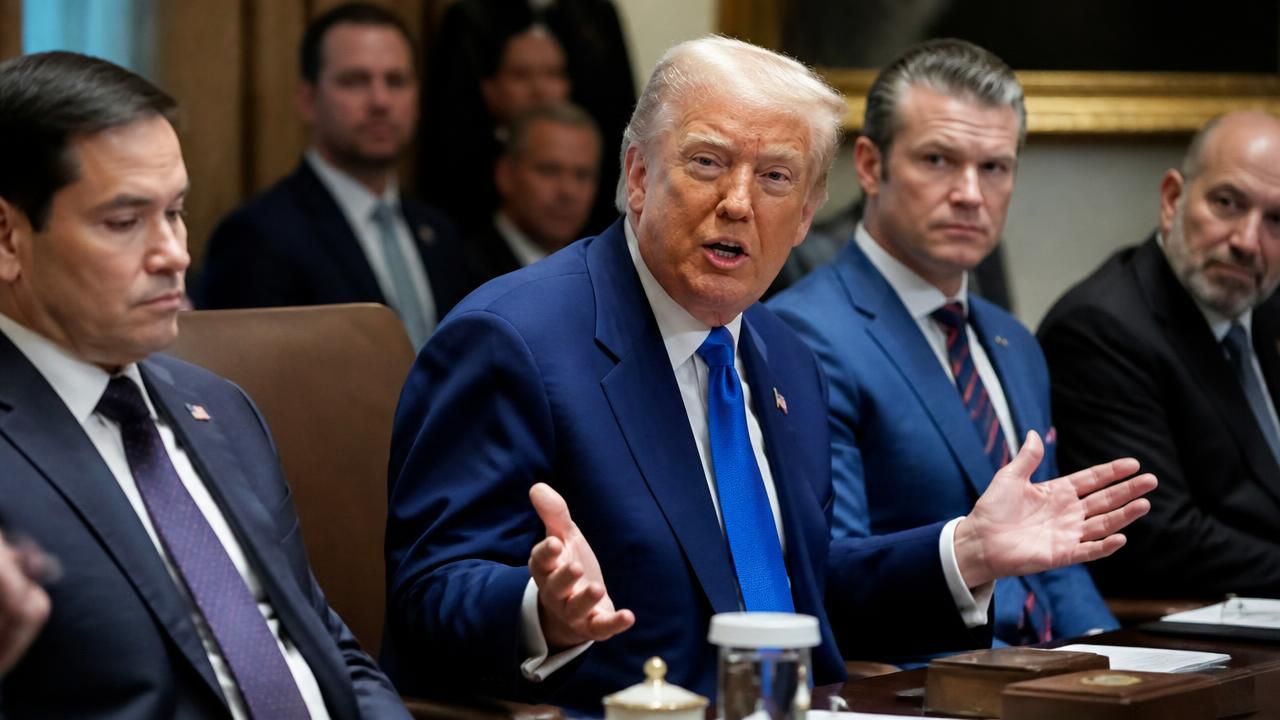
The Associated Press reported the president’s remark as he defended the conflict and waved away the risk to the American homeland; The Mercury News, in its account, reported that Trump said Iran could “take out” Los Angeles and San Diego. The line, delivered in the middle of a broader defense of the war, instantly became the story of the day.
“Let them take out Los Angeles.”
— President Trump, defending the war
The reaction in California was immediate and unusually blunt. Gov. Gavin Newsom seized on the remarks and accused Trump of endorsing attacks on U.S. soil, according to the Baltimore Sun. Elected leaders across San Diego County described the comments as “unbelievably distressing,” language that MSN’s aggregation of the coverage carried to a national audience within hours.
How the outlets framed it
The same sentence landed very differently depending on where it was edited. National wires treated it as a foreign-policy story — a president signaling indifference to retaliation against the United States. California’s regional outlets, including The Mercury News, the Orange County Register, the East Bay Times and the Daily Press, led instead with local consequence: two of the largest metropolitan areas in the country named, in effect, as acceptable losses. That split in framing is itself revealing. For Washington, the remark is a data point about deterrence; for San Diego and Los Angeles, it is a question about whether their residents are being treated as bargaining chips.
A presidential retreat — at his own club
On another front, Trump said he wants to develop one of his Florida golf courses into a presidential retreat where his successors could spend quiet weekends. “Sort of a Camp David,” he called it, according to NPR — a phrase that MSN and other aggregators quickly compressed into a blunter headline: “The new Camp David?”
The comparison invites scrutiny. Camp David — formally Naval Support Facility Thurmont — sits in Maryland’s Catoctin Mountains and has served as the presidential retreat since Franklin D. Roosevelt’s administration. It is federal property, secured and staffed at public expense, and deliberately removed from any president’s private commercial interests. Trump’s proposal would relocate that function inside a business he still owns, raising questions about who pays for security, upkeep and logistics — and whether a future president would be leasing weekend respite from a predecessor’s company.
Policy front: AI, diesel and the courts
Away from the microphone, the administration pushed on several policy tracks. The Boston Herald reported that Trump named Jay Clayton to lead a new federal AI task force — positioning the White House at the center of a technology race that has largely been governed, so far, by executive action rather than legislation.
- AI: A new federal task force, led by Clayton, will coordinate the administration’s approach to artificial intelligence.
- Dyed diesel: Trump signed an executive order on dyed diesel, but farmers and truckers told the Orange County Register it will offer little relief — the tax-exempt fuel used in off-road equipment remains governed by rules that frustrate the people it was meant to help.
- Free speech: ABC and Trump’s FCC battled in federal court over issues of free speech and jurisdiction, the East Bay Times reported — a case with implications well beyond one network.
- Propaganda law: The DNC sued the Trump administration, alleging taxpayer-funded advertising violates federal propaganda law, according to the Twin Cities Pioneer Press.
Foreign policy and the world stage
Overseas, senators pressed the administration to move swiftly on Russian sanctions to help Ukraine, the Press Democrat reported — a push that tests how far Congress can drive foreign policy when the president prefers to set the tempo himself. In Alaska, Trump plugged a $54 billion natural gas project built around South Korean investment, appearing alongside a senator in a tight race, per the Orange County Register — a reminder that energy policy and campaign politics now travel together on the same stage.
During a state visit with China’s leader, protesters opposing Xi’s policies gathered within earshot of the White House, the Sun-Sentinel reported, while Melania Trump took China’s first lady on a museum outing that was watched as closely for style as for diplomacy, according to the Daily Press.
Midterms, messaging and the money
With the midterms approaching, the political dimensions of the week were hard to miss. A new poll found Trump’s immigration crackdown dividing rural voters, the Baltimore Sun reported — a warning sign in the districts that delivered him the White House. Disaster relief funding is creeping into the president’s midterm rhetoric, a development critics say has no place there, the Orlando Sentinel noted. And a $90 Medicare rebate began reaching beneficiaries even as millions were left out entirely, a rollout the Bastille Post reported is being branded by critics as a political stunt timed for the campaign season.
Taken together, the week captures the operating logic of the current White House: policy, personal business, foreign conflict and campaign messaging advanced simultaneously, each amplifying the others. Whether the Iran remark fades into the news cycle or defines the fall campaign may depend less on what the president meant than on how voters in Los Angeles, San Diego and the rural counties watching immigration policy decide to hear it.