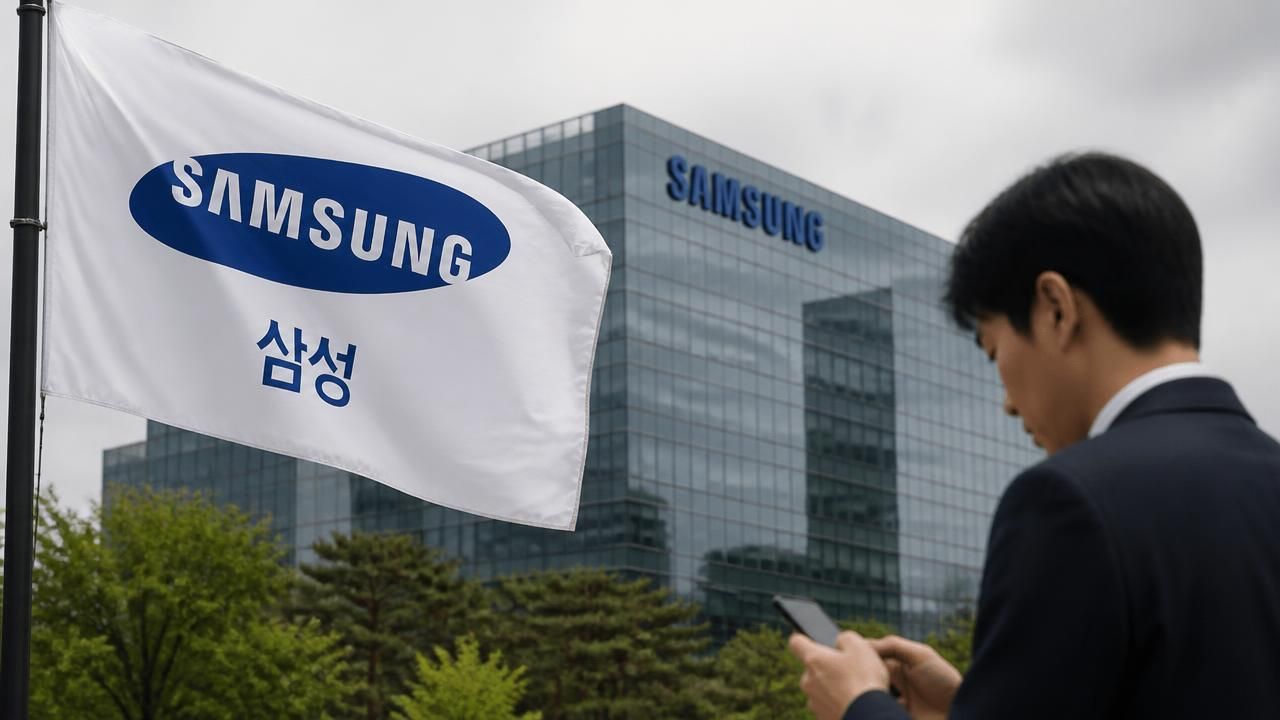
Samsung Electronics reported a record quarterly operating profit driven by an unrelenting boom in artificial intelligence memory chips, a result that cements the company's position at the center of the global AI supply chain — and yet did almost nothing to satisfy the investors who own it.
The South Korean giant's third-quarter profit was reported at above $80 billion on some headline measures, a figure that reflects the extraordinary pricing power now enjoyed by makers of high-bandwidth memory (HBM) and other advanced chips that feed AI data centers. Reuters reported the quarter's profit was seen jumping roughly nine-fold from the prior-year period. Yet Yahoo Finance framed the same result more bluntly: profit surged to a record high but missed lofty expectations.
That split — record numbers, disappointed markets — is the defining tension of the current AI memory cycle, and it is being felt across Seoul's semiconductor complex, from Samsung to its smaller rival SK Hynix.
A Record Quarter, in Numbers
The headline figures are staggering by almost any historical standard. Samsung's operating profit topped $80 billion for the period according to Marketscreener, while MSN characterized the AI chip boom as pushing profits to a record $80 billion. Bloomberg, in its Asia trade coverage, led with the same headline number — record profit — and immediately pivoted to the question investors are actually asking.
The scale of the swing is what makes the result notable. A nine-fold year-over-year increase in profit is not a normal cyclical recovery; it is a repricing of an entire industry's output. HBM, the stacked memory used in AI accelerators, has become one of the tightest-supplied components in the technology economy, and both Samsung and SK Hynix have benefited enormously.
Why Record Profits Aren't Enough
Why Samsung and SK Hynix's record AI profits aren't proving enough for investors
That framing, from MSN's coverage, captures the paradox. Three concerns are doing the damage.
- Flat chip margins. Reuters reported that while profit was seen jumping nine-fold, chip margins may be flat — a signal that cost inflation, ramp-up expenses on new HBM lines, and competition are eating into the upside of higher volumes.
- Missed expectations. When a company's results are measured against the most bullish analyst models in the world, a record can still read as a shortfall. Yahoo Finance's headline made the mismatch explicit.
- Sustainability of AI spending. Bloomberg's coverage posed the central question directly: investors are questioning whether the pace of AI capital expenditure by hyperscalers can persist at levels that justify current memory pricing.
The result is a market that has already priced in perfection. As one BeInCrypto preview put it, Samsung headed into the quarter with "five open questions about its chip boom" — questions about HBM qualification, yield, customer concentration, pricing durability, and what happens when the capex cycle turns.
The Cash Mountain and the Payout Fight
If the income statement is a triumph, the balance sheet is now a political problem. Bloomberg reported that Samsung and SK Hynix plan record shareholder returns amid the AI boom, while Reuters reported that shareholders at both companies are calling for bigger payouts from what is effectively an AI cash mountain.
The pressure is structural, not seasonal. South Korean chipmakers have historically retained enormous sums for capital expenditure, a strategy that made sense during memory downturns but looks harder to defend when quarterly profits are at all-time highs and the shares trade at a discount to global peers. Investors argue that buybacks, higher dividends, and the cancellation of treasury shares would narrow that so-called Korea discount and force more disciplined capital allocation.
Shareholders call for bigger payouts from AI cash mountain
Both companies have begun responding. Record return programs signal that management is listening, but the debate over size, timing, and whether payouts will be funded by sustainable free cash flow or by a cyclical peak remains unresolved.
The Broader Context
Samsung's quarter lands at a moment when the AI trade is under its first serious stress test. Nvidia's demand for HBM has been the single most powerful force in semiconductors for two years, but the market has begun to interrogate the assumptions underneath it: whether inference workloads will generate the revenue needed to justify today's infrastructure build-out, whether custom silicon from hyperscalers will erode merchant chip economics, and whether memory — historically the most volatile segment in tech — can sustain premium pricing through a full cycle.
For Samsung specifically, the stakes are compounded by execution risk. The company has been fighting to qualify its HBM products with key customers after falling behind SK Hynix in the highest-margin tiers. A record profit quarter that nonetheless shows flat chip margins suggests the mix shift toward premium memory is real but not yet fully reflected in profitability.
What to Watch
Three things will determine whether this quarter marks a peak or a plateau. First, HBM pricing and contract renewals for the coming year — the clearest read on whether AI demand is holding. Second, capital expenditure guidance, which will show whether Samsung intends to defend share or defend margins. Third, the size and structure of the shareholder return package, which will test whether management treats the AI windfall as a permanent change in the company's financial policy or a one-time gift.
For now, the paradox stands: the AI boom has delivered Samsung its best quarter ever, and investors are still asking for more — and asking whether any of it lasts.