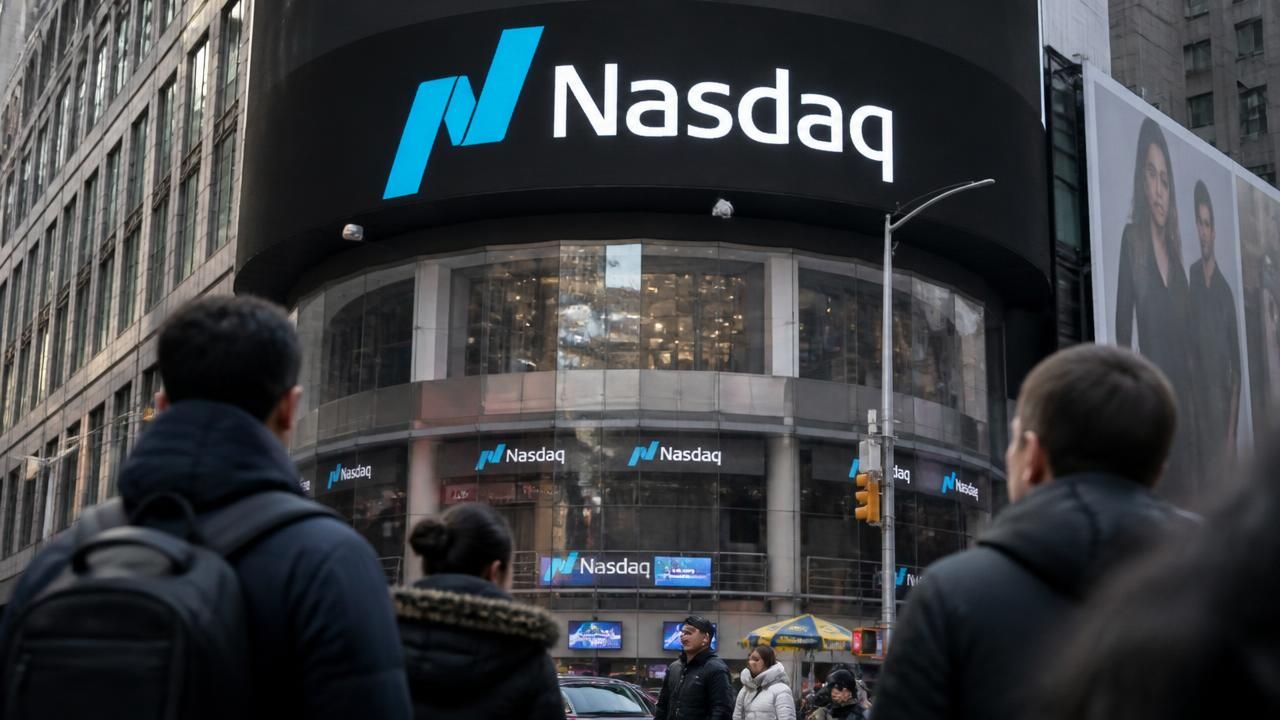
Nasdaq’s $100 million investment in Payward, the parent company of crypto exchange Kraken, has crystallized a shift in the tokenization debate: after years of pilot projects and blockchain experiments, the financial industry is now confronting the harder questions of market structure, liquidity, and regulatory clarity. The exchange operator is eyeing a 2027 launch of tokenized stock trading, according to CNBC, a move that would bring blockchain-based representations of equities into the same competitive arena as traditional listings.
The investment signals that major exchanges no longer view tokenization as a fringe experiment. It also raises the stakes for rivals such as NYSE owner Intercontinental Exchange, Cboe, and crypto-native platforms. Nasdaq’s bet is not merely financial; it is a strategic claim on the infrastructure that could underpin the next generation of securities trading. If tokenized stocks arrive in 2027, they will need listing standards, trading rules, settlement finality, and custody arrangements that satisfy both regulators and institutional investors.
From On-Chain to At-Work
Fidelity International’s head of digital assets distribution, Emma Pecenicic, told Bloomberg’s Insight with Haslinda Amin that the next phase must focus on utility.
“Tokenization’s next chapter is putting assets to work, not just putting them on-chain,”she said. That distinction matters. Tokenized money market funds, bonds, and equities can sit idle on a blockchain unless they can be used as collateral, traded efficiently, or integrated into portfolio management. Fidelity’s view aligns with a broader industry push to make tokenized assets productive rather than merely digital wrappers.
The first wave of tokenization was dominated by issuance: putting a fund, a bond, or a share on a distributed ledger. The second wave, executives argue, must be about velocity. Assets need to move, be lent against, and settle instantly across borders. Without that, tokenization risks becoming a costly accounting exercise rather than a market transformation.
Ripple’s Bid to End Idle Assets
Ripple has taken equity stakes in Zilo and Licuido, according to Yahoo Finance, in a direct attempt to fix the problem of idle tokenized assets. The company behind XRP has been expanding beyond payments into tokenized finance. By investing in firms that focus on asset utilization, Ripple is betting that the next wave of value will come from connecting tokenized instruments to lending, collateral, and settlement networks.
The phrase “idle tokenized assets” captures a central paradox. A token can represent a claim on a real-world asset, but if it cannot be pledged, rehypothecated, or exchanged without friction, it fails to deliver the capital efficiency that blockchain enthusiasts promise. Ripple’s stakes in Zilo and Licuido suggest it wants to build the connective tissue that turns static tokens into working collateral.
Market Structure Before Technology
Traders Magazine captured the mood in two separate headlines: “Tokenized Securities Need Market Structure, Not Just Technology” and “Tokenized Markets Face Liquidity Test.” The message is that blockchain can provide faster settlement and fractional ownership, but it cannot by itself create deep, two-sided markets. Liquidity requires market makers, clear custody rules, legal finality, and interoperability between chains and traditional rails.
Regulatory clarity remains the missing piece. IndyStar framed the issue as “Tokenized Markets and the Role of Regulatory Clarity,” though the page was not accessible in some regions. In the United States, the Securities and Exchange Commission has pursued enforcement actions while also approving Bitcoin and Ether exchange-traded products. In the European Union, the Markets in Crypto-Assets regulation is phasing in, and the United Kingdom is consulting on a digital securities sandbox. The patchwork nature of these rules makes cross-border tokenized trading difficult.
The 2030 Vision for Tokenized Funds
Finextra’s analysis, “Tokenized Funds in 2030: How Blockchain Will Redefine the Future of Asset Management,” projects that tokenized funds could become a core part of asset management by the end of the decade. Although the page required JavaScript to load, its title alone points to a future in which fund shares are issued, traded, and settled on distributed ledgers, with smart contracts automating distributions and compliance.
That vision depends on infrastructure that is still being built. Nasdaq’s 2027 target for tokenized stock trading may seem ambitious, but it gives the industry a concrete deadline. If the exchange can demonstrate that tokenized equities can trade with the same liquidity and regulatory comfort as traditional shares, it will pressure other venues to follow. If it cannot, the experiment may remain confined to crypto-native investors.
Competing Framings
Different outlets emphasize different risks. Bloomberg and Fidelity focus on asset productivity. CNBC highlights the competitive race among exchanges and the size of Nasdaq’s bet. Traders Magazine stresses liquidity and market structure. Yahoo Finance frames Ripple’s moves as a fix for idle assets. Finextra looks to 2030 and asset management. IndyStar points to regulatory clarity. Together, they describe a market that is no longer asking whether tokenization will happen, but whether it can be made to work at scale.
The $100 million investment in Kraken’s parent is modest relative to Nasdaq’s market capitalization, but it is strategically significant. It gives Nasdaq a stake in a crypto exchange with deep liquidity and retail reach, while Kraken gains a bridge to traditional market infrastructure. The partnership could help Nasdaq learn how crypto markets handle 24/7 trading, instant settlement, and global access—features that tokenized equities might eventually require.
For institutional investors, the key metrics will be liquidity, custody, and regulatory acceptance. Tokenized markets will not replace traditional exchanges overnight. But the direction of travel is clear. As Pecenicic’s comment suggests, the winning platforms will be those that turn tokenized assets into working assets. The losers will be those that simply put assets on-chain and wait for demand to appear.
What to Watch
- Nasdaq’s progress toward a 2027 tokenized stock trading launch, including regulatory filings and exchange partnerships.
- Ripple’s integration of Zilo and Licuido, and whether their technology reduces idle collateral in tokenized finance.
- SEC and EU rulemaking on tokenized securities, custody, and market structure.
- Liquidity metrics for tokenized funds, including bid-ask spreads, trading volumes, and collateral usage.
- Whether Fidelity and other asset managers launch tokenized products that can be used across DeFi and traditional finance.
The tokenization story is entering its most consequential phase. The technology is no longer the main event. Market structure, regulation, and liquidity will decide whether tokenized markets become a parallel financial system or a niche overlay on the existing one.