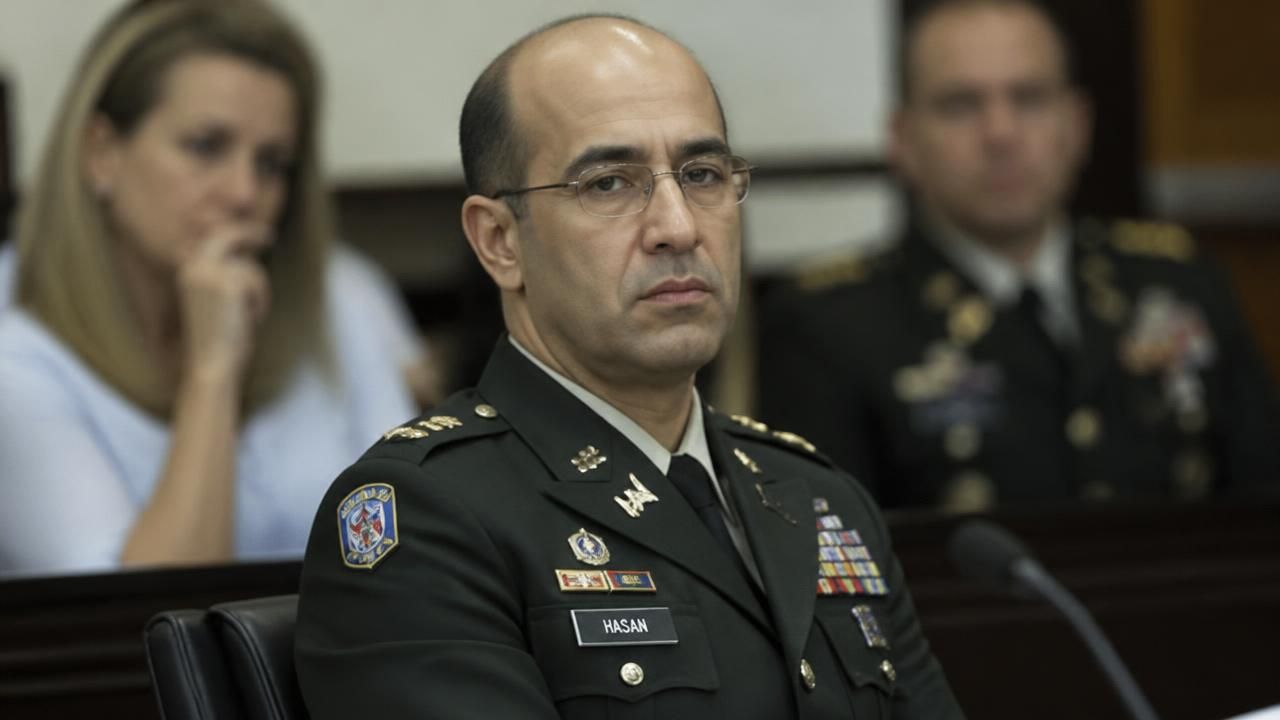
President Donald Trump has approved the execution of Nidal Hasan by firing squad, the first such execution by the U.S. military since World War II and the first military execution of any kind since 1961. The Pentagon announced that Hasan, a former Army psychiatrist convicted of killing 13 people at Fort Hood in 2009, will be executed in December at the Texas base where the massacre occurred. The decision, first reported by NPR and confirmed by military officials, comes days after a botched lethal injection in Tennessee, intensifying a national debate over capital punishment methods.
Hasan, 48, was sentenced to death in 2013 for the Nov. 5, 2009, shooting spree that also wounded more than 30 others. He admitted to the attack, describing it as an effort to protect Taliban leaders in Afghanistan. His case has been under automatic appeal for years, but the military has now set an execution date, signaling a dramatic escalation in the use of the death penalty within the armed forces.
A Historic Shift in Military Justice
The last military execution was that of Army Pvt. John A. Bennett in 1961, who was hanged for rape and attempted murder. The last firing squad execution by the U.S. military was in 1945, when Pvt. Eddie Slovik was executed for desertion during World War II. As the Baltimore Sun noted, Hasan's case is the first military death penalty case since 1961. The BBC emphasized that it is the first firing squad execution since World War II, while People magazine described it as the first in 65 years. The rarity of the event underscores how exceptional military executions have become.
The military death penalty system is governed by the Uniform Code of Military Justice, which authorizes lethal injection as the primary method. However, in recent years, drug shortages and legal challenges have made lethal injection increasingly difficult to carry out. The botched lethal injection in Tennessee, which left an inmate in visible distress before ultimately being halted, has been cited by death penalty proponents as evidence that lethal injection is unreliable. Several states have turned to alternative methods, including firing squads, nitrogen hypoxia, and electrocution.
NPR reported that the announcement came just days after the Tennessee execution attempt, raising the question of whether the timing was a direct response to the failures of lethal injection.
The Legal and Political Battlefield
The decision has sparked immediate controversy. Opponents argue that the firing squad is a relic of a bygone era, and that any method of execution must comply with the Eighth Amendment's prohibition on cruel and unusual punishment. Supporters counter that a firing squad is more humane than lethal injection because it causes immediate unconsciousness and death, provided the shooters are accurate. The debate over method often obscures the broader question of whether the death penalty should exist at all.
Legal experts expect Hasan's attorneys to challenge the method and the execution date in military and federal courts. The case could eventually reach the Supreme Court. The military has not carried out an execution in more than six decades, and the logistical and legal hurdles are immense. The execution would take place at Fort Hood, now known as Fort Cavazos, which was renamed in 2023 as part of a broader effort to remove Confederate names from military installations. Using the base as the site of the execution adds another layer of symbolic weight.
Meanwhile, the news has raised questions in states that use or are considering firing squads. MSN asked whether the method is legal in Florida, where lethal injection remains the primary method but where lawmakers have debated adding firing squad as an alternative. Florida currently does not use firing squads, but the national attention may reignite that debate. The military's decision could influence state-level discussions about execution methods.
Why Now?
The timing of the announcement is deeply political. President Trump has long been a vocal supporter of the death penalty, and his administration has sought to expedite federal executions. In 2020, the federal government resumed executions after a 17-year hiatus, carrying out 13 executions in six months. The military case, however, is separate from the federal civilian system. The president must personally approve military executions, and Trump's approval signals a willingness to use capital punishment even in the armed forces.
Critics argue that the decision is a distraction from more pressing issues and that it exploits a tragedy for political gain. Supporters say it delivers long-overdue justice for the victims of the Fort Hood attack. The families of the victims have been divided over the death penalty, with some expressing relief and others preferring life in prison without parole.
What Happens Next
The execution is scheduled for December, but that date is far from certain. Hasan's case has been in appellate limbo for years, and the military appeals process is notoriously slow. The Court of Appeals for the Armed Forces and the Supreme Court could intervene. If the execution proceeds, it would be carried out by a firing squad of military personnel, likely five to six soldiers, with one or more rifles loaded with blank rounds to preserve the anonymity of the shooters. The condemned would be strapped to a chair, a hood placed over his head, and a target pinned to his chest.
As the nation watches, the case raises profound questions about justice, method, and the role of the military in carrying out the ultimate punishment. The decision to use a firing squad is both a practical response to the failures of lethal injection and a symbolic statement about the Trump administration's commitment to capital punishment. Whether it will actually happen—and what it says about American values—remains to be seen.