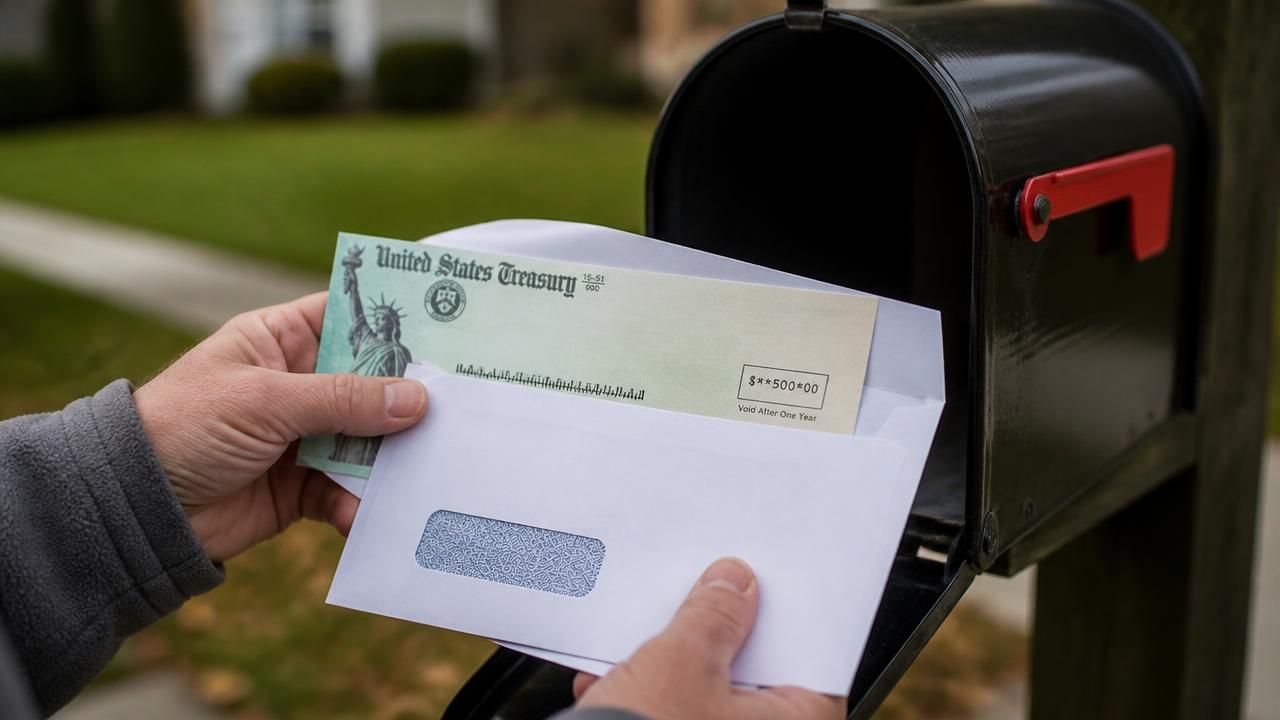
Checks worth $500 are arriving in mailboxes across the country this week, the first wave of a payment program President Donald Trump has billed as relief for Americans squeezed by the cost of health insurance. But the letters accompanying them — and the politics behind them — have turned a simple disbursement into one of the season's sharpest fights over health care, election-year tactics and the limits of executive power.
NPR reported that the payments are landing in millions of homes, with roughly 1 million Americans expected to receive them. The administration frames the money as a rebate tied to the Affordable Care Act, the law Trump spent years trying to dismantle. Recipients, critics and legal scholars are not so sure.
What the checks are — and who gets them
The $500 payments have been described by the White House as a return of money to consumers facing rising premiums. Coverage of the rollout, aggregated across outlets including USA Today, Delaware Online, Tucson.com and MSN, has focused heavily on eligibility: who qualifies, how the money arrives, and whether recipients need to do anything to claim it.
- Payments are going to roughly 1 million people, according to reporting on the program.
- The stated purpose is health insurance cost relief, framed as an ACA-linked rebate.
- Distribution is concentrated in politically competitive states, including Florida.
- Each check arrives with an accompanying letter explaining the program — a detail that has itself become a flashpoint.
Several news organizations reported that the checks were being directed disproportionately to prime political battlegrounds, a geographic pattern that has fed accusations that the program is calibrated for maximum electoral effect rather than maximum need.
'A political stunt'
The gap between the administration's message and how recipients read it was captured by NPR, which spoke with a woman who received a check and described it bluntly as a "political stunt." Her reaction reflects a broader skepticism that has dogged the rollout since the first envelopes were announced.
"What an absolute joke."
That was the response from critics quoted in coverage of the program, who argue the administration is offering a one-time $500 payment to people whose coverage costs it helped drive higher in the first place — a charge rooted in the president's long record of attempting to repeal and replace the ACA. One analysis put it starkly: Trump is offering a modest rebate to about a million Americans, and critics pounced on how he "gutted" health care in the first place.
Commentators also singled out the letters that accompany the checks, calling them "cynical" and describing the overall effort as "gimmicky." The framing matters: a check with a presidential signature attached is, in political terms, an advertisement as much as a benefit.
Polling and the politics of health care
The program arrives at an awkward moment for Republicans. A poll released as the checks went out showed Americans do not trust the party on health care, a vulnerability that has persisted through multiple election cycles despite sustained GOP messaging on premiums and choice.
Health care has historically been a stronger issue for Democrats, and the ACA in particular has grown more popular since Republicans' failed 2017 repeal effort. Roughly 24 million people now rely on ACA marketplaces for coverage, and many of them have faced double-digit premium increases in recent years as enhanced federal subsidies have expired or been curtailed. Against that backdrop, a $500 check covers a fraction of a typical annual premium — a point experts returned to repeatedly when asked whether the payments would change anyone's mind.
The consensus among analysts quoted in the coverage was skeptical: the payments are unlikely to move the needle politically. They come too late, go to too few people, and address a problem — the underlying cost of coverage — too small to be felt as meaningful relief.
Legal questions
Perhaps the most consequential thread in the coverage is legal, not political. Experts told NPR that the payment program is likely illegal, raising questions about the administration's authority to spend federal money this way without congressional appropriation.
Congress holds the power of the purse under the Constitution, and unilateral spending of this kind has repeatedly drawn legal challenge when attempted by administrations of both parties. If the program is challenged in court, the checks themselves could become evidence — and the recipients, unwitting participants in a test of executive spending authority.
Bigger promises, bigger questions
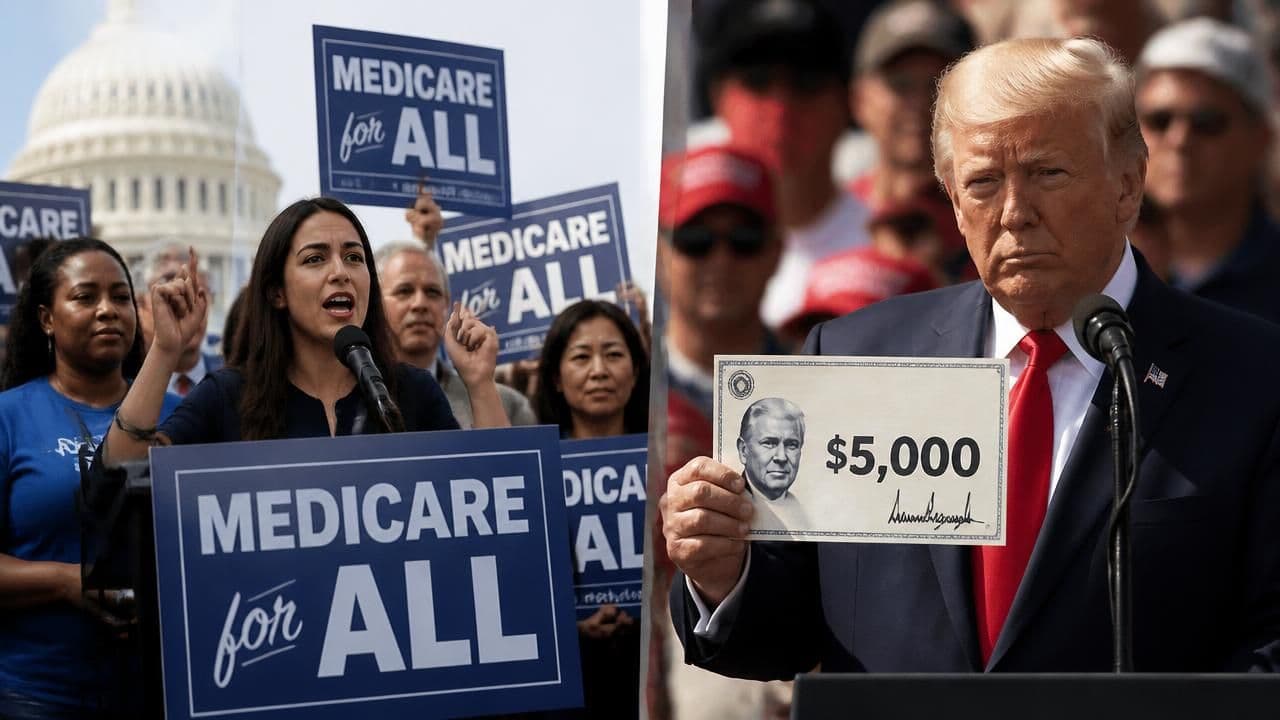
The $500 checks may not be the last word. Trump has said he "looks forward to signing" $5,000 dividend checks, a far larger promise that has circulated as a potential second-round payment. That proposal would dwarf the current program, and it has raised its own questions about where the money would come from and whether the president can direct it unilaterally.
The president's broader framing of the payments was laid out in a lengthy TIME interview transcript released during the rollout, in which he presented the checks as returning money to Americans. Whether voters accept that framing is the central question of the next several months.
What happens next
More checks are expected to go out in the coming weeks, moving through a distribution map that will be scrutinized closely for political geography. Watch three things: whether courts intervene before the program fully rolls out, whether the payments show up in polling on health care, and whether the promised $5,000 dividends ever materialize.
For now, the clearest signal is the one recipients themselves are sending. A check that arrives with an explanation letter is a policy instrument and a campaign message at once — and a meaningful share of the Americans opening those envelopes appear to be reading it as the latter.