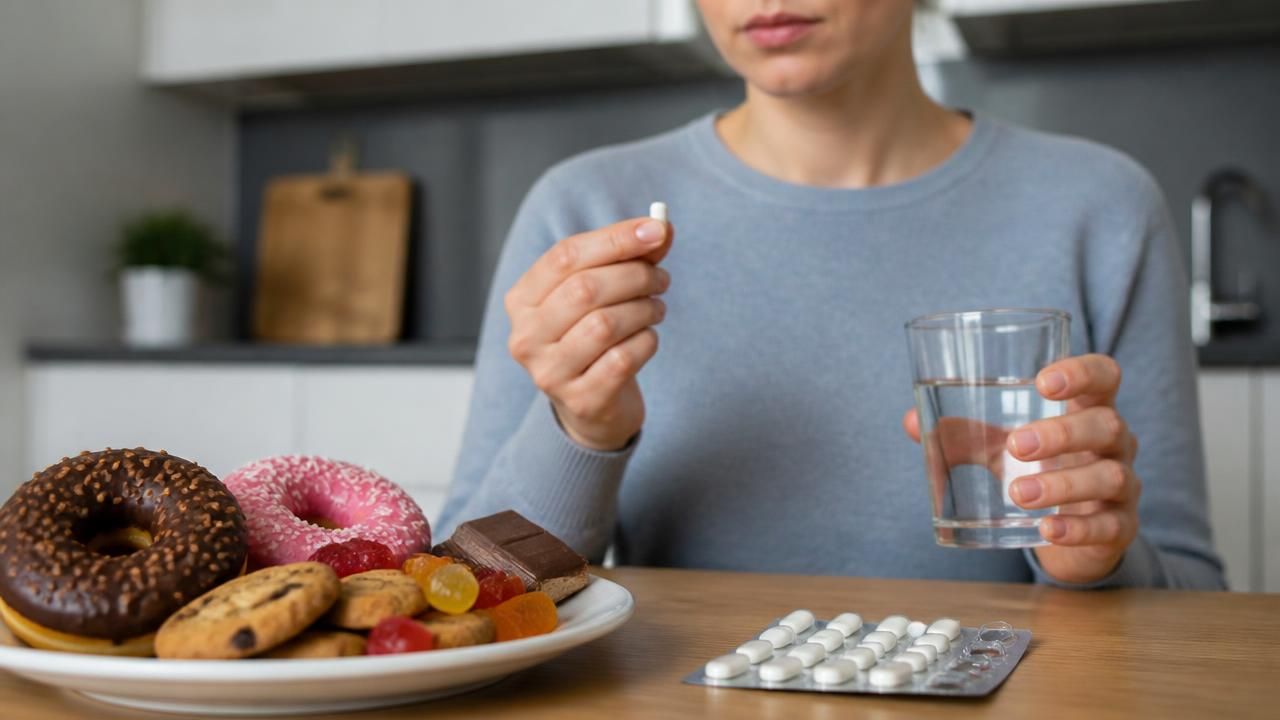
Every course of antibiotics is a bargain with collateral damage: the drugs wipe out the infection-causing bacteria they are prescribed for, but they also strip away swaths of the beneficial microbes that live in the human gut. New research suggests that diet — specifically, sugar — may help determine how bad that collateral damage gets.
According to findings reported by Science Daily and picked up by outlets including Forbes, Prevention, Medindia, Mirage News and MSN, eating more sugar while taking antibiotics was linked to greater disruption of the gut microbiome and increased growth of potentially harmful bacteria. Researchers behind the work say that temporarily cutting back on sweets during and after antibiotic treatment could be a simple, low-cost way to reduce that damage — while cautioning that clinical trials are still needed before the advice becomes a formal recommendation.
What the study found
The central claim is straightforward: sugar appears to interact with antibiotics in ways that leave the gut microbial community worse off than antibiotics alone. Participants who consumed more sugar during treatment showed a microbiome that was less diverse and more heavily colonized by bacteria associated with poor health outcomes — the kind of shift that has been linked in other research to digestive problems, opportunistic infections and slower recovery.
The finding adds sugar to a short but growing list of dietary factors that appear to modulate how the body responds to medication. It also lands squarely in the middle of a public conversation about antibiotic stewardship, which has traditionally focused on prescribing practices rather than on what patients eat while they are on the drugs.
Why sugar and antibiotics could be a bad pairing
The biological logic is not hard to follow. Antibiotics work by killing bacteria or shutting down their ability to reproduce, but they are rarely perfectly selective. A broad-spectrum drug can clear out dozens of species at once, opening ecological niches in the gut. What fills those niches depends heavily on what the host provides.
Sugar is a ready fuel source. Simple carbohydrates are absorbed quickly in the upper digestive tract, but a portion reaches the colon, where resident bacteria ferment them. Species that thrive on sugar can expand rapidly in the vacuum left by antibiotic-sensitive microbes. Some of those opportunistic organisms are harmless; others are not. The concern raised by the new work is that a high-sugar diet effectively rolls out a welcome mat at precisely the moment the gut is least able to defend itself.
Temporarily cutting back on sweets during and after antibiotic treatment could be a simple way to reduce this damage, though clinical trials are still needed.
How different outlets framed the story
The coverage reveals how a single scientific finding can be packaged for very different audiences. Science Daily, which aggregates research institution press releases, led with the mechanistic angle — sugar as a driver of microbiome disruption and bacterial overgrowth. Forbes, serving a business and personal-health readership, emphasized the actionable headline: eating less sugar may protect your gut. Prevention, aimed at a consumer wellness audience, leaned into the practical and slightly alarming framing, describing the study as evidence that sugar can worsen gut health while you are taking antibiotics.
International outlets such as Medindia and Mirage News, along with MSN's aggregations, foregrounded the public-health implication: a small dietary change with potentially large downstream effects, relevant to anyone prescribed a course of antibiotics — which, by many estimates, is a majority of people in wealthy countries in any given year.
The through-line across all of them is the same: the finding is preliminary, the mechanism is plausible, and the recommended behavior change is cheap and low-risk.
The caveat: association is not causation
Researchers were careful to describe the link as an association rather than proof of cause and effect. Observational data can show that people who eat more sugar tend to have more disrupted microbiomes, but it cannot fully rule out the possibility that other dietary patterns — or other lifestyle factors that travel with a high-sugar diet — are doing the work.
Randomized controlled trials, in which participants are assigned to different sugar intakes during a standardized antibiotic course, would be needed to establish causality and to identify how much sugar matters, and for how long. Until then, the guidance is best understood as prudent rather than proven.
Broader context: the gut's slow recovery
The stakes are not trivial. Decades of research have shown that the human gut microbiome can take weeks or months to recover from a single antibiotic course, and that some species may never return to their pre-treatment abundance. Repeated courses compound the problem. Disruption has been associated with gastrointestinal infections, including Clostridioides difficile, as well as with immune, metabolic and even neurological effects that scientists are still working to characterize.
Antimicrobial resistance is the other backdrop. The World Health Organization and national health agencies have warned for years that overprescribing fuels resistance, and antibiotic stewardship programs have pushed clinicians to prescribe more narrowly and for shorter durations. Diet has been largely absent from that conversation, but research into food-drug interactions — from grapefruit and statins to calcium and certain antibiotics — suggests it deserves a seat at the table.
What this means for patients
- Keep taking prescribed antibiotics exactly as directed. No dietary finding changes the need to complete a course.
- Consider trimming added sugars — sodas, sweets, heavily sweetened snacks — during treatment and for a period afterward.
- Ask about fermented foods, fiber and probiotics, though evidence for their role during antibiotic treatment remains mixed.
- Watch for persistent digestive symptoms after a course and raise them with a clinician.
None of this is a reason to skip antibiotics, and none of it amounts to a cure for microbiome disruption. But if the pattern holds, it points to a rare kind of health advice: a change that costs nothing, carries no risk, and might spare the gut some of its most vulnerable weeks.