Jaguar has pulled the covers off the Type 01, the electric four-door grand tourer it hopes will define the next era of the British marque — and, just as importantly, make people forget the last one.
The production car, unveiled in New York, is the long-awaited follow-up to the Type 00 concept that Jaguar used to relaunch itself as an all-electric luxury brand. According to Jaguar, it is the most powerful road car in the company's history, producing 1,015 horsepower (roughly 1,000 PS) and offering a claimed range of about 400 miles. The model is expected to reach customers as a 2028 vehicle at a six-figure price.
"The Type 01, Jaguar's most important and divisive car in years, has arrived," The Verge wrote in its first look at the machine.
A concept car, largely intact
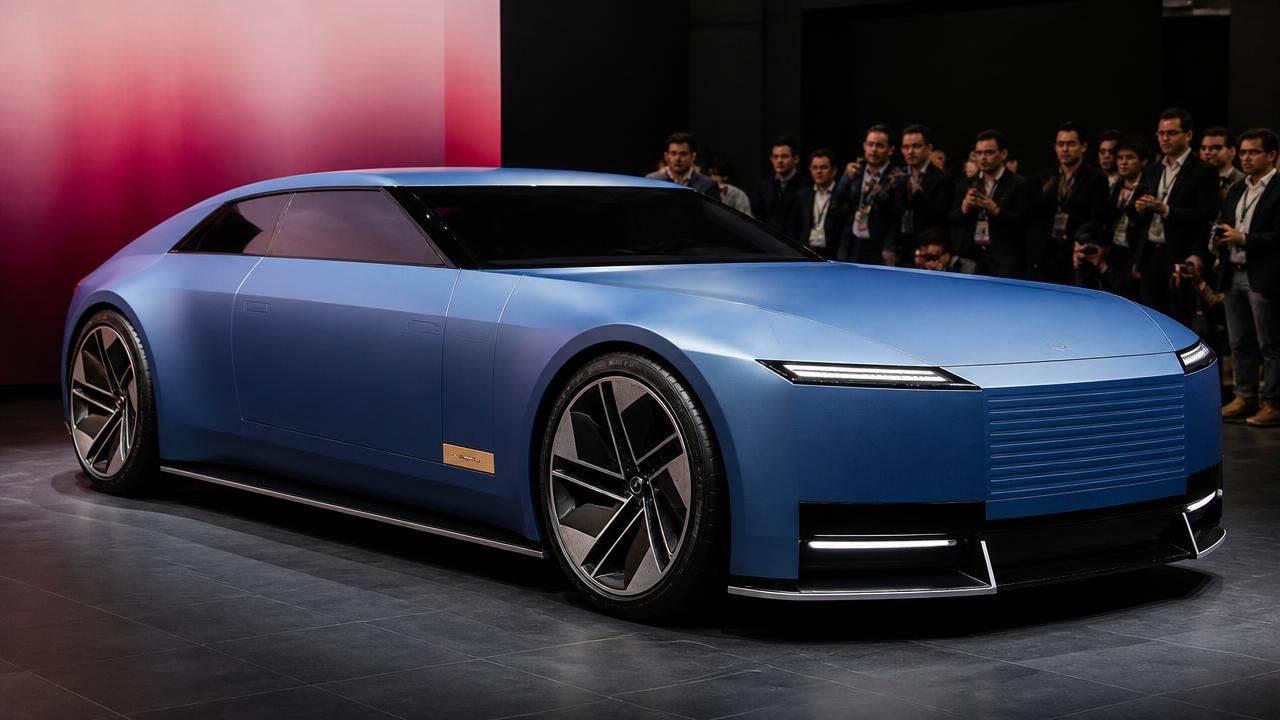
Perhaps the most striking thing about the Type 01 is how little it deviates from the show car that preceded it. The Verge noted that most of the Type 00's aesthetic has carried over to the final product — the same low-slung silhouette, the same extended side profile, and the same enormous 23-inch wheels. The obvious concession to practicality is the shift from a two-door concept to a four-door production layout, a change that alters the car's proportions and gives it a more upright, imposing stance.
One signature element did not survive the journey to production: the concept's hot Miami pink paint. Buyers will have to settle for a more conventional palette.
The continuity is notable given reports that the Type 00's design chief was fired earlier this year. Despite the leadership shake-up, the visual language Jaguar bet its brand identity on appears to have been preserved nearly intact — a signal that the company views the design as a feature, not a liability.
Performance and positioning
On paper, the Type 01 slots into an increasingly crowded field of ultra-high-performance electric luxury cars. The headline figures:
- Power: 1,015 hp (about 1,000 PS), making it Jaguar's most powerful road car ever built
- Range: Approximately 400 miles on a full charge
- Body style: Four-door electric grand tourer
- Wheels: 23-inch, matching the concept
- Price: Six figures
- Timing: Expected as a 2028 model
The combination of grand-touring range and supercar-grade output places the car in direct conversation with established electric flagships from Porsche, Lucid, and Mercedes-Benz — a segment where Jaguar has historically had little presence and no electric entry at all.
Inside the cabin
Jaguar has also given a first look at the Type 01's interior, a detail that matters enormously for a brand trying to justify six-figure pricing. Interior execution — materials, software, and the overall sense of occasion — has become the decisive battleground in the electric luxury market, where drivetrain performance has become relatively commoditized. For Jaguar, the cabin is where it must convincingly argue that it belongs alongside Germany's finest.
The rebrand hangover
The Type 01 arrives freighted with an unusual amount of cultural baggage. Jaguar's relaunch campaign — which preceded the concept car — drew widespread mockery and was attacked in some quarters as "woke," turning a marketing exercise into a political flashpoint and, at times, overshadowing the actual product strategy.
Coverage of the new car reflects that context. Outlets framed the reveal less as a straightforward product launch than as a reputational test. One headline described the journey bluntly: "From 'woke' ridicule to real car." Others emphasized the stakes directly, with one framing it as a sedan "it hopes marks a turnaround" and another describing a company "raising their game" after a controversial rebrand.
The divergence in framing is telling. Enthusiast and automotive outlets, such as New Zealand's Tarmac Life, led with the engineering story — a 1,000 PS electric GT making its debut in New York. General-interest aggregators led with the narrative of a troubled brand attempting a comeback. Technology publications like The Verge split the difference, treating the design language itself as the story and openly debating whether the concept's polarizing looks were an asset or an anchor in production form.
Why it matters
Jaguar's problem is not unique, but its solution is unusually radical. Legacy automakers transitioning to electric powertrains have generally hedged — keeping familiar nameplates, familiar silhouettes, familiar price points. Jaguar instead killed off its existing lineup, abandoned the volume segment, and repositioned itself as an EV-only luxury house selling cars that most of its traditional customers cannot afford.
That strategy only works if the Type 01 is genuinely desirable on its own terms. The early indications are that Jaguar has delivered on the spectacle: the car looks like the concept, goes like a supercar, and travels like a grand tourer. What remains unproven is whether a brand that spent a decade struggling for relevance can command six-figure loyalty from buyers who currently default to Porsche, Bentley, or Lucid.
Jaguar has staked its future on the answer. The Type 01 is not a cautious step into electrification — it is the entire plan, wearing 23-inch wheels.