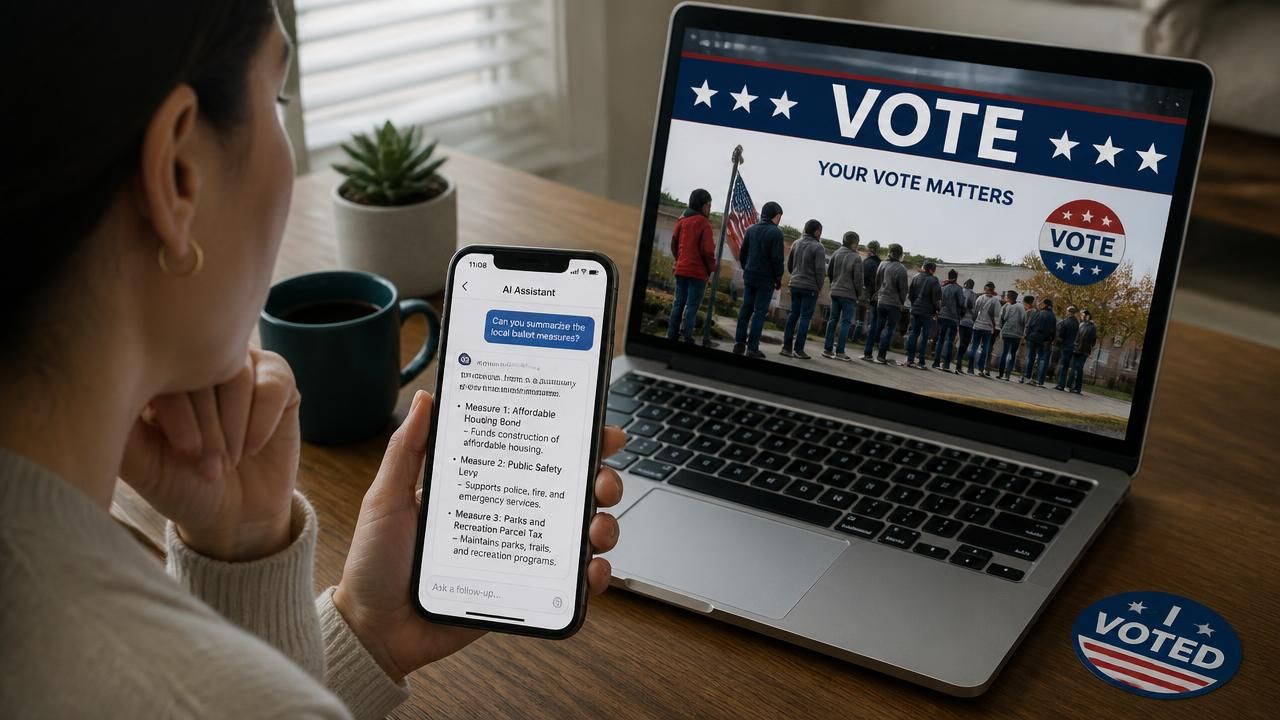
Voters heading to the polls in the midterm elections are increasingly turning to artificial intelligence chatbots to help them research candidates, fact-check claims and make sense of down-ballot measures, according to reports from NPR Politics, Boise State Public Radio, MSN and The Hill. The trend marks a new front in the long-running debate over how technology shapes civic participation—and whether the tools voters rely on are actually trustworthy.
A New Habit in Ballot Preparation
NPR Politics reported that voters already casting ballots are trying something new this year: asking AI to help research their ballot and even decide who to vote for. Boise State Public Radio carried the same reporting, underscoring how the behavior is being observed across public radio’s national network. The core finding is simple: a subset of voters no longer limits their election research to traditional news sources, candidate websites, or official voter guides. They are prompting chatbots.
"Voters are already voting in the midterms. This year, some voters are trying something new to get ready for the election: asking AI to help research their ballot and even decide who to vote for."
That shift is notable because elections are high-stakes, time-sensitive and hyper-local. A voter in one state may need to understand a dozen ballot initiatives, judicial retention races and county-level contests that receive little national coverage. AI chatbots can summarize dense voter pamphlets, translate materials, compare candidate issue positions and answer follow-up questions in plain language. For voters short on time or unfamiliar with the political system, the appeal is obvious.
What Voters Are Asking AI
According to the reports, voters are using chatbots for a range of tasks: fact-checking political ads, comparing candidates on issues such as health care and the economy, understanding ballot measures, and getting logistical information about how and where to vote. Research cited by MSN suggests some voters are using AI to help with midterms information. The exact share of the electorate doing so remains unclear, but the anecdotal and survey evidence points to a growing practice rather than a fringe experiment.
The tools are easy to access. Popular chatbots from OpenAI, Google, Microsoft and Anthropic can be used on a phone in seconds. Unlike a search engine, they generate conversational answers, which can feel more authoritative than a list of links. That fluency is precisely what worries experts.
Is AI Up to the Task?
MSN framed the trend with a skeptical question: "Voters are turning to AI on politics. Is it up to the task?" The Hill reported that voters are increasingly using AI for election information despite accuracy risks. Those risks are well documented. Large language models can hallucinate—fabricating candidate positions, inventing quotes or citing nonexistent studies. Their training data may be outdated, which is a serious problem in a campaign where positions shift and news breaks daily. Some models are designed to avoid political questions altogether, while others may reflect the biases of their training data or the preferences of their developers.
There is also the problem of verification. A voter who asks an AI chatbot whether a candidate supports a particular policy may receive a confident answer that is wrong. If the voter does not cross-check with an official source, the error can influence a real ballot. Election administrators have warned for years about misinformation spreading through social media; AI chatbots add a new vector that can generate personalized, plausible-sounding falsehoods at scale.
Different Outlets, Different Frames
The coverage reveals subtle differences in emphasis. NPR Politics and Boise State Public Radio focused on voter behavior—the novelty of asking AI to help decide who to vote for. MSN’s coverage leaned into the question of whether the technology is capable of providing reliable political information. The Hill centered the accuracy risks, while the second MSN piece highlighted research suggesting the practice is spreading. Together, the sources paint a picture of a technological shift that is outrunning both regulation and public understanding.
That divergence matters. If the story is framed only as a curiosity, voters may not appreciate the dangers. If it is framed only as a risk, newsrooms may overlook the genuine benefits for people who lack access to traditional civic education. The most accurate framing is probably both: AI is making election information more accessible and more treacherous at the same time.
Implications for Democracy
The trend has implications for campaigns, election officials and tech companies. Campaigns may begin optimizing their websites and statements for AI consumption, knowing that chatbots will summarize and synthesize their positions. Election officials may need to publish machine-readable, frequently updated voter guides so that AI systems have accurate data to draw from. Tech companies face pressure to improve political accuracy, add citations, and clearly label AI-generated content during elections.
For voters, the lesson is straightforward: AI can be a useful starting point, but it should not be the final word. Cross-checking with official state and county election offices, nonpartisan voter guides, and local news remains essential. Media literacy now includes AI literacy.
What to Watch
As the midterms approach, researchers and election watchdogs will be tracking how often voters consult chatbots, what kinds of questions they ask, and whether AI-generated errors affect real races. The answers will shape not only this election but also how democracy adapts to a world where anyone with a phone can ask a machine who to vote for—and receive an answer that sounds certain, even when it is not.